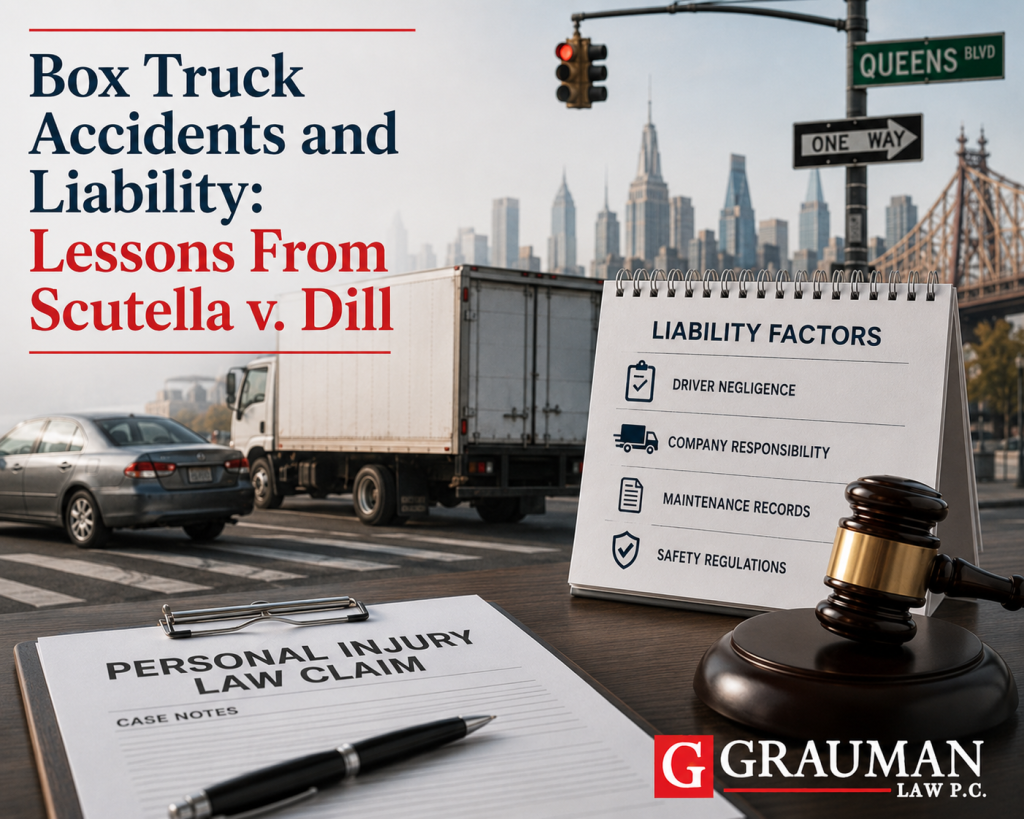
Commercial trucks are a common sight throughout Queens, particularly in busy neighborhoods where deliveries occur throughout the day. While these vehicles play an important role in keeping businesses supplied, they can also create dangerous conditions when drivers perform backing maneuvers or obstruct active traffic lanes. A recent New York case, Scutella v. Dill, provides insight into how courts evaluate liability in truck accident cases involving blocked roadways and backing vehicles. The decision serves as a reminder that commercial drivers have a duty to operate their vehicles safely and that questions of negligence often arise when a truck creates a hazard for other motorists. more The Facts of the Case In Scutella v. Dill, the plaintiff alleged that she suffered injuries when her vehicle collided with a box truck that was backing into a driveway. According to the allegations, the truck driver was in the process of reversing the vehicle when the truck blocked the plaintiff's lane of travel. The plaintiff's vehicle subsequently struck the truck, resulting in injuries and a personal injury lawsuit. The defendant argued that the plaintiff was solely responsible for the collision and sought dismissal of the case. However, the plaintiff contended that the truck driver's actions created a dangerous roadway condition and contributed to the accident. The dispute ultimately reached the Appellate Division, which was tasked with determining whether the defendant had established entitlement to judgment as a matter of law. Why Backing Truck Accidents Are Often Legally Complex Unlike many rear-end collisions or intersection crashes, accidents involving backing commercial vehicles frequently involve multiple questions of fact. When a truck driver reverses into a roadway or blocks a lane of travel, courts may consider several factors, including: Whether the driver maintained a proper lookout; Whether the backing maneuver was performed safely; Whether warning devices or signals were used; Whether the driver could adequately see approaching traffic; Whether the truck obstructed the roadway for an unreasonable period of time; and Whether the driver exercised reasonable care under the circumstances. Because large commercial vehicles often have significant blind spots, backing maneuvers can present unique dangers to nearby motorists. What Did the Court Decide? The Appellate Division reinstated the plaintiff's complaint, allowing the lawsuit to proceed. The court explained that the defendant had the burden of demonstrating either that he was not negligent or that any alleged negligence was not a proximate cause of the accident. Importantly, the court found that unresolved factual questions remained regarding the truck driver's conduct. Specifically, issues existed concerning whether the defendant maintained a proper lookout and whether he acted reasonably while backing the truck into the driveway. Because these questions could not be resolved as a matter of law, the defendant was not entitled to dismissal of the case. As a result, the plaintiff was permitted to continue pursuing her claims. The Importance of Reasonable Care for Commercial Drivers Commercial drivers are not automatically liable simply because an accident occurs. However, they are expected to operate their vehicles with reasonable care under the circumstances. This duty becomes especially important when a driver is performing a backing maneuver. Backing a large truck into a driveway, loading area, or commercial property often requires careful attention to surrounding traffic. A driver must remain aware of approaching vehicles, pedestrians, cyclists, and other roadway users. When a truck blocks an active lane of travel, questions may arise regarding whether the maneuver was performed safely and whether sufficient precautions were taken to avoid creating a hazard. The Scutella decision demonstrates that courts closely examine these circumstances before determining whether a commercial driver bears responsibility for a crash. Common Causes of Box Truck Accidents Box truck accidents occur for many reasons, particularly in densely populated urban areas like Queens. Some of the most common contributing factors include: Unsafe Backing Maneuvers Backing accidents often occur when drivers fail to adequately monitor surrounding traffic or misjudge the available space. Obstructed Traffic Lanes A truck that blocks part or all of a travel lane can create a sudden hazard for approaching motorists. Limited Visibility Commercial trucks frequently have significant blind spots that make it difficult for drivers to see vehicles approaching from certain angles. Driver Distraction Like all motorists, commercial drivers can become distracted by phones, navigation systems, delivery schedules, or other factors. Congested Urban Roadways Heavy traffic conditions often leave drivers with little time to react when a truck unexpectedly enters or obstructs their lane. What This Means for Injury Victims The outcome of Scutella v. Dill highlights an important principle of New York personal injury law: liability is not always as straightforward as one party claims. Defendants often argue that an injured motorist was entirely responsible for a collision. However, courts will carefully examine all of the circumstances surrounding the accident before reaching that conclusion. For injured drivers, this means that a claim may still be viable even when the defense attempts to shift all blame onto the plaintiff. Evidence such as: Accident reports; Witness statements; Surveillance footage; Dash camera recordings; Photographs of the scene; and Expert accident reconstruction analysis may all play important roles in establishing how a truck accident occurred and whether the commercial driver contributed to the collision. The Reality of Box Truck Accidents in Queens Queens experiences significant commercial vehicle traffic every day. Delivery trucks, moving trucks, construction vehicles, and commercial box trucks routinely travel through some of the borough's busiest neighborhoods. Areas such as Long Island City, Astoria, Flushing, Jamaica, Forest Hills, and Jackson Heights frequently experience congestion caused by loading operations and commercial deliveries. Drivers in these neighborhoods often encounter trucks that are: Backing into driveways; Entering loading docks; Blocking travel lanes; Double-parked near businesses; or Maneuvering through narrow streets. When these activities are performed carelessly, serious accidents can occur. Key Takeaways From Scutella v. Dill The Scutella decision offers several important lessons for motorists: Commercial Drivers Must Exercise Reasonable Care Truck drivers performing backing maneuvers have a duty to operate their vehicles safely and remain aware of surrounding traffic. Blocking a Lane Can Create Liability Issues When a truck obstructs an active lane of travel, courts may examine whether the obstruction contributed to the collision. Fault Is Not Always Clear-Cut Even when a defendant claims that another driver caused the crash, factual disputes may prevent dismissal of the case. Thorough Investigation Matters Photographs, witness statements, surveillance footage, and other evidence can be critical in determining how a truck accident occurred. Conclusion The decision in Scutella v. Dill illustrates how New York courts evaluate liability in accidents involving box trucks and backing maneuvers. Although the defendant argued that the plaintiff was solely responsible for the crash, the Appellate Division found that unresolved questions remained regarding whether the truck driver acted reasonably and maintained a proper lookout. For Queens motorists, the case serves as an important reminder that commercial vehicles can create dangerous roadway conditions when backing into driveways or obstructing traffic lanes. When a truck driver's conduct contributes to a collision, injured victims may have the right to pursue compensation for their injuries and losses under New York law.
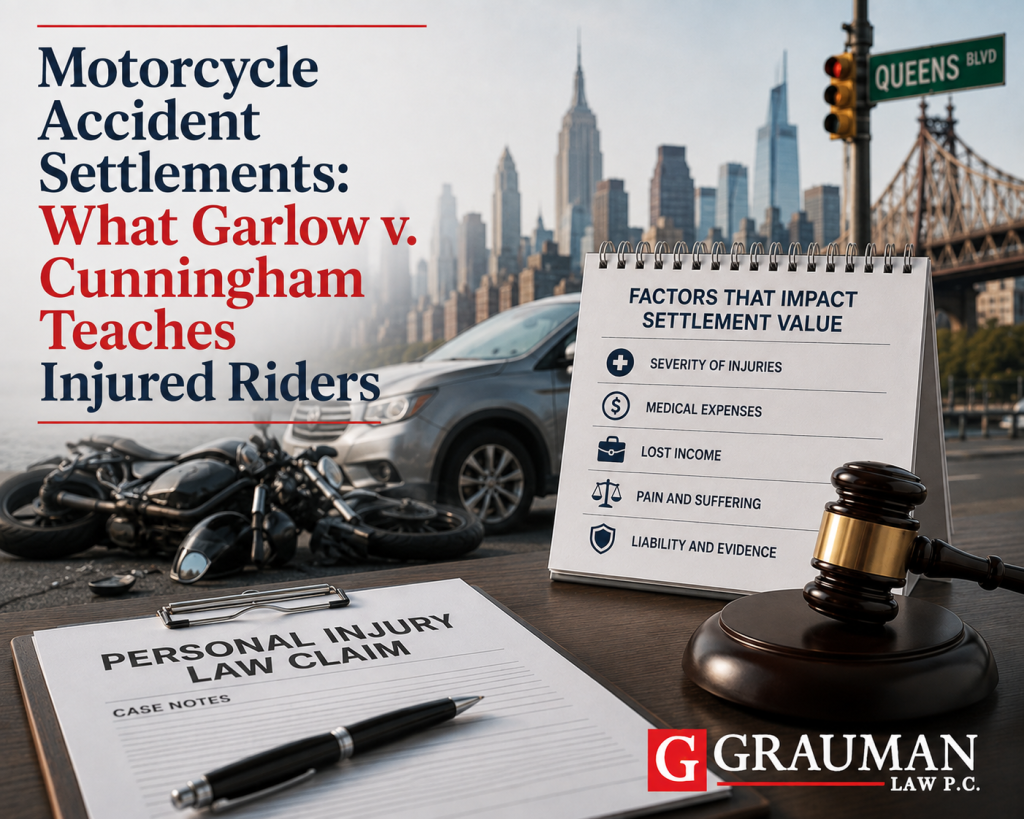
Motorcycle Accident Settlements: What Garlow v. Cunningham Teaches Injured Riders
Motorcycle accidents often result in serious injuries, substantial medical expenses, and significant property damage. After a crash, insurance companies frequently move quickly to negotiate a settlement, sometimes before the injured rider fully understands the extent of their losses. A recent New York case, Garlow v. Cunningham, highlights an important lesson for motorcyclists: the language contained in a settlement agreement can have a major impact on the rights you retain—and the rights you give up. The decision demonstrates why accident victims should carefully review any release or settlement document before signing it. more The Facts of the Case In Garlow v. Cunningham, the plaintiff was injured in a collision involving his motorcycle and the defendant's vehicle. Following the accident, the defendant's insurance carrier attempted to resolve the claims arising from the crash. According to the case, the insurer offered $100,000 to settle both the plaintiff's personal injury claims and his property damage claims. The plaintiff, however, did not agree to the settlement exactly as proposed. Instead, when presented with a release, the plaintiff modified the document to exclude his property damage claim. By making this change, the rider sought to preserve his ability to pursue compensation for damage to his motorcycle and related property losses while addressing the injury claim separately. The dispute eventually centered on whether a binding settlement had been reached. Why Settlement Agreements Matter After a Motorcycle Accident Many accident victims assume that once an insurance company offers compensation, the primary concern is simply the dollar amount being paid. In reality, the language contained within a settlement agreement is often just as important as the settlement figure itself. Settlement documents typically contain a release, which is a legal agreement in which the injured party agrees to give up certain claims in exchange for compensation. Depending on the wording, a release may affect: Personal injury claims; Property damage claims; Medical expenses; Lost wage claims; Future treatment costs; Pain and suffering damages; and Other rights arising from the accident. Once a valid release is signed and accepted, it can become extremely difficult—or impossible—to pursue additional compensation later. For this reason, courts closely examine whether both parties actually agreed to the same settlement terms. What Did the Court Decide? The court determined that there was no enforceable settlement agreement covering all of the claims that the defendant asserted had been resolved. The key issue was that the plaintiff modified the release before signing it. Because the rider altered the proposed agreement by excluding his property damage claim, the signed release did not match the terms originally offered by the insurance carrier. In contract law, a material change to proposed settlement terms can prevent the formation of a binding agreement if the parties have not mutually agreed to the same terms. As a result, the court declined to enforce the alleged settlement in the manner requested by the defendant. The decision illustrates a fundamental legal principle: for a settlement to be enforceable, both parties must agree to the same material terms. Understanding the Difference Between Injury Claims and Property Damage Claims One of the most important takeaways from Garlow is that personal injury claims and property damage claims are often separate components of a motorcycle accident case. Personal Injury Claims These claims generally seek compensation for losses related to physical injuries, including: Medical bills; Future medical treatment; Lost wages; Reduced earning capacity; Pain and suffering; and Other accident-related damages. Property Damage Claims Property damage claims typically involve compensation for: Motorcycle repair costs; Fair market value of a totaled motorcycle; Damaged riding gear; Helmets; Electronics; and Other personal property damaged in the collision. Although insurers sometimes attempt to resolve all claims simultaneously, accident victims may wish to address these issues separately depending on the circumstances of the case. Why Motorcycle Accident Victims Must Review Releases Carefully Insurance companies routinely use releases to finalize claims. Once signed, these documents can have significant legal consequences. Before signing any settlement paperwork, injured riders should understand: What Claims Are Being Released Some releases apply only to property damage, while others apply to all claims arising from the accident. Whether Future Medical Treatment Is Covered Motorcycle accident injuries sometimes worsen over time. Settling too early may prevent recovery for future treatment costs. Whether All Damages Have Been Evaluated Before accepting a settlement, it is important to understand the full extent of medical expenses, lost income, and other damages. Whether the Settlement Reflects the Actual Value of the Claim A settlement may appear attractive initially but fail to account for long-term consequences of the injuries. The Garlow decision serves as a reminder that even seemingly minor language changes can have significant legal implications. Motorcycle Accidents Often Result in Serious Injuries Unlike occupants of passenger vehicles, motorcyclists have very little protection during a collision. Even relatively low-speed crashes can result in: Traumatic brain injuries; Broken bones; Spinal injuries; Road rash; Internal injuries; Shoulder injuries; and Permanent disabilities. Because of the severity of these injuries, the financial stakes in motorcycle accident claims are often substantial. A settlement agreement signed too early or without careful review can significantly affect an injured rider's ability to recover full compensation. What This Means for Queens Motorcyclists Queens presents unique risks for motorcyclists due to heavy traffic, congested intersections, and frequent lane changes by other drivers. Motorcycle accidents regularly occur throughout: Long Island City; Astoria; Flushing; Jamaica; Forest Hills; Rego Park; Jackson Heights; and Kew Gardens. Following a crash, insurance adjusters may contact injured riders quickly in an effort to resolve claims. While settlement discussions are a normal part of the process, Garlow v. Cunningham demonstrates why riders should fully understand the legal effect of any release before signing. Key Takeaways From Garlow v. Cunningham The case offers several important lessons for motorcycle accident victims: Settlement Language Matters The wording of a release can determine which claims remain available and which claims are permanently resolved. Injury and Property Damage Claims May Be Treated Separately A rider may have distinct claims for bodily injuries and motorcycle damage. Both Parties Must Agree to the Same Terms A settlement generally cannot be enforced when the parties have not mutually agreed to identical material terms. Never Rush Into Signing Insurance Paperwork Accident victims should understand exactly what rights they are giving up before accepting a settlement. Conclusion The decision in Garlow v. Cunningham highlights the importance of carefully reviewing settlement agreements after a motorcycle accident. Although the insurer attempted to settle both the injury and property damage portions of the claim, the plaintiff modified the release to preserve certain rights. Because the signed document did not match the insurer's proposed terms, the court declined to enforce the settlement as the defendant requested. For injured motorcyclists in Queens and throughout New York, the case serves as an important reminder that settlement documents are more than mere paperwork. The language of a release can significantly affect future legal rights, making it essential to understand exactly what claims are being resolved before signing any agreement.