How to Protect Your Rights After a Serious Accident
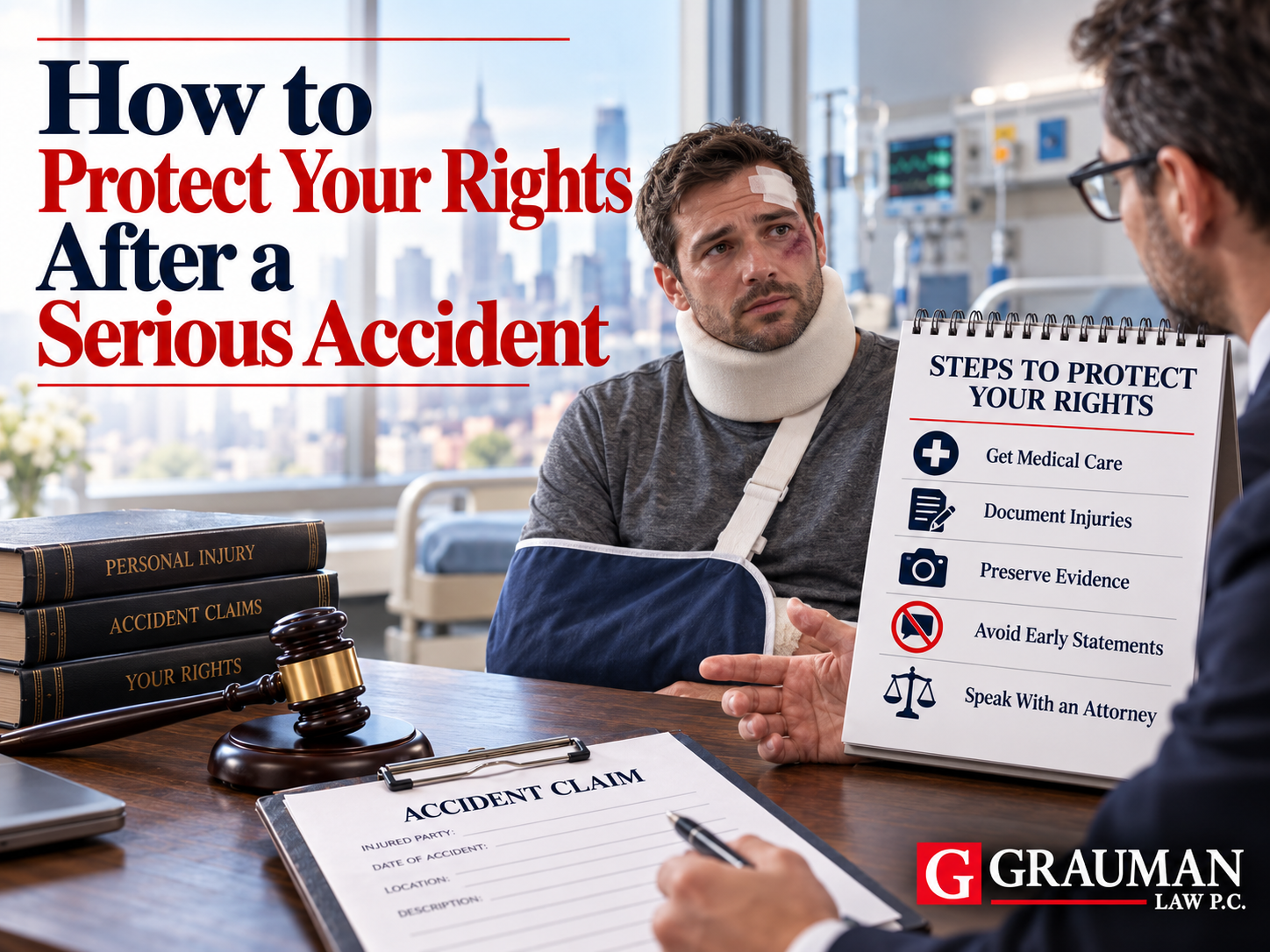
In the days after serious car accidents here in Queens, victims typically start to have questions about their rights and how to protect them. Here's what you need to know.
We handle both personal injury and criminal defense. Please fill out the form below for your free consultation or call us at 347-620-2865.
As electric scooters, mopeds, and app-based transportation services become increasingly common throughout New York City, accidents involving these vehicles have become more frequent. While many crashes result in serious injuries, some tragically lead to fatalities that leave families searching for answers and accountability. A recent New York case, Marinos v. Brahaj, addresses an important legal issue that arises in many modern transportation-related accidents: whether a person’s agreement to arbitrate disputes can prevent surviving family members from pursuing a wrongful death claim in court. The decision provides valuable guidance for families facing the aftermath of a fatal accident and highlights a critical distinction between personal injury claims and wrongful death actions under New York law. The Facts of the Case In Marinos v. Brahaj, the decedent rented and operated a Revel electric moped in Manhattan. According to the case, the rider was ejected from the moped and thrown into the roadway, where he was subsequently struck by a vehicle. The accident resulted in fatal injuries. Following the tragedy, the decedent's parents brought legal claims arising from the incident, including claims related to personal injury and wrongful death. The defendants sought to compel arbitration based on an agreement the decedent had allegedly accepted when renting the moped through the Revel mobile application. Like many app-based services, the rental platform included terms and conditions that contained an arbitration provision requiring certain disputes to be resolved outside of court. The central legal question became whether that arbitration agreement also applied to the wrongful death claims brought by the decedent's parents. The Growing Role of Arbitration Agreements in Modern Transportation Services Today, consumers routinely agree to digital contracts when using: Ride-share services; Scooter rental platforms; Moped-sharing services; Bike-sharing programs; Delivery applications; and Various transportation-related apps. These agreements often contain arbitration clauses that require disputes to be resolved through private arbitration rather than traditional court proceedings. Many users accept these terms by simply clicking a button within an application, often without reading the full agreement. As a result, arbitration provisions have become increasingly important in litigation involving app-based transportation services. However, the existence of an arbitration agreement does not automatically resolve every legal issue, particularly when family members bring claims after a fatal accident. Understanding the Difference Between Personal Injury and Wrongful Death Claims One of the most important aspects of Marinos is the distinction between personal injury claims and wrongful death claims. Although they often arise from the same accident, these causes of action are legally different. Personal Injury Claims A personal injury claim generally belongs to the injured individual. The claim seeks compensation for losses suffered by that person, including: Medical expenses; Pain and suffering; Lost wages; Disability; Loss of enjoyment of life; and Other accident-related damages. Because these claims belong to the injured person, agreements signed by that individual may affect how those claims are resolved. Wrongful Death Claims A wrongful death claim is different. Under New York law, a wrongful death action is brought on behalf of eligible family members or distributees who suffer losses as a result of the death. These claims are separate from the decedent's personal injury rights and seek damages associated with the losses suffered by surviving family members. This distinction became the key issue in Marinos v. Brahaj. What Did the Court Decide? The Appellate Division held that the parents' wrongful death claim was not subject to the arbitration clause that the decedent allegedly agreed to when renting the Revel moped. The court explained that the wrongful death cause of action belongs to the distributees rather than to the decedent. Because the wrongful death claim is legally distinct from the personal injury claim that belonged to the rider, the arbitration agreement could not automatically bind the parents with respect to their independent wrongful death rights. As a result, the wrongful death claim was permitted to proceed outside of arbitration. The decision reinforces the principle that wrongful death actions are separate legal claims belonging to surviving family members, not merely extensions of the decedent's personal injury claim. Why This Decision Matters The Marinos ruling has implications far beyond moped accidents. Many companies increasingly rely on arbitration provisions in consumer agreements. These clauses frequently appear in: Transportation apps; Vehicle rental agreements; Subscription services; Online marketplaces; Delivery platforms; and Technology-based services. The case demonstrates that courts may distinguish between claims belonging to the individual who signed an agreement and claims belonging to surviving family members after a fatal accident. For families, this distinction can significantly affect where and how a case is litigated. The Rise of Scooter and Moped Accidents in New York City Micromobility services have transformed transportation throughout New York City. Electric scooters, bicycles, and mopeds offer convenient alternatives to traditional transportation, particularly in densely populated neighborhoods. However, these vehicles also expose riders to significant risks. Unlike occupants of passenger vehicles, riders generally lack substantial protection during a collision. Common causes of serious scooter and moped accidents include: Vehicle collisions; Roadway defects; Driver inattention; Unsafe lane changes; Opening vehicle doors; Traffic congestion; and Loss of vehicle control. Because riders are largely unprotected, injuries can be catastrophic. What Families Should Know After a Fatal Accident When a fatal accident occurs, families are often overwhelmed by grief while simultaneously facing legal, financial, and practical challenges. Potential issues may include: Funeral expenses; Medical bills; Loss of financial support; Investigation of the accident; Insurance claims; Potential litigation; and Questions regarding liability. Cases involving rental vehicles, app-based services, or transportation platforms may also involve complex contractual issues, including arbitration provisions and liability limitations. The Marinos decision illustrates why these cases often require careful legal analysis before assumptions are made about a family's rights. Why This Case Is Especially Relevant in Queens Queens residents regularly encounter: Revel mopeds; Citi Bikes; Electric scooters; Ride-share vehicles; Delivery riders; and Other app-based transportation services. Busy corridors in neighborhoods such as Astoria, Long Island City, Jackson Heights, Flushing, Jamaica, and Forest Hills see substantial micromobility traffic every day. As these transportation options continue to grow in popularity, legal disputes involving rental agreements, accident liability, and wrongful death claims are likely to become increasingly common. The principles discussed in Marinos therefore have direct relevance to families throughout Queens and New York City. Key Takeaways From Marinos v. Brahaj The case provides several important lessons: Wrongful Death Claims Are Legally Distinct A wrongful death action belongs to surviving distributees and is separate from the decedent's personal injury claim. Arbitration Clauses Do Not Always Control Every Claim The existence of an arbitration agreement does not automatically determine the rights of surviving family members. App-Based Transportation Services Create Unique Legal Issues Rental agreements, mobile applications, and digital contracts can significantly affect litigation following a serious accident. Families May Have Independent Rights Even when an injured person entered into a contractual agreement, surviving family members may retain separate legal claims under New York law. Conclusion The decision in Marinos v. Brahaj highlights an important aspect of New York wrongful death law. Although the decedent rented a Revel moped through an application containing an arbitration provision, the Appellate Division determined that the parents' wrongful death claim belonged to them as distributees and was not automatically subject to the arbitration agreement. For families coping with the loss of a loved one in a scooter, moped, bicycle, ride-share, or other transportation-related accident, the case serves as a reminder that wrongful death claims often involve rights that are legally distinct from those held by the deceased person. As transportation technology continues to evolve throughout New York City, these legal principles will remain increasingly important for accident victims and their families.
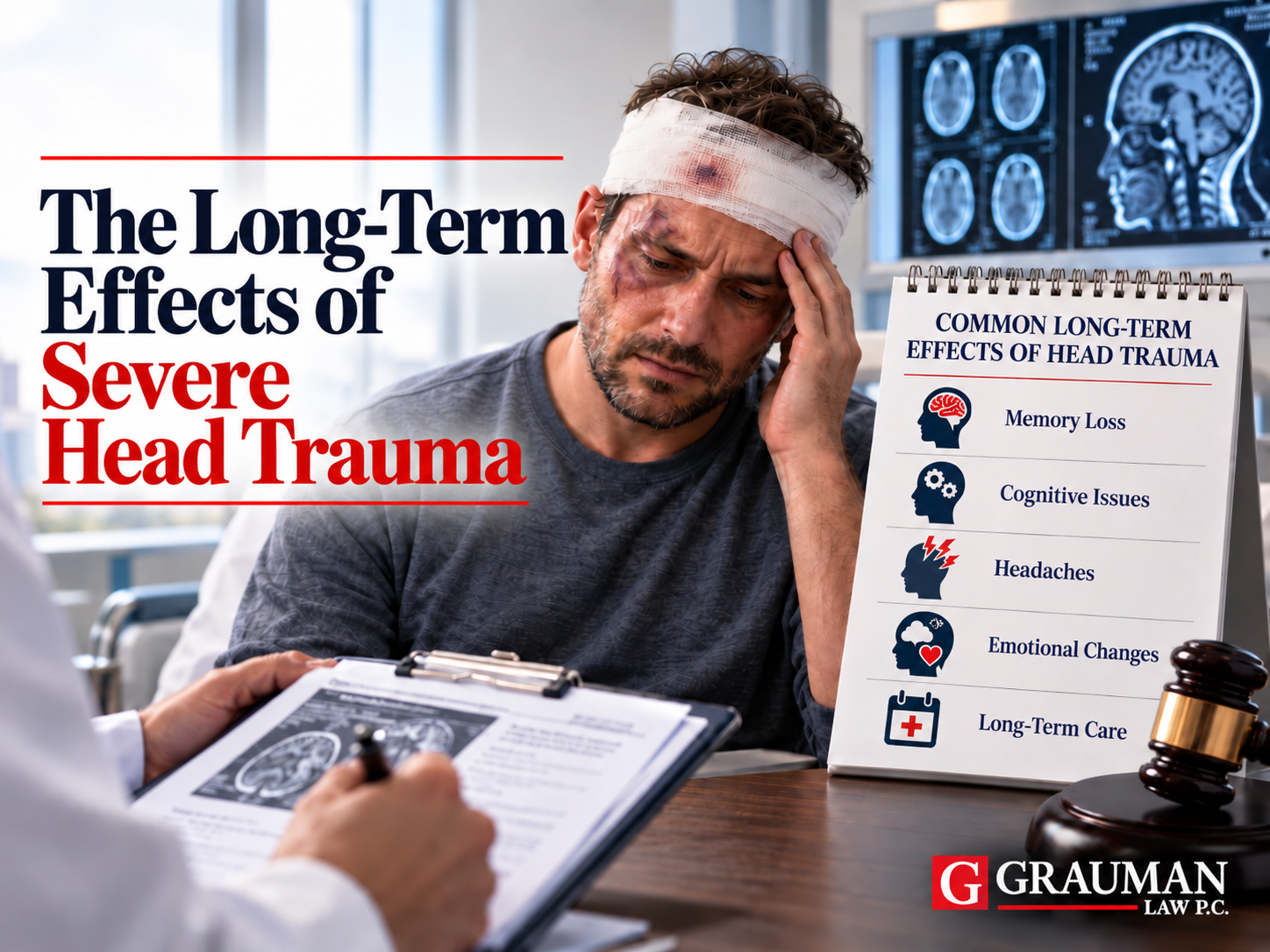
Severe head trauma after an accident can leave lasting effects on both the body and mind. Families in Nassau County who face a traumatic brain injury often have to deal with years of medical and daily life and work challenges. Traumatic Brain Injury Outcomes The first hours after a blow or jolt that damages brain tissue tend to dominate the medical attention, but the full cost of that injury frequently reveals itself only after the initial, acute crisis has passed. Five years after such an event, more than half of those still living remain moderately or severely disabled, and a similar share who once held jobs can no longer work. One in three still needs help with everyday tasks. Ability to Manage Life Memory, attention, processing speed, and the capacity to plan or shift from one task to another often remain impaired for a long time after these injuries, and cognitive change can be the most stubborn and far-reaching consequence. Studies that follow survivors for two years and beyond show that those with the gravest injuries fall further behind their peers on measures of general intellect and executive skill rather than catching up. Physical Complications Physical complications frequently persist as chronic conditions, like post-traumatic epilepsy (which appears in roughly 1/5th of survivors), balance problems, headaches, loss of smell or taste, visual disturbances, and sleep disruption. These are all common enough in survivors that they become chronic conditions rather than symptoms you can expect to improve with time. Hydrocephalus, infections, and damage to blood vessels that later raise stroke risk can all be present and add further complexity to the prognosis. Emotional Life Depression, anxiety, irritability, impulsivity, and reduced empathy appear in traumatic brain injury victims at rates well above those seen in the general population, and these often intensify rather than fade. An umbrella review of more than thirty million participants found elevated risks for psychotic disorders, attention-deficit conditions, suicide, and later dementia. These psychiatric and neurodegenerative associations often don't appear immediately, either. Hormonal Changes The pituitary gland sits at the base of the skull and is therefore vulnerable to impact. It can lose function after the injury, and that can mean hormonal disruption which worsens fatigue, muscle loss, cognitive fog, and emotional instability for years unless it is specifically tested for. Growth hormone deficiency is the most frequent finding, followed by shortages of sex hormones, thyroid hormone, and cortisol. Effects on Nassau County Victims and Families Because these injuries can continue to evolve rather than just resolve, families must arrange ongoing medical surveillance, rehabilitation, and practical support while they also plan for changing needs in housing, transportation, finances, and daily care. Legal questions about the proper compensation for all these costs over a lifetime can be heated and contested when the injury is due to the negligence of someone else. If you or someone close to you is living with the effects of severe head trauma, contact Grauman Law in Kew Gardens, NY for a free consultation. We've been serving Nassau County and New York City for nearly two decades.
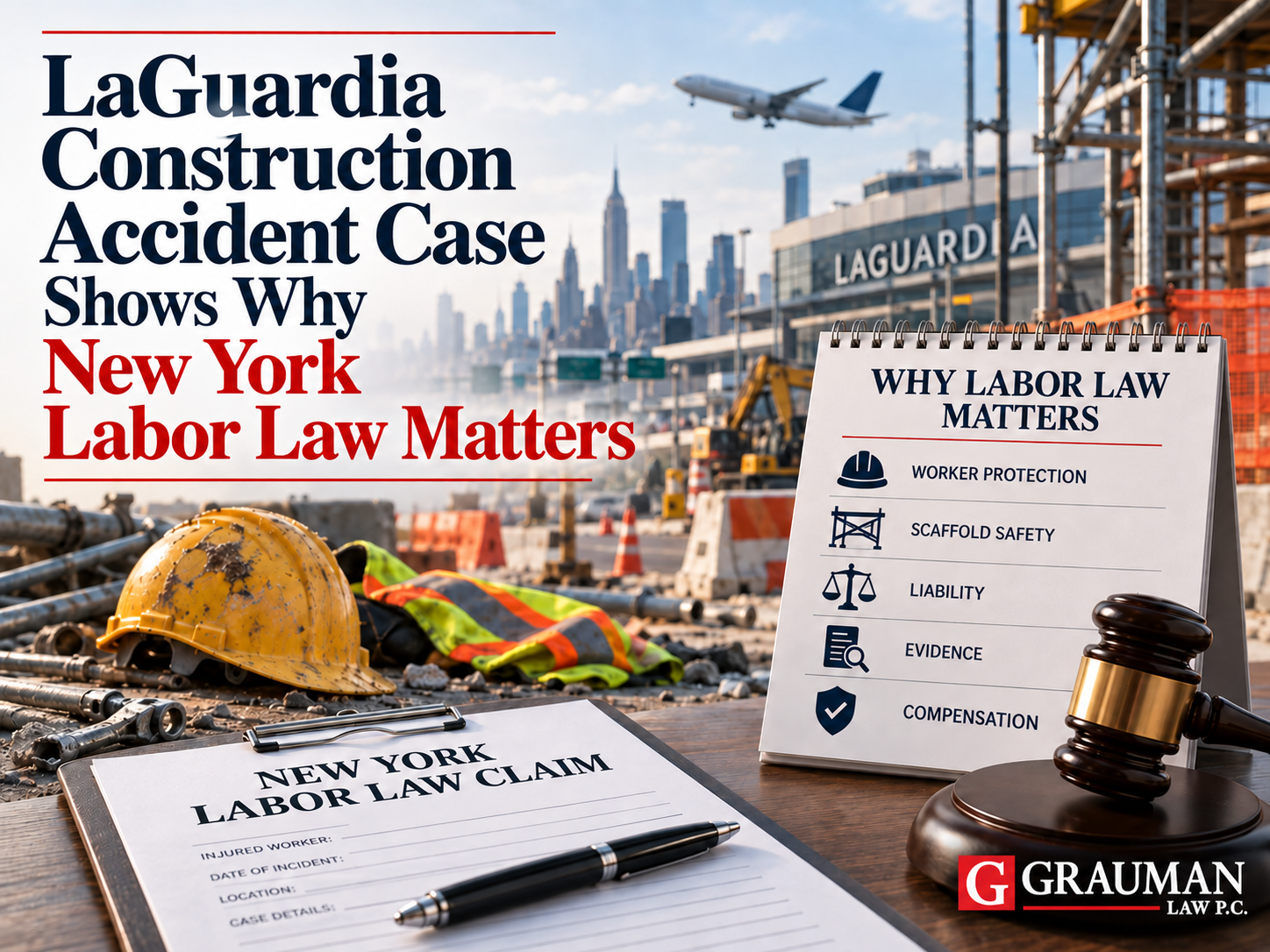
Construction work is one of the most dangerous occupations in New York. Workers regularly face hazards such as falls, falling objects, electrical risks, heavy machinery, and dangerous site conditions. Because of these risks, New York has enacted labor laws designed to protect construction workers and hold owners and contractors accountable when safety violations contribute to injuries. A recent case, McCloskey v. Port Authority of New York and New Jersey, illustrates how these protections can come into play following a workplace accident. The case arose from a major construction project at LaGuardia Airport in Queens and serves as a reminder that injured workers may have legal rights that extend beyond traditional workers' compensation benefits. The Facts of the Case The plaintiff in McCloskey was working on the extensive redevelopment project at LaGuardia Airport. According to the allegations, the plaintiff was employed by Welsbach Electric and was assigned to a night shift involving cable work in underground manholes located within the construction site. As the shift came to an end, the plaintiff left the work area and proceeded through a section of the jobsite. He later testified that the area was poorly illuminated. While walking, the plaintiff stepped on an object, lost his footing, and fell forward. After the incident, he observed pieces of wood scattered throughout the area where he fell. The lawsuit named several entities involved in the project, including the Port Authority of New York and New Jersey and LaGuardia Gateway Partners as property owners, along with Skanska-affiliated entities that served as general contractors. The plaintiff alleged that unsafe construction-site conditions contributed to the accident. Why Construction Site Housekeeping Matters Construction sites are constantly changing environments. Materials, tools, debris, and temporary structures are frequently moved throughout the workday. Because of this, proper housekeeping is a critical component of workplace safety. Hazards that may increase the risk of falls include: Scattered construction materials; Loose lumber; Debris left in walkways; Uneven surfaces; Temporary obstacles; Electrical cords; and Inadequate lighting. Even experienced workers can be injured when work areas are not properly maintained. Construction companies are expected to implement procedures that help keep passageways and work areas reasonably safe for workers moving throughout the site. The Dangers of Poor Lighting on Construction Sites Lighting is one of the most overlooked yet important safety measures on any construction project. Workers rely on adequate illumination to: Identify tripping hazards; Navigate walkways safely; Detect changes in elevation; Avoid construction materials and debris; Operate equipment safely; and Maintain awareness of their surroundings. Night-shift workers may face increased risks when temporary lighting is inadequate or when portions of a construction site remain poorly illuminated. In the McCloskey case, the plaintiff specifically alleged that the area where he fell lacked sufficient lighting, making it difficult to see hazards in his path. Understanding Labor Law § 241(6) One of the central legal issues in the case involved New York Labor Law § 241(6). This statute imposes a duty on owners and contractors to provide reasonable and adequate protection and safety for workers involved in construction, excavation, and demolition activities. Unlike an ordinary negligence claim, Labor Law § 241(6) permits injured workers to pursue claims based upon violations of specific provisions contained in New York's Industrial Code. When applicable safety regulations are violated and those violations contribute to a worker's injury, owners and contractors may face liability. Importantly, these claims are often brought in addition to workers' compensation benefits. What Did the Court Consider? In McCloskey, the plaintiff sought partial summary judgment under Labor Law § 241(6). The plaintiff argued that construction-site safety violations contributed to the accident and that the evidence supported liability under the statute. The litigation focused on whether conditions at the worksite—including the alleged presence of scattered wood and inadequate lighting—violated applicable safety requirements and contributed to the plaintiff's fall. As with many Labor Law cases, the court's analysis centered on the specific circumstances surrounding the accident and whether the alleged safety violations were sufficient to support the claim. Why Construction Workers May Have Claims Beyond Workers' Compensation Many injured workers assume that workers' compensation is their only available remedy after a workplace accident. However, construction accidents often involve additional legal claims against parties other than the injured worker's direct employer. Depending on the circumstances, an injured worker may have claims against: Property owners; General contractors; Construction managers; Subcontractors; or Other responsible third parties. These claims can be significant because they may allow recovery for damages that are generally unavailable through workers' compensation, including pain and suffering. This is one reason why New York Labor Law plays such an important role in construction injury litigation. Common Construction Site Fall Hazards The allegations in McCloskey involve conditions that frequently appear in construction accident cases throughout New York. Common hazards include: Poor Housekeeping Loose materials and debris can create dangerous tripping hazards. Inadequate Lighting Workers cannot avoid hazards they cannot see. Obstructed Walkways Passageways should remain reasonably clear to allow safe movement throughout the jobsite. Unsafe Temporary Conditions Construction sites often contain changing conditions that require constant monitoring and maintenance. Failure to Follow Safety Regulations Industrial Code violations may provide the basis for Labor Law claims when safety requirements are ignored. Why This Case Matters to Queens Workers Few construction projects have been as visible in Queens as the ongoing redevelopment of LaGuardia Airport. Thousands of workers have participated in the transformation of one of New York City's busiest transportation hubs. Because the accident occurred at LaGuardia Airport, the case has particular significance for workers throughout Queens who perform construction, electrical, infrastructure, and transportation-related work. The decision serves as a reminder that even routine tasks performed at the end of a shift can become dangerous when proper safety measures are not maintained. Key Takeaways From McCloskey v. Port Authority of New York and New Jersey The case highlights several important principles: Construction Sites Must Be Maintained Safely Owners and contractors have responsibilities regarding site safety and housekeeping. Poor Lighting Can Contribute to Serious Injuries Adequate lighting is essential, particularly on night shifts and large construction projects. Construction Workers May Have Rights Beyond Workers' Compensation Labor Law claims may provide additional avenues of recovery when safety violations contribute to an accident. Labor Law § 241(6) Remains an Important Protection New York's Labor Law continues to provide important safeguards for workers injured because of unsafe construction-site conditions. Conclusion The case of McCloskey v. Port Authority of New York and New Jersey demonstrates how seemingly simple hazards—such as scattered construction materials and inadequate lighting—can lead to serious workplace injuries. Arising from the massive LaGuardia Airport redevelopment project in Queens, the case underscores the importance of maintaining safe jobsite conditions and complying with New York's construction safety regulations. For construction workers injured on the job, the case serves as an important reminder that workers' compensation may not be the only source of recovery. When unsafe construction-site conditions violate New York Labor Law, injured workers may have additional legal rights against owners, contractors, and other responsible parties.



The information on this website is for general information purposes only. Nothing on this site should be taken as legal advice for any individual case or situation. This information is not intended to create, and receipt or viewing does not constitute, an attorney-client relationship.