Get A Free Case Evaluation

We handle both personal injury and criminal defense. Please fill out the form below for your free consultation or call us at 347-620-2865.

Blog / Blog

Blog

All Blog Personal Injury Criminal Law Civil Rights Law Employment & Labor Law Financial Law Bicycle Accidents Construction Accidents Guides Head Trauma Hit and run Rideshare Accidents Serious injuries Slip and fall Wrongful Death
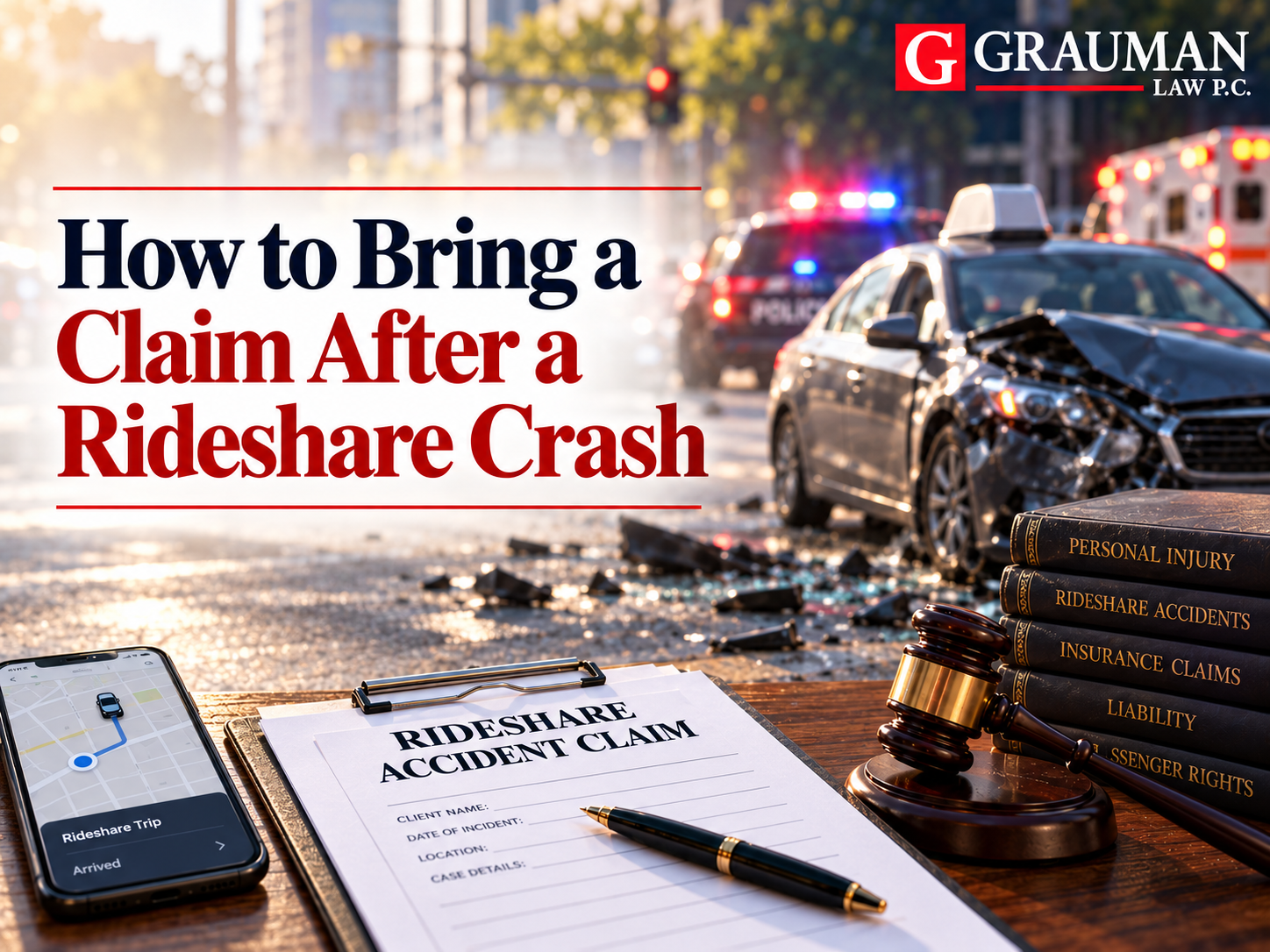
Rideshare crash scene with accident claim documents and legal representation.

How to Bring a Claim After a Rideshare Crash

After Uber or Lyft accidents here in Kew Gardens, things can get confusing. There are various insurance filings that might need to be made, and a lot depends on the status of the rideshare driver at the moment of the accident. Our firm can help you by coordinating all these steps, identifying every available policy and source of compensation, and handling all communications and negotiations to get you the best possible outcome. How to Bring a Claim After Uber/Lyft Accidents Getting Started in the App Once you've done the basics (called 911, helped anyone injured), immediately screenshot the Uber or Lyft trip details in the app so you have the driver's name, vehicle information, route, timestamps, and trip status (if you're a passenger). That data establishes which coverage period applied, and it can become inaccessible later, so it's best to have it safe right from the beginning. After you've got your screenshots, report the incident through the rideshare app. Be sure to give only the basic facts. Avoid making any statements about fault, talking about the extent of injuries, or even about how the collision happened. Getting Evidence Photograph the vehicle damage, roadway, any traffic controls, and visible injuries. If there are witnesses, get their contact info if they're willing to give it. You'll give all this to your lawyer, and your lawyer will put it together, look for more as needed, and chase things down. Dealing With No-Fault New York's no-fault statute requires every motor vehicle, including those used for Uber and Lyft trips, to carry Personal Injury Protection (PIP) coverage that pays medical expenses and a portion of lost wages to driver and any passengers, regardless of who caused the crash and up to the basic $50,000 limit. A passenger riding in an Uber is a covered person under that policy. The group insurance policy that rideshares maintain for drivers must include this no-fault coverage, and you'll need to turn to this first to cover your losses. You have 30 days to bring a claim, and we can get that started for you. Regardless of what insurers you talk with during this process, however, always refuse to give any recorded statements, stick to facts only, and pass off all the communication to your lawyer as soon as you have one. Above all, never sign anything without having your lawyer look over it first. Other Insurance The insurance available from the rideshare company depends on the driver's status at the moment of impact: App off: only the driver's personal policy applies Logged on but not yet engaged in a trip: minimum limits of $75,000 per person and $150,000 per accident for bodily injury, plus $25,000 for property damage Accepted a request/have a passenger: $1,250,000 coverage for bodily injury, death, and property damage, plus $1,250,000 in supplemental uninsured/underinsured motorist coverage and no-fault Beyond Economic Damages To get compensation for pain and suffering and other non-economic damages that go beyond the no-fault benefits, you'll need to have what New York law considers a serious injury. Your lawyer can help you understand whether you qualify for this and then deal with the paperwork and other issues. Talk to a Lawyer in Kew Gardens If you've been in a rideshare wreck, contact us at Grauman Law P.C. right away for a free consultation. From our Kew Gardens and Forest Hills offices, we serve clients through NYC and beyond.

Bicycle accident scene in NYC

Bicycle Accident Claims: Lessons From Velazquez v. County of Westchester

When people think of bicycle accidents, they often picture collisions between cyclists and motor vehicles. While those crashes are common, not every bicycle injury involves a negligent driver. In many cases, dangerous property conditions, poorly maintained premises, unexpected obstacles, or hazardous structures can cause serious injuries to cyclists. A recent New York case, Velazquez v. County of Westchester, highlights an important aspect of bicycle accident litigation: property owners and those responsible for maintaining premises may be held liable when dangerous conditions contribute to a cyclist's injuries. The decision serves as a reminder that bicycle accident claims can extend beyond roadway negligence and may involve issues of premises liability, property maintenance, and dangerous conditions. The Facts of the Case In Velazquez v. County of Westchester, the plaintiff brought a personal injury lawsuit after allegedly suffering injuries while riding his bicycle near the North White Plains train station parking lot. According to the plaintiff, the accident occurred when he collided with the arm of a toll booth located within the parking facility. The plaintiff alleged that the condition of the property contributed to the accident and sought compensation for his injuries. The defendants moved for summary judgment, arguing that the case should be dismissed before trial. They contended that the toll booth arm was an open and obvious condition and therefore could not serve as the basis for liability. The dispute ultimately reached the Appellate Division, which examined whether the defendants had established entitlement to dismissal as a matter of law. Bicycle Accident Cases Are Not Always About Cars Many cyclists are surprised to learn that a bicycle accident claim may arise even when no motor vehicle is involved. Cyclists frequently encounter hazards such as: Gates and barriers; Parking lot structures; Construction equipment; Potholes; Uneven pavement; Defective sidewalks; Roadway debris; Poor lighting conditions; Improperly placed signs; and Other dangerous property conditions. When a dangerous condition causes a cyclist to crash, the legal analysis often focuses on who owned, controlled, maintained, or was responsible for the area where the accident occurred. The Velazquez case demonstrates how these issues can become central to a bicycle injury lawsuit. Understanding the "Open and Obvious" Defense One of the primary arguments raised by the defendants involved the legal concept of an "open and obvious" condition. Property owners frequently argue that they should not be liable for injuries caused by conditions that are readily visible. The theory behind this defense is that individuals should be expected to observe and avoid obvious hazards. However, New York courts have repeatedly explained that simply labeling a condition as "open and obvious" does not automatically eliminate liability. Courts must often consider additional factors, including: The surrounding environment; Lighting conditions; Visibility; The location of the hazard; Foreseeable use of the property; and Whether the condition was inherently dangerous. As a result, an allegedly visible condition may still present an unreasonable risk of harm under certain circumstances. What Did the Court Decide? The Appellate Division reversed the lower court's dismissal of the case. The court determined that the defendants failed to establish, as a matter of law, that the toll booth arm was both open and obvious and not inherently dangerous under the circumstances existing at the time of the accident. In other words, the court concluded that factual questions remained regarding the nature of the condition and whether it presented an unreasonable danger to users of the property. Because those issues could not be resolved solely based on the evidence presented by the defendants, dismissal was inappropriate. As a result, the plaintiff was permitted to continue pursuing the bicycle injury claim. Why Property Owners Have a Duty to Maintain Safe Conditions Under New York law, property owners and those responsible for maintaining property generally have a duty to keep their premises in a reasonably safe condition. This duty may apply to: Parking lots; Commercial properties; Train stations; Shopping centers; Sidewalks; Apartment complexes; Public facilities; and Other areas where people are expected to travel. The precise scope of that duty depends on the circumstances of each case. When a dangerous condition exists and contributes to an injury, courts may examine: Whether the owner created the condition; Whether the owner knew about the condition; Whether the owner should have discovered it through reasonable inspection; and Whether reasonable corrective action was taken. Why Visibility Alone Does Not End a Case One of the most important lessons from Velazquez is that visibility is only one factor in determining liability. Property owners often argue that a condition was obvious and therefore not actionable. However, courts recognize that some visible conditions can still be dangerous. For example: A visible pothole may still present a hazard; A visible obstruction may be improperly placed; A visible barrier may be difficult to perceive under certain lighting conditions; or A visible structure may create an unreasonable risk because of its location. The Appellate Division's decision reinforces the principle that courts must evaluate the totality of the circumstances rather than relying solely on whether a condition could theoretically be seen. Common Property Hazards That Cause Bicycle Accidents Cyclists are particularly vulnerable to roadway and property defects because bicycles are less stable than passenger vehicles and often have limited room to maneuver. Common hazards include: Gates and Barriers Parking lot arms, access gates, and entry barriers can create risks when improperly maintained or positioned. Potholes and Surface Defects Even relatively small roadway defects can cause a cyclist to lose control. Poor Lighting Inadequate illumination can make obstacles difficult to detect. Construction Zones Temporary barriers, debris, and equipment can create dangerous conditions. Drainage Grates and Utility Covers Improperly maintained infrastructure may present hazards to cyclists. Debris and Obstructions Loose materials, equipment, or objects left in travel areas can contribute to crashes. What This Means for Injury Victims The Velazquez decision highlights the importance of conducting a thorough investigation after a bicycle accident. Potentially important evidence may include: Photographs of the accident scene; Surveillance footage; Maintenance records; Property inspection reports; Witness statements; Lighting conditions at the time of the incident; and Evidence identifying the parties responsible for maintaining the property. Without a detailed investigation, important evidence regarding the cause of the accident may be lost. Why This Case Matters in Queens Queens has experienced significant growth in bicycle traffic over the past decade. Cyclists regularly travel through: Long Island City; Astoria; Flushing; Forest Hills; Jackson Heights; Sunnyside; Jamaica; and Bayside. Many bicycle routes pass through areas containing: Train stations; Parking facilities; Commercial properties; Public transportation hubs; and Mixed-use developments. As a result, bicycle accidents in Queens frequently involve property conditions in addition to motor vehicle traffic. The legal principles discussed in Velazquez are therefore highly relevant to cyclists who suffer injuries because of dangerous conditions on public or private property. Key Takeaways From Velazquez v. County of Westchester The case offers several important lessons: Bicycle Accidents Are Not Limited to Vehicle Collisions Dangerous property conditions can also cause serious cycling injuries. Property Owners May Face Liability Those who own, control, or maintain property may be responsible when hazardous conditions contribute to an accident. Open and Obvious Does Not Automatically Mean Safe Courts consider the surrounding circumstances when evaluating dangerous conditions. Thorough Investigation Is Essential Identifying responsible parties and preserving evidence is often critical to a successful claim. Conclusion The decision in Velazquez v. County of Westchester demonstrates that bicycle accident cases often involve issues far beyond motor vehicle negligence. After allegedly colliding with a toll booth arm at the North White Plains train station parking lot, the plaintiff pursued claims based on the condition of the property. The Appellate Division determined that the defendants failed to establish, as a matter of law, that the condition was open and obvious and not inherently dangerous, allowing the case to proceed. For cyclists in Queens and throughout New York, the case serves as an important reminder that dangerous property conditions can play a significant role in bicycle accidents. When hazards such as gates, barriers, poor lighting, potholes, or obstructions contribute to a crash, property owners and those responsible for maintaining the premises may face liability for resulting injuries.

Hit and run scene

Uber Hit-and-Run Claims: Lessons From Liberty Mutual v. Wilson

Uber and Lyft have become a routine part of daily life throughout New York. Whether traveling to work, heading into Manhattan, or catching a flight from JFK or LaGuardia Airport, thousands of Queens residents rely on rideshare services every day. While many passengers assume that insurance coverage is straightforward if an accident occurs, rideshare crashes often involve multiple insurance policies, overlapping benefits, and complex legal disputes. Those complications become even more significant when the at-fault vehicle leaves the scene. A recent New York case, Matter of Liberty Mutual Fire Insurance Company v. Wilson, highlights some of the legal issues that can arise after an Uber passenger is injured in a hit-and-run collision. The case illustrates the role of uninsured motorist coverage and demonstrates how insurance companies may challenge claims when questions arise about the circumstances of an accident. The Facts of the Case In Matter of Liberty Mutual Fire Insurance Company v. Wilson, the respondent was riding as a passenger in an Uber vehicle in Hempstead, New York. According to the claim, the Uber vehicle was rear-ended by another vehicle. The alleged at-fault vehicle then fled the scene without stopping. Because the driver of the other vehicle was never identified, the passenger sought compensation through uninsured motorist coverage and demanded arbitration. The insurance carrier, Liberty Mutual, challenged the claim and sought to stay the arbitration proceeding. The insurer argued that the collision may have been staged and therefore did not constitute a covered accident under the applicable insurance policy. The dispute ultimately required the court to examine issues involving uninsured motorist benefits, hit-and-run claims, and allegations of insurance fraud. Understanding Uninsured Motorist Coverage Many people mistakenly believe uninsured motorist coverage applies only when another driver lacks insurance. In reality, uninsured motorist coverage often applies in several situations, including: Accidents involving uninsured drivers; Hit-and-run collisions; Accidents involving unidentified vehicles; and Certain situations where insurance coverage is unavailable. The purpose of uninsured motorist coverage is to protect innocent individuals who suffer injuries because of financially irresponsible or unidentified drivers. Without this protection, many accident victims would be left without a practical source of compensation. For passengers injured in Uber or Lyft accidents, uninsured motorist coverage can become particularly important when the responsible vehicle leaves the scene before it can be identified. Why Hit-and-Run Accidents Create Unique Challenges Hit-and-run accidents often present difficulties that are not present in ordinary motor vehicle collisions. When the at-fault driver flees, investigators may have limited information regarding: The driver's identity; Vehicle ownership; Insurance coverage; Witnesses; and The circumstances leading to the collision. As a result, injured passengers frequently rely on uninsured motorist benefits when the responsible driver cannot be located. However, because the fleeing driver is unknown, insurance companies often scrutinize these claims carefully. Evidence becomes especially important in establishing that a legitimate hit-and-run accident actually occurred. What Did the Court Discuss? The court addressed several important principles involving uninsured motorist coverage. Among other things, the court acknowledged that deliberately staged collisions do not qualify as covered accidents under automobile insurance policies. Insurance coverage is designed to compensate victims of genuine accidents, not intentionally manufactured collisions. At the same time, the court emphasized the fundamental purpose of uninsured motorist coverage: protecting individuals who are injured by unidentified or financially irresponsible drivers. The case therefore involved competing considerations. On one hand, insurers have a legitimate interest in investigating and preventing fraudulent claims. On the other hand, innocent accident victims are entitled to the protections that uninsured motorist coverage was designed to provide. The litigation focused on these competing concerns and the circumstances surrounding the alleged hit-and-run collision. Why Uber and Lyft Accident Claims Are Often More Complex Unlike traditional car accident cases, rideshare accidents may involve several layers of insurance coverage. Depending on the circumstances, coverage may potentially involve: The rideshare driver's personal policy; Uber or Lyft insurance coverage; No-fault insurance benefits; Uninsured motorist coverage; Supplemental uninsured motorist coverage; and Other available insurance policies. The applicable coverage frequently depends on factors such as: Whether the driver was logged into the app; Whether a passenger was present; Whether a ride had been accepted; The timing of the collision; and The identity of the at-fault driver. These issues can significantly complicate an otherwise straightforward injury claim. Understanding No-Fault Benefits in New York New York's no-fault insurance system provides certain benefits regardless of who caused the accident. These benefits may include: Medical expenses; Lost earnings; Transportation costs related to treatment; and Certain other economic losses. For rideshare passengers, determining which insurer is responsible for providing no-fault benefits can sometimes become a disputed issue. Although no-fault benefits may provide immediate assistance after an accident, they are often only one part of a larger injury claim. Why Insurance Fraud Allegations Matter The insurer in Liberty Mutual v. Wilson raised concerns that the collision may have been staged. Insurance fraud allegations can dramatically alter the course of a case. When an insurer suspects fraud, it may conduct extensive investigations involving: Recorded statements; Vehicle inspections; Witness interviews; Surveillance; Accident reconstruction experts; and Examination under oath proceedings. While fraudulent claims certainly exist, legitimate accident victims can sometimes find themselves caught in lengthy investigations when insurers question the circumstances of a collision. This is one reason why documenting the accident thoroughly is often critical. Evidence That Can Strengthen a Hit-and-Run Claim Because the at-fault vehicle is often unknown, evidence becomes especially important in hit-and-run cases. Helpful evidence may include: Police Reports Prompt reporting can help establish that a hit-and-run occurred. Witness Statements Independent witnesses can provide valuable corroboration. Dash Camera Footage Video evidence may capture the fleeing vehicle or the collision itself. Uber or Lyft Ride Records App data can confirm the timing and location of the ride. Photographs Photographs of vehicle damage can help demonstrate how the collision occurred. Medical Records Treatment records help establish the nature and extent of the injuries. What This Means for Injury Victims The Wilson case highlights an important reality: rideshare accident claims often involve more than simply determining who caused the crash. Injured passengers may face issues involving: Uninsured motorist claims; Arbitration proceedings; No-fault benefits; Coverage disputes; Fraud investigations; and Multiple insurance carriers. Understanding these issues can be essential when pursuing compensation after a serious accident. Why This Case Matters in Queens Queens residents are among the most frequent users of rideshare services in New York City. Uber and Lyft trips are common for travel to and from: JFK Airport; LaGuardia Airport; Manhattan; Long Island; Brooklyn; and Nassau County. Given the volume of rideshare traffic throughout Queens, accidents involving Uber and Lyft vehicles occur regularly. When a hit-and-run driver is involved, the insurance issues can become significantly more complicated than a typical car accident claim. The principles discussed in Liberty Mutual v. Wilson therefore have direct relevance for Queens passengers who rely on rideshare services every day. Key Takeaways From Liberty Mutual v. Wilson The case offers several important lessons: Uninsured Motorist Coverage Can Protect Hit-and-Run Victims Coverage may be available when the at-fault driver cannot be identified. Rideshare Claims Often Involve Multiple Insurance Layers Determining available coverage can require careful analysis. Insurers May Investigate Suspected Fraud Questions regarding the legitimacy of an accident can lead to extensive investigations. Evidence Is Critical Documentation often plays a major role in establishing the validity of a hit-and-run claim. Conclusion The decision in Matter of Liberty Mutual Fire Insurance Company v. Wilson highlights the complexities that can arise when an Uber passenger is injured in a hit-and-run collision. While the case involved allegations that the accident may have been staged, it also reinforced the important purpose of uninsured motorist coverage: protecting innocent individuals injured by unidentified or financially irresponsible drivers. For Queens residents who use Uber or Lyft to travel throughout New York City, Long Island, and the region's airports, the case serves as a reminder that rideshare accident claims can quickly become complicated. Issues involving no-fault benefits, uninsured motorist coverage, arbitration, and insurance investigations often require careful analysis to ensure that injured passengers receive the protections afforded under New York law.

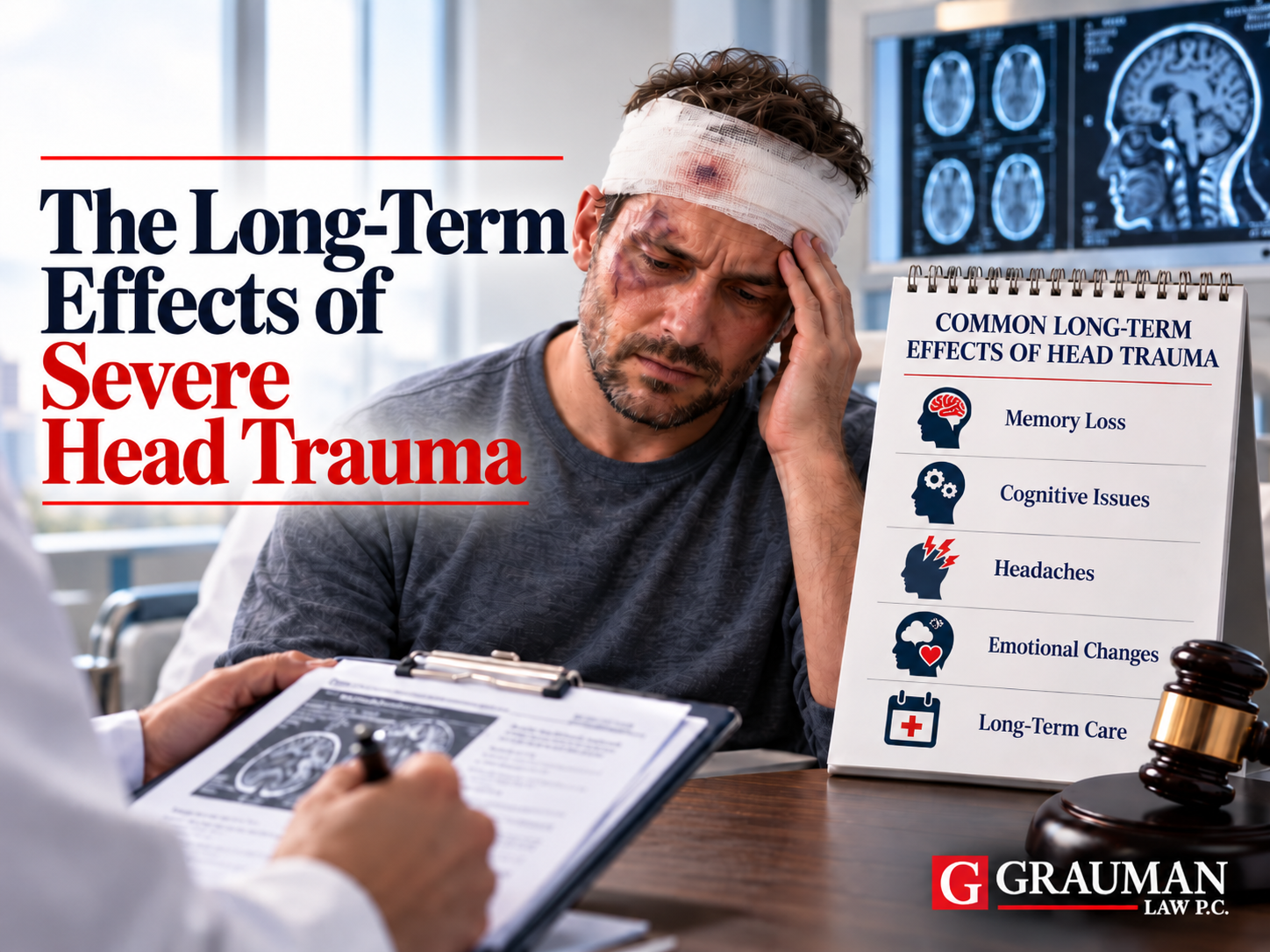
Grauman Law P.C. graphic showing an injured man with a head bandage and the long-term effects of severe head trauma

The Long-Term Effects of Severe Head Trauma

Severe head trauma after an accident can leave lasting effects on both the body and mind. Families in Nassau County who face a traumatic brain injury often have to deal with years of medical and daily life and work challenges. Traumatic Brain Injury Outcomes The first hours after a blow or jolt that damages brain tissue tend to dominate the medical attention, but the full cost of that injury frequently reveals itself only after the initial, acute crisis has passed. Five years after such an event, more than half of those still living remain moderately or severely disabled, and a similar share who once held jobs can no longer work. One in three still needs help with everyday tasks. Ability to Manage Life Memory, attention, processing speed, and the capacity to plan or shift from one task to another often remain impaired for a long time after these injuries, and cognitive change can be the most stubborn and far-reaching consequence. Studies that follow survivors for two years and beyond show that those with the gravest injuries fall further behind their peers on measures of general intellect and executive skill rather than catching up. Physical Complications Physical complications frequently persist as chronic conditions, like post-traumatic epilepsy (which appears in roughly 1/5th of survivors), balance problems, headaches, loss of smell or taste, visual disturbances, and sleep disruption. These are all common enough in survivors that they become chronic conditions rather than symptoms you can expect to improve with time. Hydrocephalus, infections, and damage to blood vessels that later raise stroke risk can all be present and add further complexity to the prognosis. Emotional Life Depression, anxiety, irritability, impulsivity, and reduced empathy appear in traumatic brain injury victims at rates well above those seen in the general population, and these often intensify rather than fade. An umbrella review of more than thirty million participants found elevated risks for psychotic disorders, attention-deficit conditions, suicide, and later dementia. These psychiatric and neurodegenerative associations often don't appear immediately, either. Hormonal Changes The pituitary gland sits at the base of the skull and is therefore vulnerable to impact. It can lose function after the injury, and that can mean hormonal disruption which worsens fatigue, muscle loss, cognitive fog, and emotional instability for years unless it is specifically tested for. Growth hormone deficiency is the most frequent finding, followed by shortages of sex hormones, thyroid hormone, and cortisol. Effects on Nassau County Victims and Families Because these injuries can continue to evolve rather than just resolve, families must arrange ongoing medical surveillance, rehabilitation, and practical support while they also plan for changing needs in housing, transportation, finances, and daily care. Legal questions about the proper compensation for all these costs over a lifetime can be heated and contested when the injury is due to the negligence of someone else. If you or someone close to you is living with the effects of severe head trauma, contact Grauman Law in Kew Gardens, NY for a free consultation. We've been serving Nassau County and New York City for nearly two decades.

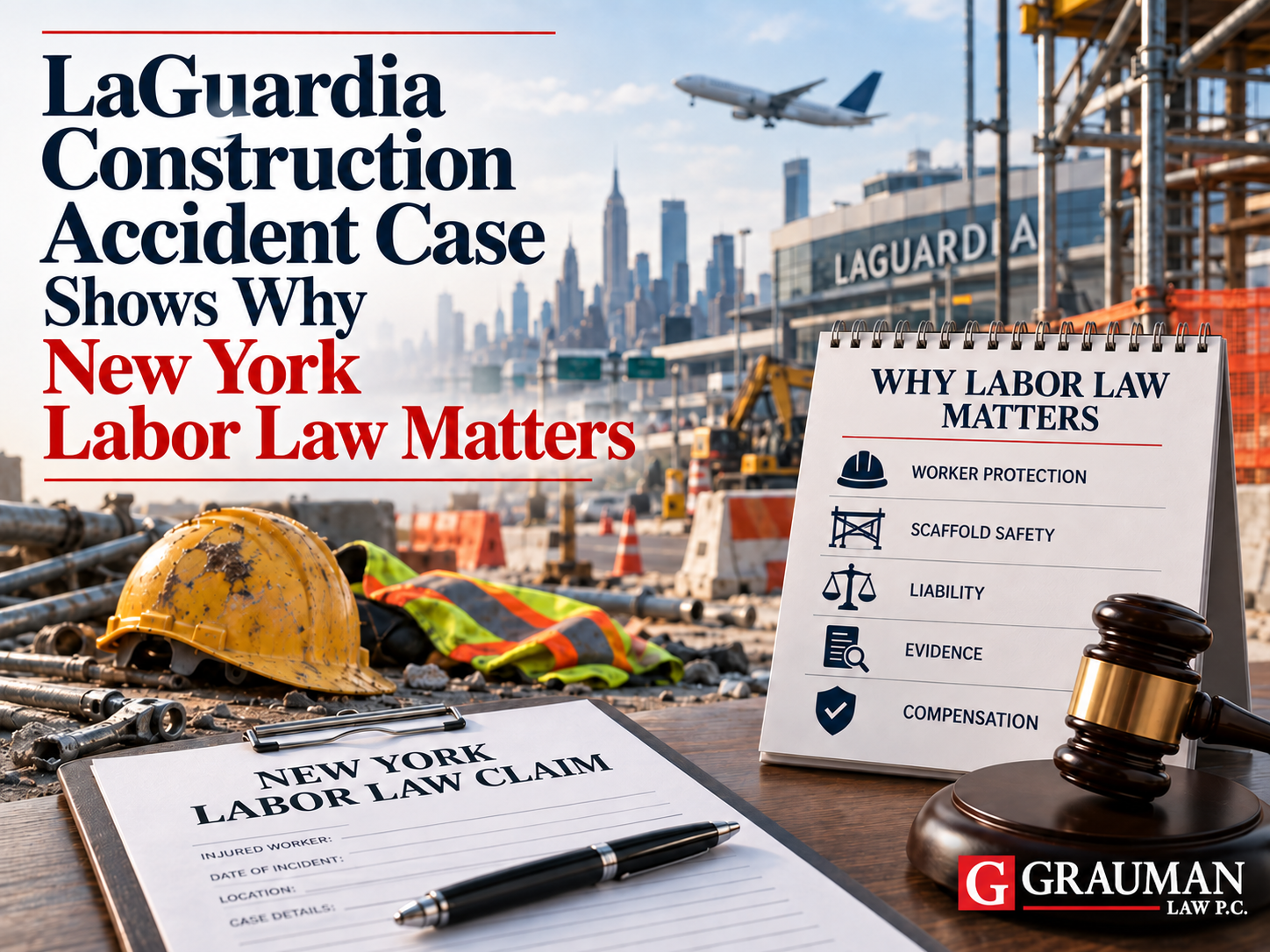
LaGuardia Construction Accident Case Shows Why New York Labor Law Matters

LaGuardia Construction Accident Case Shows Why New York Labor Law Matters

Construction work is one of the most dangerous occupations in New York. Workers regularly face hazards such as falls, falling objects, electrical risks, heavy machinery, and dangerous site conditions. Because of these risks, New York has enacted labor laws designed to protect construction workers and hold owners and contractors accountable when safety violations contribute to injuries. A recent case, McCloskey v. Port Authority of New York and New Jersey, illustrates how these protections can come into play following a workplace accident. The case arose from a major construction project at LaGuardia Airport in Queens and serves as a reminder that injured workers may have legal rights that extend beyond traditional workers' compensation benefits. The Facts of the Case The plaintiff in McCloskey was working on the extensive redevelopment project at LaGuardia Airport. According to the allegations, the plaintiff was employed by Welsbach Electric and was assigned to a night shift involving cable work in underground manholes located within the construction site. As the shift came to an end, the plaintiff left the work area and proceeded through a section of the jobsite. He later testified that the area was poorly illuminated. While walking, the plaintiff stepped on an object, lost his footing, and fell forward. After the incident, he observed pieces of wood scattered throughout the area where he fell. The lawsuit named several entities involved in the project, including the Port Authority of New York and New Jersey and LaGuardia Gateway Partners as property owners, along with Skanska-affiliated entities that served as general contractors. The plaintiff alleged that unsafe construction-site conditions contributed to the accident. Why Construction Site Housekeeping Matters Construction sites are constantly changing environments. Materials, tools, debris, and temporary structures are frequently moved throughout the workday. Because of this, proper housekeeping is a critical component of workplace safety. Hazards that may increase the risk of falls include: Scattered construction materials; Loose lumber; Debris left in walkways; Uneven surfaces; Temporary obstacles; Electrical cords; and Inadequate lighting. Even experienced workers can be injured when work areas are not properly maintained. Construction companies are expected to implement procedures that help keep passageways and work areas reasonably safe for workers moving throughout the site. The Dangers of Poor Lighting on Construction Sites Lighting is one of the most overlooked yet important safety measures on any construction project. Workers rely on adequate illumination to: Identify tripping hazards; Navigate walkways safely; Detect changes in elevation; Avoid construction materials and debris; Operate equipment safely; and Maintain awareness of their surroundings. Night-shift workers may face increased risks when temporary lighting is inadequate or when portions of a construction site remain poorly illuminated. In the McCloskey case, the plaintiff specifically alleged that the area where he fell lacked sufficient lighting, making it difficult to see hazards in his path. Understanding Labor Law § 241(6) One of the central legal issues in the case involved New York Labor Law § 241(6). This statute imposes a duty on owners and contractors to provide reasonable and adequate protection and safety for workers involved in construction, excavation, and demolition activities. Unlike an ordinary negligence claim, Labor Law § 241(6) permits injured workers to pursue claims based upon violations of specific provisions contained in New York's Industrial Code. When applicable safety regulations are violated and those violations contribute to a worker's injury, owners and contractors may face liability. Importantly, these claims are often brought in addition to workers' compensation benefits. What Did the Court Consider? In McCloskey, the plaintiff sought partial summary judgment under Labor Law § 241(6). The plaintiff argued that construction-site safety violations contributed to the accident and that the evidence supported liability under the statute. The litigation focused on whether conditions at the worksite—including the alleged presence of scattered wood and inadequate lighting—violated applicable safety requirements and contributed to the plaintiff's fall. As with many Labor Law cases, the court's analysis centered on the specific circumstances surrounding the accident and whether the alleged safety violations were sufficient to support the claim. Why Construction Workers May Have Claims Beyond Workers' Compensation Many injured workers assume that workers' compensation is their only available remedy after a workplace accident. However, construction accidents often involve additional legal claims against parties other than the injured worker's direct employer. Depending on the circumstances, an injured worker may have claims against: Property owners; General contractors; Construction managers; Subcontractors; or Other responsible third parties. These claims can be significant because they may allow recovery for damages that are generally unavailable through workers' compensation, including pain and suffering. This is one reason why New York Labor Law plays such an important role in construction injury litigation. Common Construction Site Fall Hazards The allegations in McCloskey involve conditions that frequently appear in construction accident cases throughout New York. Common hazards include: Poor Housekeeping Loose materials and debris can create dangerous tripping hazards. Inadequate Lighting Workers cannot avoid hazards they cannot see. Obstructed Walkways Passageways should remain reasonably clear to allow safe movement throughout the jobsite. Unsafe Temporary Conditions Construction sites often contain changing conditions that require constant monitoring and maintenance. Failure to Follow Safety Regulations Industrial Code violations may provide the basis for Labor Law claims when safety requirements are ignored. Why This Case Matters to Queens Workers Few construction projects have been as visible in Queens as the ongoing redevelopment of LaGuardia Airport. Thousands of workers have participated in the transformation of one of New York City's busiest transportation hubs. Because the accident occurred at LaGuardia Airport, the case has particular significance for workers throughout Queens who perform construction, electrical, infrastructure, and transportation-related work. The decision serves as a reminder that even routine tasks performed at the end of a shift can become dangerous when proper safety measures are not maintained. Key Takeaways From McCloskey v. Port Authority of New York and New Jersey The case highlights several important principles: Construction Sites Must Be Maintained Safely Owners and contractors have responsibilities regarding site safety and housekeeping. Poor Lighting Can Contribute to Serious Injuries Adequate lighting is essential, particularly on night shifts and large construction projects. Construction Workers May Have Rights Beyond Workers' Compensation Labor Law claims may provide additional avenues of recovery when safety violations contribute to an accident. Labor Law § 241(6) Remains an Important Protection New York's Labor Law continues to provide important safeguards for workers injured because of unsafe construction-site conditions. Conclusion The case of McCloskey v. Port Authority of New York and New Jersey demonstrates how seemingly simple hazards—such as scattered construction materials and inadequate lighting—can lead to serious workplace injuries. Arising from the massive LaGuardia Airport redevelopment project in Queens, the case underscores the importance of maintaining safe jobsite conditions and complying with New York's construction safety regulations. For construction workers injured on the job, the case serves as an important reminder that workers' compensation may not be the only source of recovery. When unsafe construction-site conditions violate New York Labor Law, injured workers may have additional legal rights against owners, contractors, and other responsible parties.

LaGuardia Construction Accident Case Shows Why New York Labor Law Matters

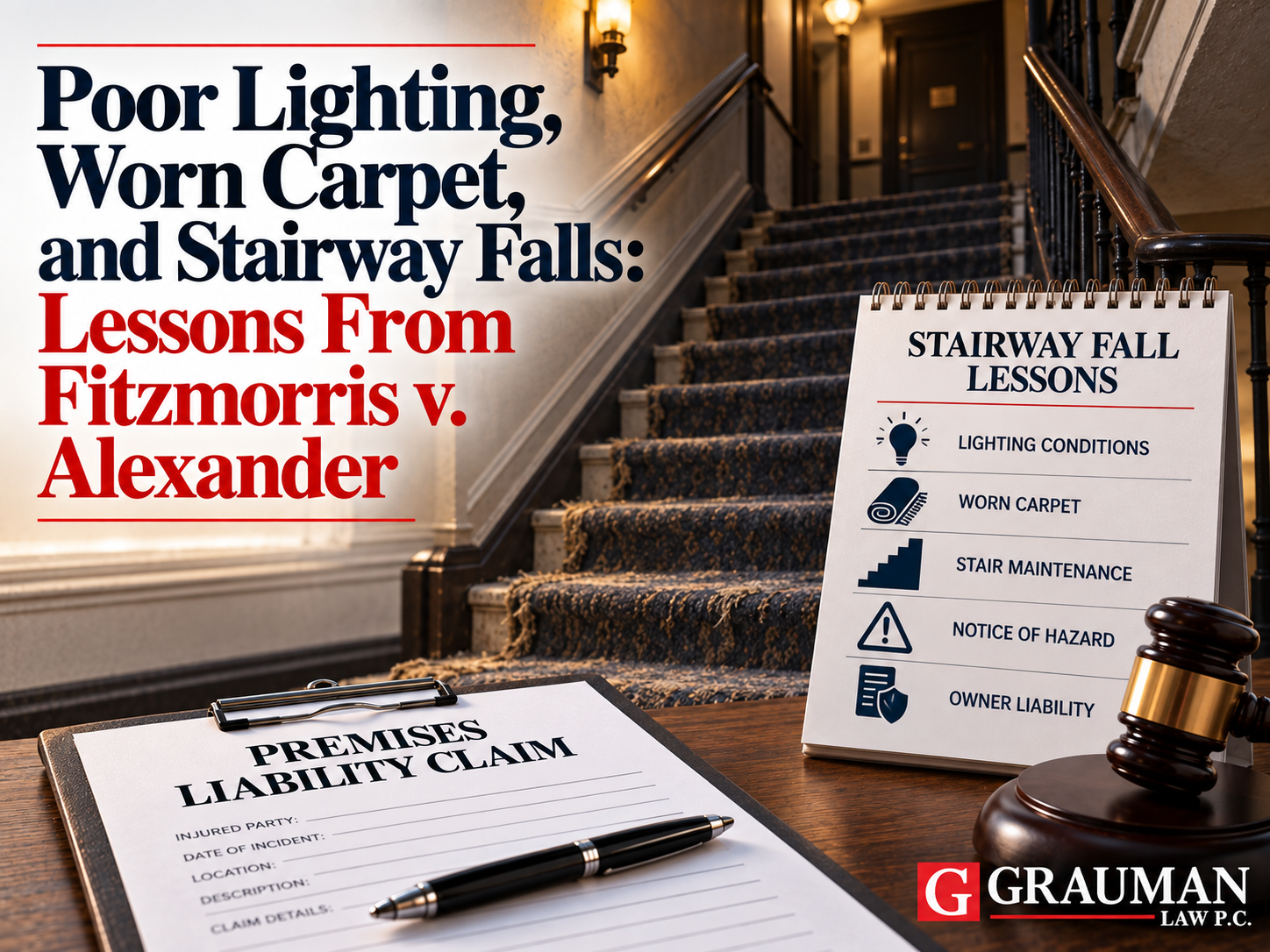
Poor Lighting, Worn Carpet, and Stairway Falls: Lessons From Fitzmorris v. Alexander

Falls on stairways are among the most common causes of serious injuries in apartment buildings. While many falls are initially dismissed as simple accidents, dangerous property conditions such as inadequate lighting, loose handrails, or worn flooring can significantly increase the risk of injury. A recent New York case, Fitzmorris v. Alexander, demonstrates how courts evaluate premises liability claims when a tenant alleges that unsafe stairway conditions contributed to a fall. The decision highlights an important principle of New York law: property owners may be held accountable when hazardous conditions create an unreasonable risk of injury. For residents of Queens, where thousands of people live in multi-family apartment buildings with shared staircases, the case serves as an important reminder that landlords have a responsibility to maintain common areas in a reasonably safe condition. The Facts of the Case In Fitzmorris v. Alexander, the plaintiff alleged that he was injured while ascending a staircase leading to his second-floor apartment. According to the plaintiff's testimony, several conditions may have contributed to the accident. He stated that poor lighting made it difficult to see where he was stepping as he climbed the stairs. He also testified that either his foot slipped or the handrail moved or shook when he attempted to use it for support. In addition, the plaintiff alleged that worn carpeting on the stairway contributed to the dangerous condition. After suffering injuries in the fall, the plaintiff brought a premises liability lawsuit against the property owner. Why Stairway Accidents Often Lead to Premises Liability Claims Staircases present unique safety concerns because they require individuals to navigate changes in elevation while maintaining balance and footing. Even a minor defect can significantly increase the risk of a fall. Common stairway hazards include: Inadequate lighting; Loose or defective handrails; Worn carpeting; Uneven steps; Missing stair treads; Broken flooring materials; Debris on stairs; and Building code violations. When one or more of these conditions exists, property owners may face liability if they knew or should have known about the hazard and failed to correct it within a reasonable period of time. The Importance of Proper Lighting Lighting is one of the most important safety features in any stairwell. People rely on adequate illumination to: Judge the height and depth of steps; Identify changes in flooring surfaces; Detect obstacles; Maintain balance; and Safely use handrails. Poor lighting can make otherwise manageable stairways dangerous, particularly in apartment buildings where tenants use common staircases every day. In the Fitzmorris case, the plaintiff testified that inadequate lighting prevented him from clearly seeing where he was stepping. This allegation became one of several factors supporting the continuation of his claim. Why Handrails Matter Handrails are designed to provide stability and support when ascending or descending stairs. A properly installed and maintained handrail can help prevent a loss of balance from turning into a serious fall. However, if a handrail is loose, unstable, or improperly secured, it may fail when a person attempts to use it. According to the plaintiff's testimony, the handrail either moved or shook as he was climbing the stairs. Whether the handrail was defective became part of the broader factual dispute concerning the cause of the accident. When investigating stairway injury cases, evidence regarding handrail maintenance, repairs, inspections, and building code compliance often becomes critically important. The Dangers of Worn Carpet and Flooring Flooring conditions can also play a significant role in stairway accidents. Over time, carpeting may become: Frayed; Loose; Uneven; Torn; or Excessively worn. When carpet deteriorates, it can create tripping and slipping hazards, particularly on staircases where footing is already limited. The plaintiff in Fitzmorris alleged that worn carpeting contributed to the fall. Such allegations are common in apartment building cases where flooring materials have not been properly maintained or replaced despite years of use. What Did the Court Decide? The Appellate Division allowed the plaintiff's premises liability claim to proceed. The defendant argued that the plaintiff could not identify the precise cause of his fall and therefore could only speculate about what happened. The court disagreed. The Appellate Division found that the defendant failed to establish that the plaintiff's account of the accident was purely speculative. The plaintiff had identified specific conditions that allegedly contributed to the fall, including poor lighting, the movement of the handrail, and worn carpeting. Because factual issues remained regarding the cause of the accident and the condition of the stairway, dismissal of the case was not appropriate. As a result, the plaintiff was permitted to continue pursuing his claims against the property owner. Why Property Owners Cannot Always Escape Liability by Claiming the Cause Is Unknown One of the most common defenses in slip-and-fall and stairway accident cases is the argument that the injured person cannot identify exactly what caused the fall. If a plaintiff truly cannot determine whether they slipped, tripped, lost balance, or fell for some unrelated reason, proving negligence can become difficult. However, Fitzmorris illustrates that courts will closely examine the evidence before concluding that a plaintiff's claim is speculative. When an injured person can point to identifiable dangerous conditions that may have contributed to the accident, a property owner may not be entitled to dismissal simply by arguing that the exact mechanism of the fall remains disputed. What This Means for Injury Victims The decision in Fitzmorris v. Alexander demonstrates that premises liability cases often involve detailed factual investigations. Evidence that may become important includes: Photographs of the stairway; Maintenance records; Building inspection reports; Prior complaints from tenants; Witness testimony; Surveillance footage; and Expert evaluations of the property condition. In many cases, conditions such as inadequate lighting or worn flooring may be repaired shortly after an accident. Prompt documentation can therefore be critical. Stairway Hazards in Queens Apartment Buildings Queens contains thousands of apartment buildings ranging from small multi-family homes to large residential complexes. Residents in neighborhoods such as: Astoria; Long Island City; Flushing; Jamaica; Forest Hills; Rego Park; Jackson Heights; and Kew Gardens often rely on common stairways every day. When staircases are not properly maintained, serious injuries can occur, including: Broken bones; Head injuries; Back injuries; Shoulder injuries; Knee injuries; and Permanent mobility impairments. Because of these risks, landlords and property owners have a continuing obligation to maintain common areas in a reasonably safe condition. Key Takeaways From Fitzmorris v. Alexander The case offers several important lessons for tenants and property owners alike: Poor Lighting Can Create Dangerous Conditions Property owners should ensure that stairwells and common areas are adequately illuminated. Handrails Must Be Properly Maintained Loose or unstable handrails can contribute to serious falls and may expose a property owner to liability. Worn Flooring May Create Liability Risks Damaged or deteriorated carpeting can become a hazardous condition if left unaddressed. Premises Liability Cases Often Involve Questions of Fact Courts frequently allow cases to proceed when evidence exists that unsafe property conditions may have contributed to an accident. Conclusion The decision in Fitzmorris v. Alexander highlights how multiple property defects—including poor lighting, worn carpeting, and a potentially unstable handrail—can contribute to a stairway accident. The Appellate Division determined that the defendant failed to show that the plaintiff's account was merely speculative, allowing the premises liability claim to continue. For Queens residents, the case serves as an important reminder that stairway safety is not optional. Property owners and landlords must take reasonable steps to maintain lighting, flooring, handrails, and other common-area features to help protect tenants and visitors from preventable injuries.

Grauman Law P.C. graphic showing a rented moped crash scene and wrongful death claim documents in New York

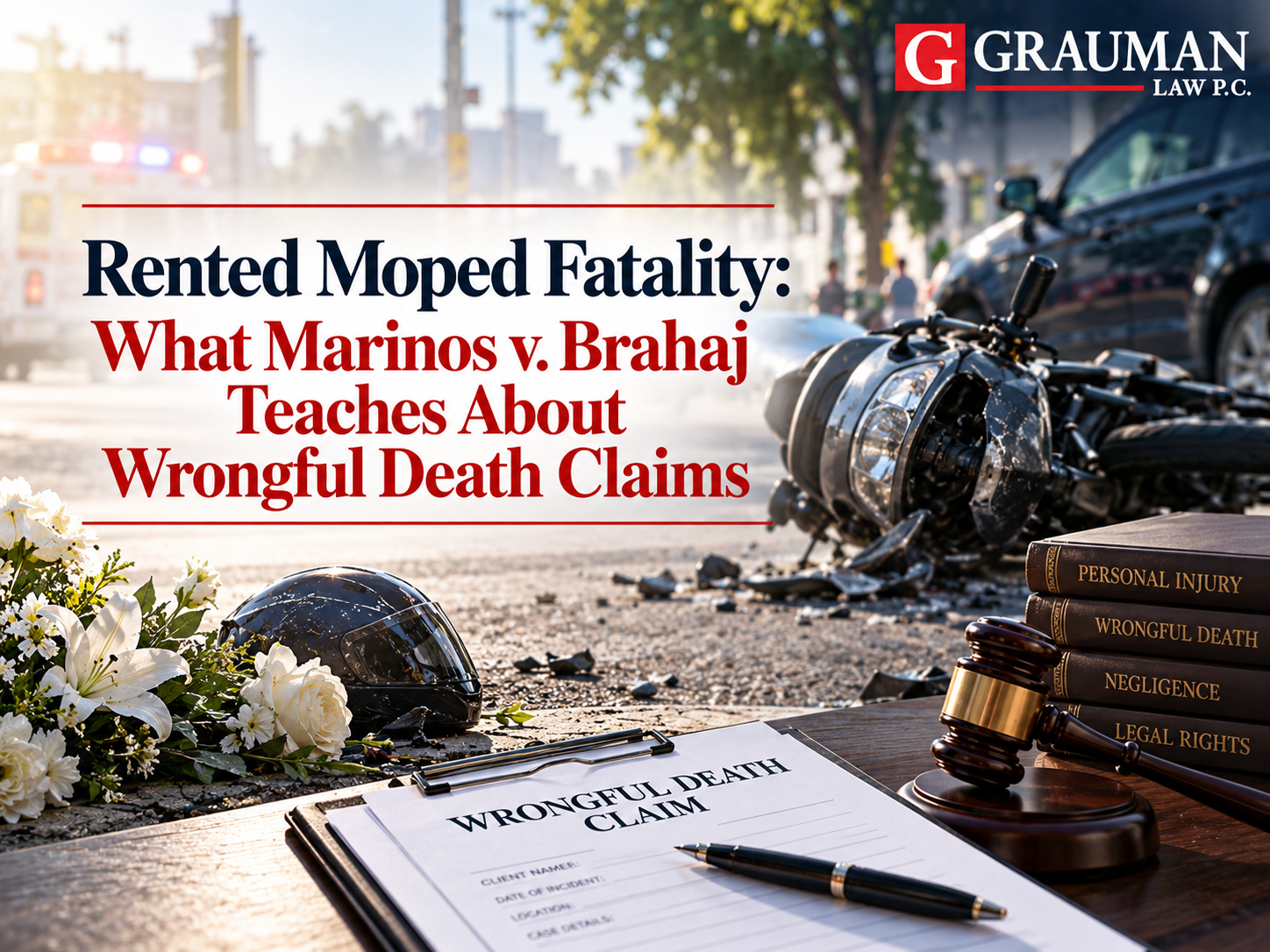
Rented Moped Fatality: What Marinos v. Brahaj Teaches About Wrongful Death Claims

As electric scooters, mopeds, and app-based transportation services become increasingly common throughout New York City, accidents involving these vehicles have become more frequent. While many crashes result in serious injuries, some tragically lead to fatalities that leave families searching for answers and accountability. A recent New York case, Marinos v. Brahaj, addresses an important legal issue that arises in many modern transportation-related accidents: whether a person’s agreement to arbitrate disputes can prevent surviving family members from pursuing a wrongful death claim in court. The decision provides valuable guidance for families facing the aftermath of a fatal accident and highlights a critical distinction between personal injury claims and wrongful death actions under New York law. The Facts of the Case In Marinos v. Brahaj, the decedent rented and operated a Revel electric moped in Manhattan. According to the case, the rider was ejected from the moped and thrown into the roadway, where he was subsequently struck by a vehicle. The accident resulted in fatal injuries. Following the tragedy, the decedent's parents brought legal claims arising from the incident, including claims related to personal injury and wrongful death. The defendants sought to compel arbitration based on an agreement the decedent had allegedly accepted when renting the moped through the Revel mobile application. Like many app-based services, the rental platform included terms and conditions that contained an arbitration provision requiring certain disputes to be resolved outside of court. The central legal question became whether that arbitration agreement also applied to the wrongful death claims brought by the decedent's parents. The Growing Role of Arbitration Agreements in Modern Transportation Services Today, consumers routinely agree to digital contracts when using: Ride-share services; Scooter rental platforms; Moped-sharing services; Bike-sharing programs; Delivery applications; and Various transportation-related apps. These agreements often contain arbitration clauses that require disputes to be resolved through private arbitration rather than traditional court proceedings. Many users accept these terms by simply clicking a button within an application, often without reading the full agreement. As a result, arbitration provisions have become increasingly important in litigation involving app-based transportation services. However, the existence of an arbitration agreement does not automatically resolve every legal issue, particularly when family members bring claims after a fatal accident. Understanding the Difference Between Personal Injury and Wrongful Death Claims One of the most important aspects of Marinos is the distinction between personal injury claims and wrongful death claims. Although they often arise from the same accident, these causes of action are legally different. Personal Injury Claims A personal injury claim generally belongs to the injured individual. The claim seeks compensation for losses suffered by that person, including: Medical expenses; Pain and suffering; Lost wages; Disability; Loss of enjoyment of life; and Other accident-related damages. Because these claims belong to the injured person, agreements signed by that individual may affect how those claims are resolved. Wrongful Death Claims A wrongful death claim is different. Under New York law, a wrongful death action is brought on behalf of eligible family members or distributees who suffer losses as a result of the death. These claims are separate from the decedent's personal injury rights and seek damages associated with the losses suffered by surviving family members. This distinction became the key issue in Marinos v. Brahaj. What Did the Court Decide? The Appellate Division held that the parents' wrongful death claim was not subject to the arbitration clause that the decedent allegedly agreed to when renting the Revel moped. The court explained that the wrongful death cause of action belongs to the distributees rather than to the decedent. Because the wrongful death claim is legally distinct from the personal injury claim that belonged to the rider, the arbitration agreement could not automatically bind the parents with respect to their independent wrongful death rights. As a result, the wrongful death claim was permitted to proceed outside of arbitration. The decision reinforces the principle that wrongful death actions are separate legal claims belonging to surviving family members, not merely extensions of the decedent's personal injury claim. Why This Decision Matters The Marinos ruling has implications far beyond moped accidents. Many companies increasingly rely on arbitration provisions in consumer agreements. These clauses frequently appear in: Transportation apps; Vehicle rental agreements; Subscription services; Online marketplaces; Delivery platforms; and Technology-based services. The case demonstrates that courts may distinguish between claims belonging to the individual who signed an agreement and claims belonging to surviving family members after a fatal accident. For families, this distinction can significantly affect where and how a case is litigated. The Rise of Scooter and Moped Accidents in New York City Micromobility services have transformed transportation throughout New York City. Electric scooters, bicycles, and mopeds offer convenient alternatives to traditional transportation, particularly in densely populated neighborhoods. However, these vehicles also expose riders to significant risks. Unlike occupants of passenger vehicles, riders generally lack substantial protection during a collision. Common causes of serious scooter and moped accidents include: Vehicle collisions; Roadway defects; Driver inattention; Unsafe lane changes; Opening vehicle doors; Traffic congestion; and Loss of vehicle control. Because riders are largely unprotected, injuries can be catastrophic. What Families Should Know After a Fatal Accident When a fatal accident occurs, families are often overwhelmed by grief while simultaneously facing legal, financial, and practical challenges. Potential issues may include: Funeral expenses; Medical bills; Loss of financial support; Investigation of the accident; Insurance claims; Potential litigation; and Questions regarding liability. Cases involving rental vehicles, app-based services, or transportation platforms may also involve complex contractual issues, including arbitration provisions and liability limitations. The Marinos decision illustrates why these cases often require careful legal analysis before assumptions are made about a family's rights. Why This Case Is Especially Relevant in Queens Queens residents regularly encounter: Revel mopeds; Citi Bikes; Electric scooters; Ride-share vehicles; Delivery riders; and Other app-based transportation services. Busy corridors in neighborhoods such as Astoria, Long Island City, Jackson Heights, Flushing, Jamaica, and Forest Hills see substantial micromobility traffic every day. As these transportation options continue to grow in popularity, legal disputes involving rental agreements, accident liability, and wrongful death claims are likely to become increasingly common. The principles discussed in Marinos therefore have direct relevance to families throughout Queens and New York City. Key Takeaways From Marinos v. Brahaj The case provides several important lessons: Wrongful Death Claims Are Legally Distinct A wrongful death action belongs to surviving distributees and is separate from the decedent's personal injury claim. Arbitration Clauses Do Not Always Control Every Claim The existence of an arbitration agreement does not automatically determine the rights of surviving family members. App-Based Transportation Services Create Unique Legal Issues Rental agreements, mobile applications, and digital contracts can significantly affect litigation following a serious accident. Families May Have Independent Rights Even when an injured person entered into a contractual agreement, surviving family members may retain separate legal claims under New York law. Conclusion The decision in Marinos v. Brahaj highlights an important aspect of New York wrongful death law. Although the decedent rented a Revel moped through an application containing an arbitration provision, the Appellate Division determined that the parents' wrongful death claim belonged to them as distributees and was not automatically subject to the arbitration agreement. For families coping with the loss of a loved one in a scooter, moped, bicycle, ride-share, or other transportation-related accident, the case serves as a reminder that wrongful death claims often involve rights that are legally distinct from those held by the deceased person. As transportation technology continues to evolve throughout New York City, these legal principles will remain increasingly important for accident victims and their families.

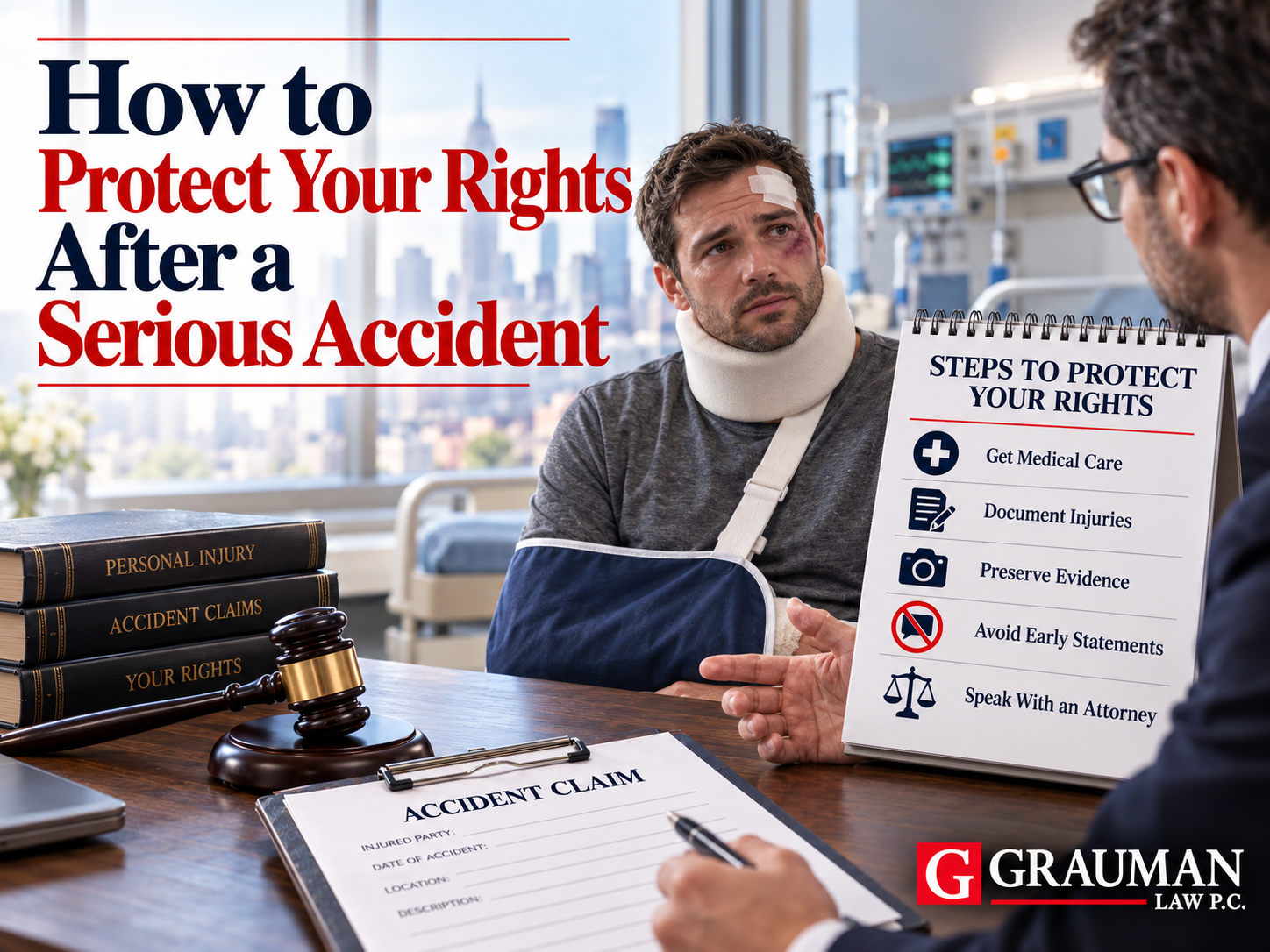
Grauman Law P.C. graphic showing an injured accident victim and steps to protect your rights after a serious accident

How to Protect Your Rights After a Serious Accident

In the days after serious car accidents here in Queens, victims typically start to have questions about their rights and how to protect them. Here's what you need to know. Protecting Your Rights After Car Accidents in Queens Stick to Your Medical Plan Follow every recommendation from your doctors and specialists, even if you start to think you're feeling better and would rather stop. Attend physical therapy, complete all prescribed tests, and report new or changing symptoms right away. This creates a medical record that clearly links your injuries to the crash, and it also protects you from unfair accusations (insurers like to challenge claims when the medical treatment stops and restarts). Start Keeping a Journal A simple daily journal is more effective evidence of what you've suffered than trying to talk about it all weeks or months later. Write down every day how much pain you felt, whether you had difficulty sleeping, any limitations you had with respect to work or chores, and the emotional effects of it all. This provides evidence that medical records and bills can't quantify. Get Organized Find and organize every piece of paper related to the crash, and act as quickly as you can. Create one folder for medical bills, insurance statements, prescription receipts, and visit summaries. Create another for your pay stubs or employer letters that show time you've missed from work. In a different file, include receipts for transportation to appointments, home modifications, or extra help around the house. Finally, keep a file with all communication you have with the insurance company and your lawyer. Watch What You Say to Insurers Notify your own insurer if you have not already done so, but limit your statements to just the basic facts. Always decline to give any recorded statements until you've talked to your lawyer, and never accept an early settlement offer without legal advice. Once you sign a release, you usually cannot reopen the claim even if it turns out that your damages are greater than you expected. Keep Evidence If your vehicle has not yet been repaired or sold, keep it intact so experts can examine it later. Request that any event data recorder information stay available. Get the information of any witnesses to your lawyer so your lawyer can confirm their willingness to speak, and give your lawyer all the information you have or remember about businesses or property owners near where the accident took place. Your lawyer can send a letter asking them to hold any surveillance video that may still exist. Don't Discuss Your Case Stay off social media when it comes to the crash or your recovery, and remember that any photos or comments that imply you're active can be taken out of context and used to argue that injuries aren't very serious. Do not discuss the details of the case with anyone except your doctors and legal counsel. Talk to a Lawyer Contact Grauman Law P.C. in Kew Gardens or Forest Hills as soon as possible to speak with a team that has over 50 years of experience representing the people of Queens and all of NYC.

Contact Us

Fill out this form below and we'll contact you shortly
*Required Fields