Get A Free Case Evaluation

We handle both personal injury and criminal defense. Please fill out the form below for your free consultation or call us at 347-620-2865.

Blog

All Personal Injury Criminal Law Civil Rights Law Employment & Labor Law Financial Law
in Personal Injury

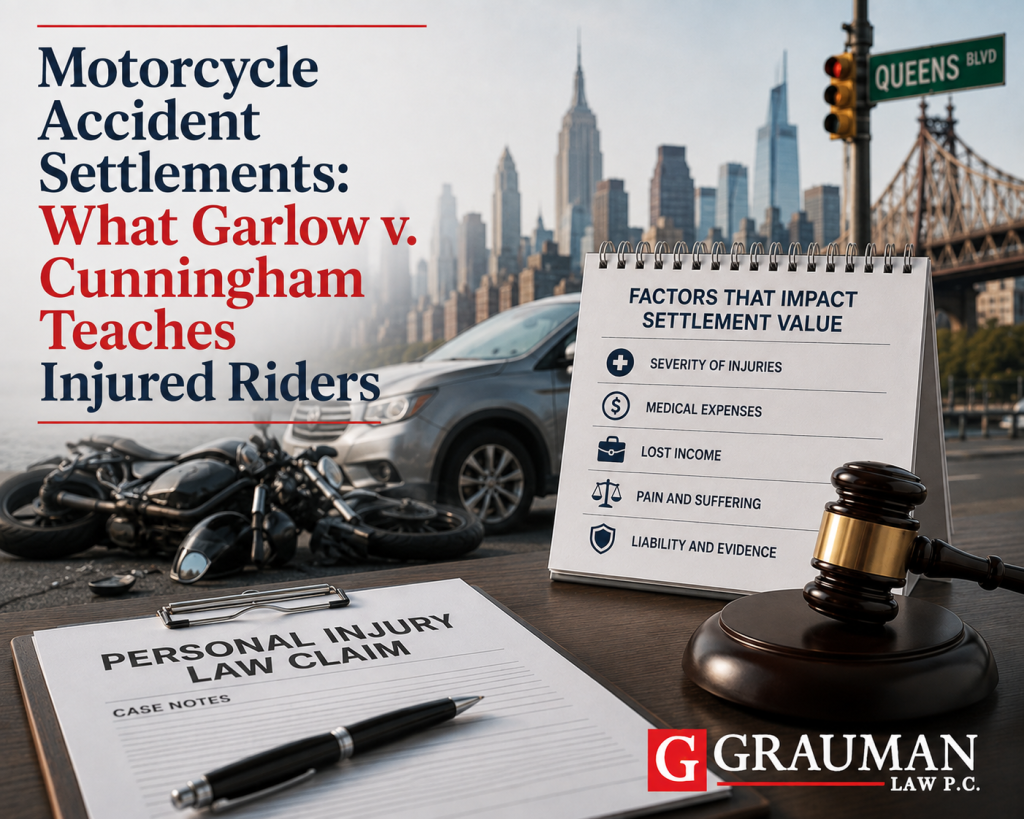
Motorcycle Accident Settlements: What Garlow v. Cunningham Teaches Injured Riders

Motorcycle accidents often result in serious injuries, substantial medical expenses, and significant property damage. After a crash, insurance companies frequently move quickly to negotiate a settlement, sometimes before the injured rider fully understands the extent of their losses. A recent New York case, Garlow v. Cunningham, highlights an important lesson for motorcyclists: the language contained in a settlement agreement can have a major impact on the rights you retain—and the rights you give up. The decision demonstrates why accident victims should carefully review any release or settlement document before signing it. more The Facts of the Case In Garlow v. Cunningham, the plaintiff was injured in a collision involving his motorcycle and the defendant's vehicle. Following the accident, the defendant's insurance carrier attempted to resolve the claims arising from the crash. According to the case, the insurer offered $100,000 to settle both the plaintiff's personal injury claims and his property damage claims. The plaintiff, however, did not agree to the settlement exactly as proposed. Instead, when presented with a release, the plaintiff modified the document to exclude his property damage claim. By making this change, the rider sought to preserve his ability to pursue compensation for damage to his motorcycle and related property losses while addressing the injury claim separately. The dispute eventually centered on whether a binding settlement had been reached. Why Settlement Agreements Matter After a Motorcycle Accident Many accident victims assume that once an insurance company offers compensation, the primary concern is simply the dollar amount being paid. In reality, the language contained within a settlement agreement is often just as important as the settlement figure itself. Settlement documents typically contain a release, which is a legal agreement in which the injured party agrees to give up certain claims in exchange for compensation. Depending on the wording, a release may affect: Personal injury claims; Property damage claims; Medical expenses; Lost wage claims; Future treatment costs; Pain and suffering damages; and Other rights arising from the accident. Once a valid release is signed and accepted, it can become extremely difficult—or impossible—to pursue additional compensation later. For this reason, courts closely examine whether both parties actually agreed to the same settlement terms. What Did the Court Decide? The court determined that there was no enforceable settlement agreement covering all of the claims that the defendant asserted had been resolved. The key issue was that the plaintiff modified the release before signing it. Because the rider altered the proposed agreement by excluding his property damage claim, the signed release did not match the terms originally offered by the insurance carrier. In contract law, a material change to proposed settlement terms can prevent the formation of a binding agreement if the parties have not mutually agreed to the same terms. As a result, the court declined to enforce the alleged settlement in the manner requested by the defendant. The decision illustrates a fundamental legal principle: for a settlement to be enforceable, both parties must agree to the same material terms. Understanding the Difference Between Injury Claims and Property Damage Claims One of the most important takeaways from Garlow is that personal injury claims and property damage claims are often separate components of a motorcycle accident case. Personal Injury Claims These claims generally seek compensation for losses related to physical injuries, including: Medical bills; Future medical treatment; Lost wages; Reduced earning capacity; Pain and suffering; and Other accident-related damages. Property Damage Claims Property damage claims typically involve compensation for: Motorcycle repair costs; Fair market value of a totaled motorcycle; Damaged riding gear; Helmets; Electronics; and Other personal property damaged in the collision. Although insurers sometimes attempt to resolve all claims simultaneously, accident victims may wish to address these issues separately depending on the circumstances of the case. Why Motorcycle Accident Victims Must Review Releases Carefully Insurance companies routinely use releases to finalize claims. Once signed, these documents can have significant legal consequences. Before signing any settlement paperwork, injured riders should understand: What Claims Are Being Released Some releases apply only to property damage, while others apply to all claims arising from the accident. Whether Future Medical Treatment Is Covered Motorcycle accident injuries sometimes worsen over time. Settling too early may prevent recovery for future treatment costs. Whether All Damages Have Been Evaluated Before accepting a settlement, it is important to understand the full extent of medical expenses, lost income, and other damages. Whether the Settlement Reflects the Actual Value of the Claim A settlement may appear attractive initially but fail to account for long-term consequences of the injuries. The Garlow decision serves as a reminder that even seemingly minor language changes can have significant legal implications. Motorcycle Accidents Often Result in Serious Injuries Unlike occupants of passenger vehicles, motorcyclists have very little protection during a collision. Even relatively low-speed crashes can result in: Traumatic brain injuries; Broken bones; Spinal injuries; Road rash; Internal injuries; Shoulder injuries; and Permanent disabilities. Because of the severity of these injuries, the financial stakes in motorcycle accident claims are often substantial. A settlement agreement signed too early or without careful review can significantly affect an injured rider's ability to recover full compensation. What This Means for Queens Motorcyclists Queens presents unique risks for motorcyclists due to heavy traffic, congested intersections, and frequent lane changes by other drivers. Motorcycle accidents regularly occur throughout: Long Island City; Astoria; Flushing; Jamaica; Forest Hills; Rego Park; Jackson Heights; and Kew Gardens. Following a crash, insurance adjusters may contact injured riders quickly in an effort to resolve claims. While settlement discussions are a normal part of the process, Garlow v. Cunningham demonstrates why riders should fully understand the legal effect of any release before signing. Key Takeaways From Garlow v. Cunningham The case offers several important lessons for motorcycle accident victims: Settlement Language Matters The wording of a release can determine which claims remain available and which claims are permanently resolved. Injury and Property Damage Claims May Be Treated Separately A rider may have distinct claims for bodily injuries and motorcycle damage. Both Parties Must Agree to the Same Terms A settlement generally cannot be enforced when the parties have not mutually agreed to identical material terms. Never Rush Into Signing Insurance Paperwork Accident victims should understand exactly what rights they are giving up before accepting a settlement. Conclusion The decision in Garlow v. Cunningham highlights the importance of carefully reviewing settlement agreements after a motorcycle accident. Although the insurer attempted to settle both the injury and property damage portions of the claim, the plaintiff modified the release to preserve certain rights. Because the signed document did not match the insurer's proposed terms, the court declined to enforce the settlement as the defendant requested. For injured motorcyclists in Queens and throughout New York, the case serves as an important reminder that settlement documents are more than mere paperwork. The language of a release can significantly affect future legal rights, making it essential to understand exactly what claims are being resolved before signing any agreement.

Read More

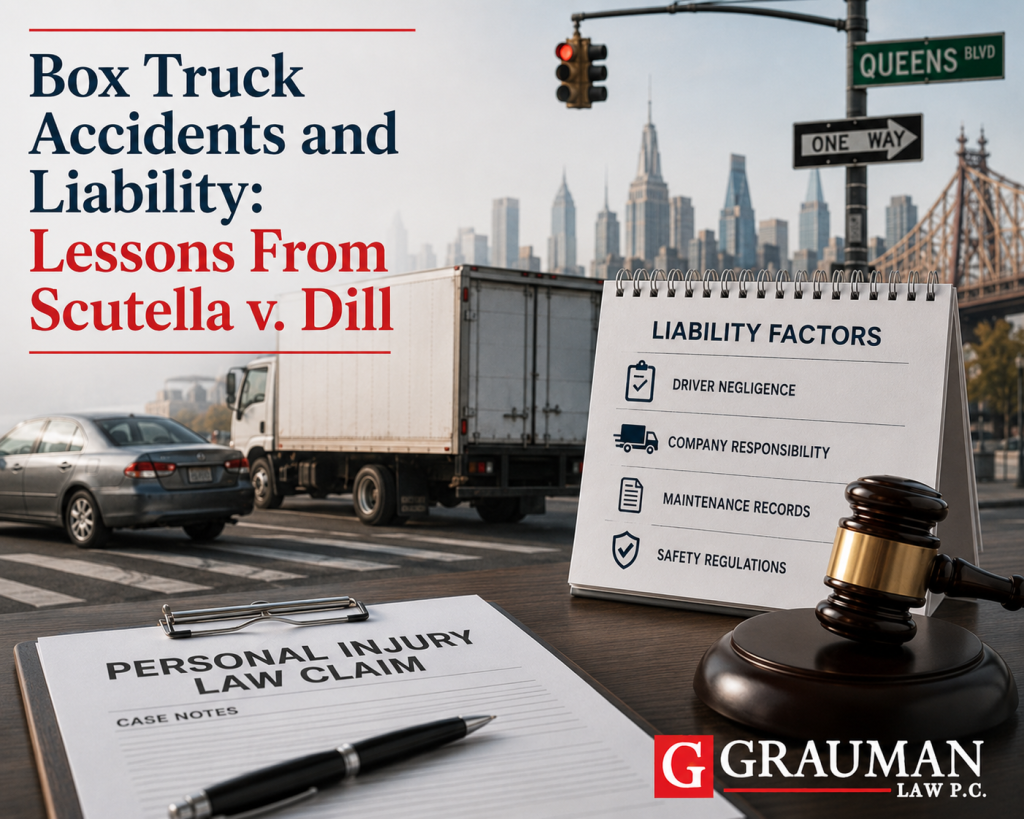
Box Truck Accidents and Liability: Lessons From Scutella v. Dill

Commercial trucks are a common sight throughout Queens, particularly in busy neighborhoods where deliveries occur throughout the day. While these vehicles play an important role in keeping businesses supplied, they can also create dangerous conditions when drivers perform backing maneuvers or obstruct active traffic lanes. A recent New York case, Scutella v. Dill, provides insight into how courts evaluate liability in truck accident cases involving blocked roadways and backing vehicles. The decision serves as a reminder that commercial drivers have a duty to operate their vehicles safely and that questions of negligence often arise when a truck creates a hazard for other motorists. more The Facts of the Case In Scutella v. Dill, the plaintiff alleged that she suffered injuries when her vehicle collided with a box truck that was backing into a driveway. According to the allegations, the truck driver was in the process of reversing the vehicle when the truck blocked the plaintiff's lane of travel. The plaintiff's vehicle subsequently struck the truck, resulting in injuries and a personal injury lawsuit. The defendant argued that the plaintiff was solely responsible for the collision and sought dismissal of the case. However, the plaintiff contended that the truck driver's actions created a dangerous roadway condition and contributed to the accident. The dispute ultimately reached the Appellate Division, which was tasked with determining whether the defendant had established entitlement to judgment as a matter of law. Why Backing Truck Accidents Are Often Legally Complex Unlike many rear-end collisions or intersection crashes, accidents involving backing commercial vehicles frequently involve multiple questions of fact. When a truck driver reverses into a roadway or blocks a lane of travel, courts may consider several factors, including: Whether the driver maintained a proper lookout; Whether the backing maneuver was performed safely; Whether warning devices or signals were used; Whether the driver could adequately see approaching traffic; Whether the truck obstructed the roadway for an unreasonable period of time; and Whether the driver exercised reasonable care under the circumstances. Because large commercial vehicles often have significant blind spots, backing maneuvers can present unique dangers to nearby motorists. What Did the Court Decide? The Appellate Division reinstated the plaintiff's complaint, allowing the lawsuit to proceed. The court explained that the defendant had the burden of demonstrating either that he was not negligent or that any alleged negligence was not a proximate cause of the accident. Importantly, the court found that unresolved factual questions remained regarding the truck driver's conduct. Specifically, issues existed concerning whether the defendant maintained a proper lookout and whether he acted reasonably while backing the truck into the driveway. Because these questions could not be resolved as a matter of law, the defendant was not entitled to dismissal of the case. As a result, the plaintiff was permitted to continue pursuing her claims. The Importance of Reasonable Care for Commercial Drivers Commercial drivers are not automatically liable simply because an accident occurs. However, they are expected to operate their vehicles with reasonable care under the circumstances. This duty becomes especially important when a driver is performing a backing maneuver. Backing a large truck into a driveway, loading area, or commercial property often requires careful attention to surrounding traffic. A driver must remain aware of approaching vehicles, pedestrians, cyclists, and other roadway users. When a truck blocks an active lane of travel, questions may arise regarding whether the maneuver was performed safely and whether sufficient precautions were taken to avoid creating a hazard. The Scutella decision demonstrates that courts closely examine these circumstances before determining whether a commercial driver bears responsibility for a crash. Common Causes of Box Truck Accidents Box truck accidents occur for many reasons, particularly in densely populated urban areas like Queens. Some of the most common contributing factors include: Unsafe Backing Maneuvers Backing accidents often occur when drivers fail to adequately monitor surrounding traffic or misjudge the available space. Obstructed Traffic Lanes A truck that blocks part or all of a travel lane can create a sudden hazard for approaching motorists. Limited Visibility Commercial trucks frequently have significant blind spots that make it difficult for drivers to see vehicles approaching from certain angles. Driver Distraction Like all motorists, commercial drivers can become distracted by phones, navigation systems, delivery schedules, or other factors. Congested Urban Roadways Heavy traffic conditions often leave drivers with little time to react when a truck unexpectedly enters or obstructs their lane. What This Means for Injury Victims The outcome of Scutella v. Dill highlights an important principle of New York personal injury law: liability is not always as straightforward as one party claims. Defendants often argue that an injured motorist was entirely responsible for a collision. However, courts will carefully examine all of the circumstances surrounding the accident before reaching that conclusion. For injured drivers, this means that a claim may still be viable even when the defense attempts to shift all blame onto the plaintiff. Evidence such as: Accident reports; Witness statements; Surveillance footage; Dash camera recordings; Photographs of the scene; and Expert accident reconstruction analysis may all play important roles in establishing how a truck accident occurred and whether the commercial driver contributed to the collision. The Reality of Box Truck Accidents in Queens Queens experiences significant commercial vehicle traffic every day. Delivery trucks, moving trucks, construction vehicles, and commercial box trucks routinely travel through some of the borough's busiest neighborhoods. Areas such as Long Island City, Astoria, Flushing, Jamaica, Forest Hills, and Jackson Heights frequently experience congestion caused by loading operations and commercial deliveries. Drivers in these neighborhoods often encounter trucks that are: Backing into driveways; Entering loading docks; Blocking travel lanes; Double-parked near businesses; or Maneuvering through narrow streets. When these activities are performed carelessly, serious accidents can occur. Key Takeaways From Scutella v. Dill The Scutella decision offers several important lessons for motorists: Commercial Drivers Must Exercise Reasonable Care Truck drivers performing backing maneuvers have a duty to operate their vehicles safely and remain aware of surrounding traffic. Blocking a Lane Can Create Liability Issues When a truck obstructs an active lane of travel, courts may examine whether the obstruction contributed to the collision. Fault Is Not Always Clear-Cut Even when a defendant claims that another driver caused the crash, factual disputes may prevent dismissal of the case. Thorough Investigation Matters Photographs, witness statements, surveillance footage, and other evidence can be critical in determining how a truck accident occurred. Conclusion The decision in Scutella v. Dill illustrates how New York courts evaluate liability in accidents involving box trucks and backing maneuvers. Although the defendant argued that the plaintiff was solely responsible for the crash, the Appellate Division found that unresolved questions remained regarding whether the truck driver acted reasonably and maintained a proper lookout. For Queens motorists, the case serves as an important reminder that commercial vehicles can create dangerous roadway conditions when backing into driveways or obstructing traffic lanes. When a truck driver's conduct contributes to a collision, injured victims may have the right to pursue compensation for their injuries and losses under New York law.
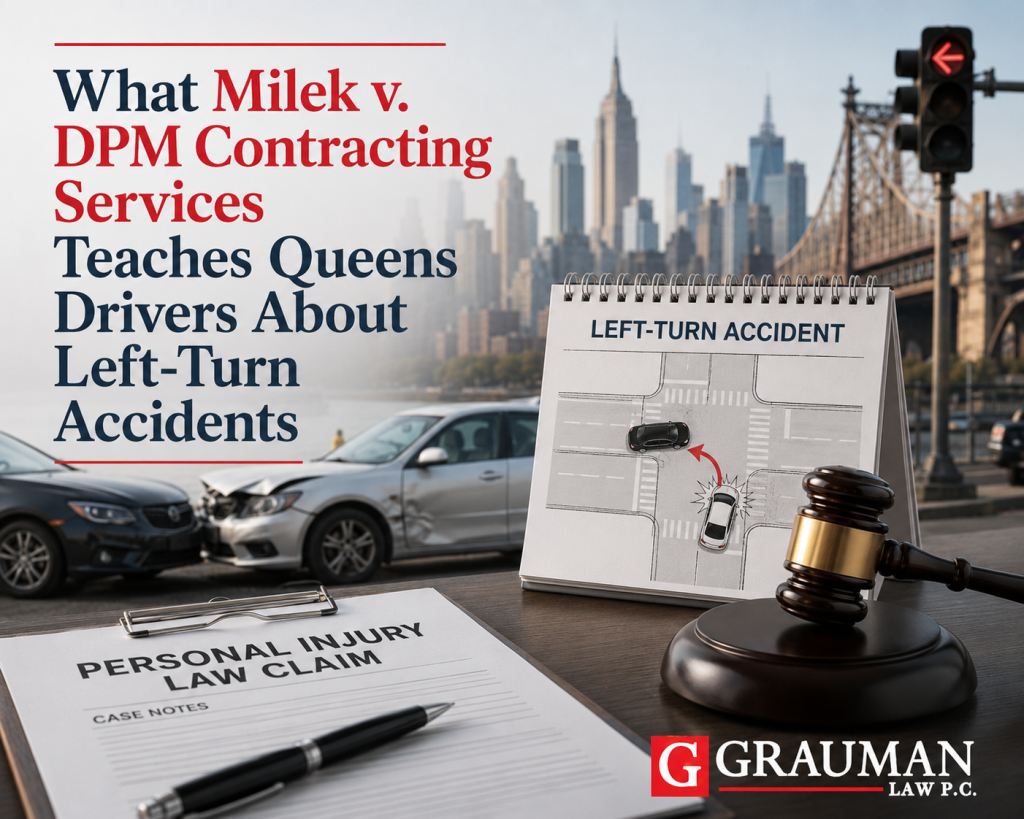
What Milek v. DPM Contracting Services Teaches Queens Drivers About Left-Turn Accidents

Left-turn accidents are among the most common causes of serious motor vehicle collisions in New York. When a driver turns left across oncoming traffic without yielding the right of way, the consequences can be devastating. A recent New York case, Milek v. DPM Contracting Services, Inc., demonstrates how courts analyze fault in these situations and why establishing liability is only one part of a successful personal injury claim. For drivers in Queens, where busy intersections and heavy traffic create countless opportunities for left-turn collisions, this case offers important insight into how New York courts determine responsibility after an accident. more The Facts of the Case In Milek v. DPM Contracting Services, Inc., the plaintiff sought summary judgment on the issue of liability following a motor vehicle accident. According to the plaintiff, he was traveling straight through an intersection when the defendant driver made a left turn directly into his path. The plaintiff argued that the collision occurred because the defendant failed to yield the right of way before attempting the turn. Under New York law, drivers making left turns have a duty to ensure that the maneuver can be completed safely before crossing oncoming traffic. The plaintiff moved for summary judgment, asking the court to determine that the defendants were legally responsible for causing the accident without the need for a trial on liability. Why Left-Turning Drivers Face a Heavy Burden Under New York Law New York Vehicle and Traffic Law places a significant responsibility on drivers who make left turns at intersections. A motorist intending to turn left must yield to approaching vehicles that are close enough to constitute an immediate hazard. This rule exists because left turns are inherently dangerous. A driver crossing opposing lanes of travel must accurately judge the speed and distance of oncoming vehicles and wait until it is safe to proceed. When a collision occurs during a left turn, courts frequently examine whether the turning driver failed to yield the right of way. If the evidence shows that the oncoming vehicle was lawfully proceeding through the intersection and had the right of way, the turning driver may be found negligent as a matter of law. The Court's Decision The court granted summary judgment in favor of the plaintiff on the issue of liability. A significant factor in the decision was the defendants' failure to appear for depositions. Because the defendants did not provide testimony or evidence creating a factual dispute regarding how the accident occurred, they were unable to effectively challenge the plaintiff's version of events. Based on the evidence presented, the court concluded that the plaintiff established that he was traveling straight through the intersection when the defendant made an unsafe left turn into his path. As a result, the plaintiff successfully demonstrated entitlement to judgment on liability. This meant that, for purposes of the lawsuit, the defendants were deemed legally responsible for causing the crash. Why Winning on Liability Does Not End the Case Many accident victims assume that proving another driver caused a crash automatically guarantees compensation. However, New York's no-fault insurance system creates an additional hurdle for many injured plaintiffs. Even after obtaining summary judgment on liability, the plaintiff in Milek still faced a separate legal issue: whether he sustained a "serious injury" under New York Insurance Law § 5102(d). The serious injury threshold is a critical component of many New York car accident cases. To recover damages for pain and suffering, an injured person typically must demonstrate that their injuries satisfy one of the categories outlined in the statute. Examples may include: Significant limitation of use of a body function or system; Permanent consequential limitation of use of a body organ or member; Fractures; Significant disfigurement; or Certain medically determined impairments that substantially interfere with daily activities. Because liability and injury are separate legal issues, a plaintiff can successfully establish fault while still being required to prove that their injuries meet the statutory threshold. Lessons for Queens Drivers Queens is home to some of the busiest intersections in New York City. Areas along Queens Boulevard, Northern Boulevard, Woodhaven Boulevard, Hillside Avenue, and other heavily traveled roadways frequently see collisions involving left-turning vehicles. The Milek decision reinforces several important principles: Drivers Making Left Turns Must Yield Motorists attempting a left turn cannot simply assume they have enough time to complete the maneuver. They must yield to oncoming vehicles that have the right of way and wait until the turn can be made safely. Evidence Matters The plaintiff was able to establish liability because the evidence supported his version of events and the defendants failed to present contrary evidence. Police reports, witness statements, photographs, surveillance footage, and deposition testimony can all play critical roles in determining fault. Liability Is Only One Part of a Personal Injury Case Even when fault appears clear, injured victims must still prove the extent of their injuries and, in many cases, satisfy New York's serious injury threshold to recover non-economic damages. Early Legal Action Can Help Preserve Important Evidence After a left-turn accident, crucial evidence may disappear quickly. Surveillance footage may be overwritten, witnesses may become difficult to locate, and physical evidence can be lost. Prompt investigation can strengthen a victim's ability to establish both liability and damages. Conclusion The decision in Milek v. DPM Contracting Services, Inc. serves as a reminder that drivers who make unsafe left turns can be held liable when they fail to yield the right of way to oncoming traffic. The case also highlights an important reality of New York personal injury litigation: proving fault is often only the first step. For Queens drivers injured in a left-turn collision, understanding how courts analyze liability and serious injury claims can be critical when pursuing compensation. While every case depends on its unique facts, Milek demonstrates how clear evidence of an unsafe left turn can establish responsibility for a crash and position an injured victim to pursue recovery under New York law.

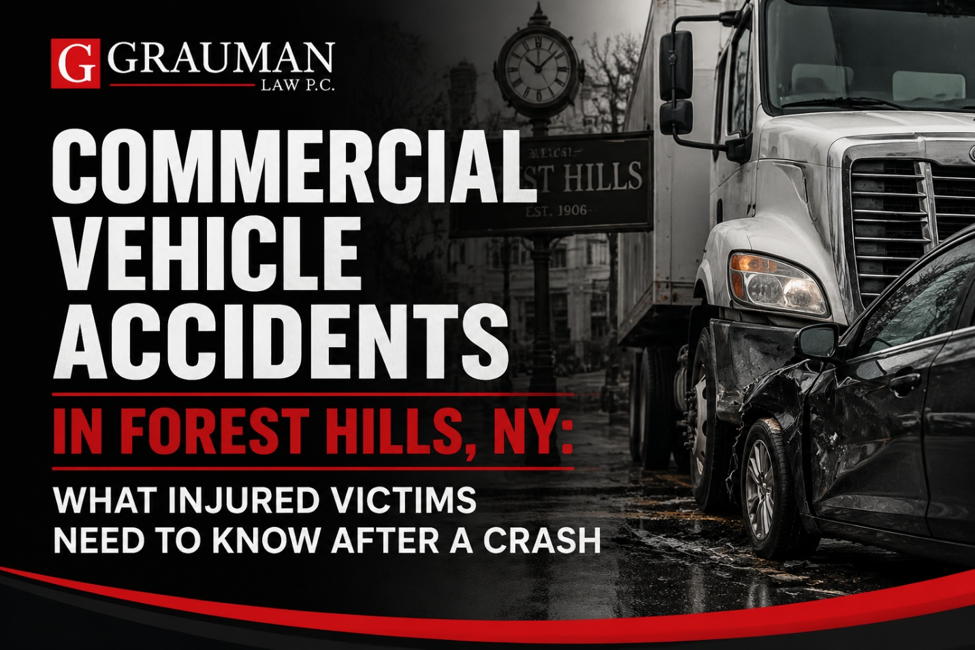
Commercial vehicle accident in Forest Hills, NY showing a truck collision with a passenger vehicle and representing injured victims seeking legal guidance from Grauman Law P.C

Commercial Vehicle Accident Attorney in Forest Hills, NY: What Injured Victims Need to Know After a Crash

A commercial vehicle accident can happen in a matter of seconds, but the physical, financial, and emotional impact can last for months or even years. One moment you may be traveling through Forest Hills, NY, and the next you may be dealing with painful injuries, medical appointments, vehicle repairs, lost income, and uncertainty about what to do next. Commercial vehicle crashes are often more complicated than standard collisions because they may involve delivery companies, employers, commercial insurance carriers, vehicle owners, contractors, or multiple parties who may share responsibility. If you were injured in a commercial vehicle accident in Forest Hills, NY, understanding your rights is an important first step. Whether the crash involved a delivery truck, company vehicle, service van, construction vehicle, or another commercial vehicle, determining fault requires a detailed investigation into how the accident happened. Grauman Law P.C. helps injured victims throughout Forest Hills, Queens, and surrounding New York communities understand their legal options after serious crashes. Our team works to investigate accidents, identify responsible parties, and help clients pursue compensation for injuries and losses. If you need guidance after a commercial vehicle accident, call 347-620-2865 or Contact us today to schedule a consultation with Grauman Law P.C. Do not wait to understand your rights after a serious crash. Contact Grauman Law P.C. today for legal support after a commercial vehicle accident in Forest Hills, NY. more Why Commercial Vehicle Accidents Are Different From Other Crashes in Forest Hills, NY Many people assume a commercial vehicle accident is handled the same way as a typical collision. However, these cases often involve additional legal and insurance issues that can make recovering compensation more challenging. A commercial vehicle accident may involve: The commercial driver The employer or company that owns the vehicle A delivery or transportation company A vehicle leasing company A maintenance provider Commercial insurance carriers Other potentially responsible parties Unlike many regular crashes, commercial vehicle accident claims often require reviewing additional evidence, including: Driver employment records Vehicle maintenance records Company safety procedures Training documentation Accident reports Witness statements Available video footage For example, if a delivery driver causes a crash while making stops throughout Queens, the investigation may involve not only the driver but also the company responsible for hiring, training, and supervising that employee. Commercial insurance companies may begin investigating immediately after an accident. Before providing statements or accepting a settlement offer, speak with Grauman Law P.C. by calling 347-620-2865 or visiting our Contact us page. Common Types of Commercial Vehicle Accidents in Forest Hills, NY Commercial vehicles operate throughout Forest Hills and surrounding Queens neighborhoods every day. Busy roads, delivery routes, commercial areas, and residential streets can create situations where commercial vehicles and passenger vehicles are forced to share limited space. Common commercial vehicle accidents include: Delivery Truck Accidents Delivery trucks and vans are frequently present throughout Queens as companies transport packages, food, equipment, and supplies. Delivery vehicle accidents may happen because of: Distracted driving Unsafe turns Failure to yield Speeding Driver fatigue Improper parking Backing accidents Because delivery vehicles are often larger and heavier than passenger cars, collisions can cause serious injuries. If you were injured in a delivery truck accident, Grauman Law P.C. can help investigate whether the driver, company, or another party may be responsible. Call 347-620-2865 or get in touch with our team to discuss your legal options. Company Vehicle Accidents Many businesses rely on employees who drive vehicles as part of their daily operations. Examples include: Service vans Construction vehicles Utility vehicles Repair vehicles Contractor vehicles Sales vehicles When an employee causes a crash while performing job-related duties, the company may potentially share responsibility depending on the circumstances. Determining responsibility may require reviewing: Employment information Company policies Driver training records Vehicle ownership information Commercial Truck Accidents Commercial trucks can cause devastating injuries because of their: Size Weight Limited visibility Longer stopping distances Truck accidents may involve: Tractor-trailers Box trucks Freight trucks Construction trucks Garbage trucks Victims involved in truck crashes may face extensive medical treatment, rehabilitation, lost wages, and long-term challenges. If you were injured in a commercial truck accident, Grauman Law P.C. can help you understand your legal options. Learn more about truck accident representation here: Truck Accident Lawyer in Forest Hills, NY Call 347-620-2865 today to schedule a consultation. What Causes Commercial Vehicle Accidents in Forest Hills, NY? Commercial vehicle accidents can happen for many different reasons. While some crashes are caused by driver mistakes, others may involve unsafe company practices, inadequate training, improper maintenance, or violations of safety requirements. Determining the cause of a commercial vehicle accident is an important step because it may help identify who can be held responsible for your injuries. Common causes of commercial vehicle accidents include: Distracted Driving Commercial drivers may experience distractions while operating vehicles, including: GPS navigation systems Mobile devices Communication with dispatchers Delivery schedules Route planning Even a few seconds of distraction can lead to a serious collision, especially on busy Queens roadways where vehicles, pedestrians, and cyclists frequently share the road. Driver Fatigue and Unrealistic Delivery Schedules Commercial drivers may face pressure to complete routes, meet deadlines, or work extended hours. Fatigue can impact a driver's ability to safely operate a vehicle. A fatigued driver may experience: Slower reaction times Reduced concentration Poor decision-making Difficulty maintaining vehicle control If a company’s scheduling practices or supervision contributed to a crash, those factors may become important during an accident investigation. Improper Vehicle Maintenance Commercial vehicle operators and companies have a responsibility to maintain safe vehicles. Mechanical issues that may contribute to accidents include: Brake failures Tire defects Steering problems Equipment failures Lighting issues Maintenance records and inspection reports may provide important information when determining why a commercial vehicle accident occurred. Unsafe Driving Practices Commercial vehicle crashes may also happen because of negligent driving behaviors, including: Speeding Unsafe lane changes Failure to yield Running traffic signals Aggressive driving Improper turns When another party’s negligence causes your injuries, you may have the right to pursue compensation through a personal injury claim. Common Injuries Caused by Commercial Vehicle Accidents Commercial vehicle accidents often result in more serious injuries because commercial vehicles are generally larger and heavier than passenger vehicles. Injured victims may experience: Traumatic brain injuries Concussions Head injuries Neck injuries Back injuries Spinal cord injuries Broken bones Internal injuries Soft tissue injuries Permanent disabilities Emotional trauma Some injuries may require: Emergency treatment Surgery Physical therapy Rehabilitation Long-term medical care The impact of a commercial vehicle accident can affect nearly every part of your life, including your ability to work, support your family, and maintain your quality of life. Grauman Law P.C. helps injured victims understand their options after serious crashes. If another driver, company, or commercial operator caused your accident, our team can help you explore your legal options. Call 347-620-2865 or Contact us today to discuss your commercial vehicle accident. What Compensation Can You Recover After a Commercial Vehicle Accident? A serious commercial vehicle accident can create significant financial challenges. Medical expenses, missed work, vehicle repairs, and ongoing treatment can quickly become overwhelming. Depending on the circumstances of your accident, you may be able to seek compensation for: Emergency medical expenses Hospital bills Doctor visits Physical therapy Rehabilitation costs Future medical treatment Lost wages Reduced earning ability Property damage Pain and suffering Emotional distress Permanent injuries Every accident is different. The value of a claim depends on factors such as: Severity of injuries Cost of medical treatment Amount of lost income Long-term impact of injuries Available insurance coverage Who was responsible for the crash A commercial vehicle accident attorney can review the facts of your case and help you understand what options may be available. If you are searching for a personal injury lawyer after a commercial vehicle accident in Forest Hills, NY, Grauman Law P.C. is here to help. Call 347-620-2865 or Contact us to schedule a consultation. What Should You Do After a Commercial Vehicle Accident in Forest Hills, NY? The steps you take after a commercial vehicle accident can have an impact on your health, your recovery, and your ability to pursue compensation. If you are able, consider taking the following steps: 1. Seek Medical Attention Your health should always be your first priority. Some injuries may not appear immediately after a crash. Seeking medical care creates documentation of your injuries and treatment. Keep records of: Medical appointments Prescriptions Treatment recommendations Medical expenses 2. Report the Accident Make sure the accident is reported to the appropriate authorities. An official accident report may contain important details about: The vehicles involved The drivers involved The accident location Potential contributing factors 3. Document the Scene If possible, collect evidence, including: Photos of vehicle damage Photos of the roadway Photos of injuries Driver information Insurance information Witness contact information Evidence can become more difficult to obtain as time passes. 4. Be Careful When Speaking With Insurance Companies After a commercial vehicle accident, you may receive calls from insurance representatives. Before providing a recorded statement or accepting a settlement offer, consider speaking with an attorney. Commercial insurance companies often have teams working to protect their financial interests. Understanding your rights before making decisions can help protect your claim. 5. Contact Grauman Law P.C. Commercial vehicle accident claims can involve complicated liability issues. Acting quickly may help preserve important evidence and protect your legal options. Call 347-620-2865 or get in touch with Grauman Law P.C. today. Do not wait until evidence is lost or deadlines become an issue. Speak with a legal team that understands commercial vehicle accidents in Forest Hills, NY. Why Choose Grauman Law P.C. After a Commercial Vehicle Accident in Forest Hills, NY? After a commercial vehicle accident, injured victims often face challenges that go beyond physical injuries. You may be dealing with medical bills, insurance companies, missed work, vehicle repairs, and uncertainty about what happens next. Choosing the right legal team can help you better understand your options and protect your rights throughout the process. Grauman Law P.C. helps injured clients throughout Forest Hills, Queens, and surrounding New York communities by focusing on: Investigating how the accident occurred Identifying all potentially responsible parties Reviewing available evidence Communicating with insurance companies Evaluating accident-related losses Helping clients pursue compensation Commercial vehicle accidents often require a detailed investigation because responsibility may not always fall on one person. A driver, employer, vehicle owner, maintenance company, or another party may potentially share liability. You can learn more about our approach and legal team by visiting our about us page. If you were injured in a commercial vehicle accident in Forest Hills, NY, call 347-620-2865 or Contact us today to schedule a consultation. Why You Should Contact a Commercial Vehicle Accident Attorney After a Crash Many accident victims are unsure whether they need legal representation after a commercial vehicle accident. However, these cases often involve: Large commercial insurance policies Businesses protecting their interests Multiple potentially responsible parties Complex evidence requirements Disputed liability issues A commercial vehicle accident attorney can help by: Investigating the Accident A thorough investigation may include reviewing: Police reports Driver statements Vehicle damage Witness accounts Surveillance footage Company records Maintenance information Protecting You From Insurance Pressure Insurance companies may attempt to resolve claims quickly. However, an early settlement may not account for: Future medical treatment Long-term injuries Lost earning ability Ongoing expenses Before accepting an offer, speak with Grauman Law P.C. to understand whether it reflects the full impact of your accident. Call 347-620-2865 or Contact us to discuss your case. Frequently Asked Questions About Commercial Vehicle Accidents in Forest Hills, NY What should I do immediately after a commercial vehicle accident in Forest Hills, NY? After a commercial vehicle accident, seek medical attention, report the accident, document the scene, gather information from witnesses, and avoid making statements to insurance companies before understanding your rights. Speaking with Grauman Law P.C. early may help protect important evidence and your ability to pursue compensation. Do I need a lawyer after a commercial vehicle accident? A commercial vehicle accident lawyer can help investigate the crash, identify responsible parties, handle insurance communications, and pursue compensation for accident-related losses. Commercial vehicle cases are often more complex than standard crashes because businesses and insurers may be involved. Can I file a claim if a company vehicle caused my accident? Possibly. If an employee caused an accident while performing work-related duties, the company may potentially share responsibility depending on the circumstances. Determining liability requires reviewing factors such as employment status, company policies, and how the accident occurred. How much compensation can I recover after a commercial vehicle accident? The amount of compensation available depends on factors including: Severity of injuries Medical expenses Lost wages Future medical needs Property damage Long-term impact of the accident Grauman Law P.C. can review your situation and help explain your potential options. How long do I have to file a commercial vehicle accident claim in New York? The deadline depends on the specific circumstances of the accident and the parties involved. Because important evidence can become harder to obtain over time, contacting an attorney as soon as possible is recommended. What if I was partially responsible for the accident? New York follows comparative negligence rules, meaning an injured person may still be able to recover compensation even if they share some responsibility for the crash. The amount recovered may depend on each party’s percentage of fault. Contact Grauman Law P.C. After a Commercial Vehicle Accident in Forest Hills, NY A commercial vehicle accident can leave you facing injuries, financial stress, and uncertainty about your future. Whether you were injured in a delivery truck crash, company vehicle accident, commercial truck collision, or another type of commercial vehicle accident, understanding your legal options is an important first step. Grauman Law P.C. helps injured victims throughout Forest Hills, Queens, and surrounding New York communities pursue compensation after serious crashes. If you or a loved one was injured: Call Grauman Law P.C. today at 347-620-2865. You can also Contact us online to schedule a consultation. Do not wait to understand your rights after a serious commercial vehicle accident. Contact Grauman Law P.C. today for legal guidance and take the first step toward protecting your future. Related Resources Learn more about commercial vehicle accident representation in Forest Hills, NY: Commercial Vehicle Accidents in Forest Hills, NY

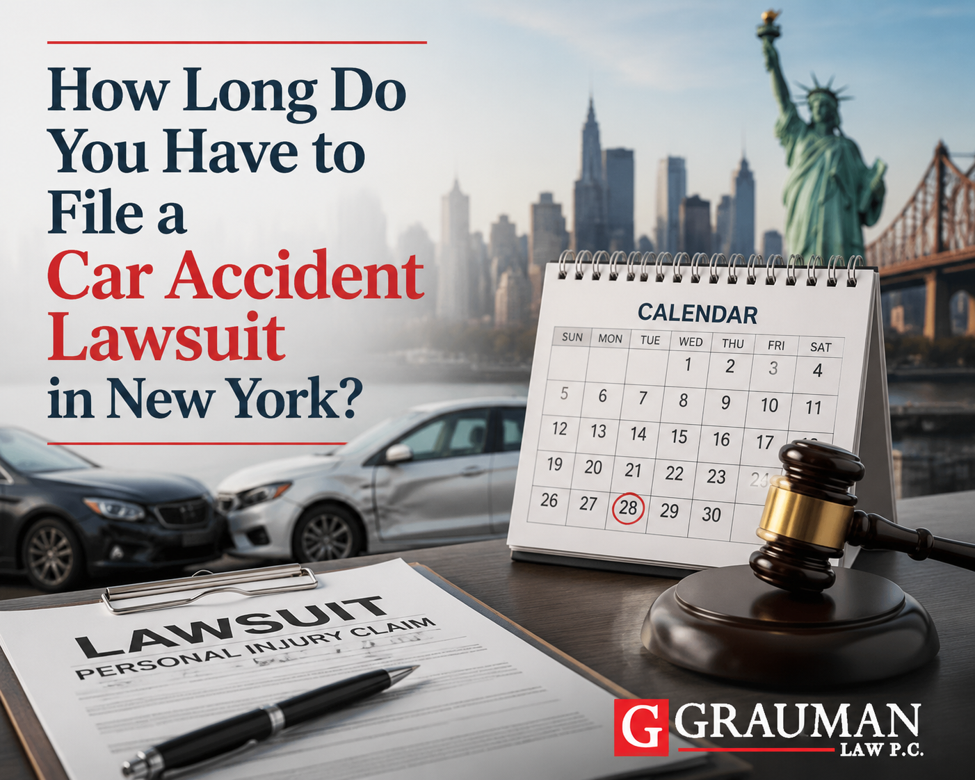
How Long Do You Have to File a Car Accident Lawsuit in New York?

A car accident can leave you dealing with painful injuries, medical appointments, vehicle repairs, insurance companies, and financial stress. While you may be focused on recovering, one of the most important things to understand after a crash is that New York law places strict deadlines on how long you have to take legal action. If you were injured in a collision, waiting too long to explore your options could affect your ability to seek compensation for medical expenses, lost wages, pain and suffering, and other damages. Speaking with a car accident lawyer in Forest Hills, NY as soon as possible can help you understand your rights and the deadlines that apply to your situation. At Grauman Law P.C., we help injured individuals throughout Forest Hills, Queens, and surrounding New York City communities understand their legal options after serious accidents. If you have questions about your potential claim, call 347-620-2865 or complete the contact form on our Contact Us page to discuss your situation. more What Is the Deadline to File a Car Accident Lawsuit in New York? In most personal injury cases involving car accidents, New York law generally gives injured individuals three years from the date of the accident to file a lawsuit. This deadline is known as the statute of limitations. If a lawsuit is not filed before the deadline expires, you may lose the ability to pursue compensation through the court system. For example, if you were injured in a car accident in Forest Hills, Queens on July 1, 2026, you generally would have until July 1, 2029, to file a personal injury lawsuit unless a specific exception applies. However, every accident is different. Factors such as who caused the accident, whether a government vehicle was involved, the severity of your injuries, and when your injuries became known can impact the applicable deadline. Insurance companies may encourage accident victims to settle quickly, but accepting a settlement before understanding the full value of your claim could prevent you from recovering additional compensation later. If you are unsure how much time you have left to file a claim, contact Grauman Law P.C. at 347-620-2865 or visit our Contact Us page today. Why You Should Not Wait to Contact a Car Accident Attorney in Forest Hills Although three years may seem like plenty of time, important evidence can become more difficult to obtain as time passes. Evidence that may be important in a car accident claim includes: Police accident reports Medical records Photos and videos from the accident scene Vehicle damage documentation Witness statements Surveillance footage Vehicle data and electronic records Some evidence may only be available for a limited period. For example, nearby businesses or traffic cameras may overwrite surveillance footage after a certain amount of time. Insurance companies also begin investigating accidents immediately. Having legal guidance early can help protect your rights while you focus on your recovery. If you were injured in a collision anywhere in Forest Hills or Queens, contact Grauman Law P.C. at 347-620-2865 or submit information through our Contact Us page to discuss your options. How Does New York’s No-Fault Insurance System Affect My Car Accident Claim? New York follows a no-fault insurance system for many car accident injuries. This means your own insurance coverage may provide benefits for certain medical expenses and lost wages, regardless of who caused the crash. However, no-fault insurance does not prevent every injured driver or passenger from filing a lawsuit. In certain situations, an injured person may be able to pursue compensation from the driver responsible for causing the accident if they meet New York’s serious injury threshold. Examples of qualifying serious injuries may include: Significant fractures Permanent limitations affecting daily activities Permanent loss of use of a body organ or function Significant disfigurement Certain long-term disabilities Determining whether your injuries meet New York’s requirements can be complicated. A legal review of your medical records, accident circumstances, and available insurance coverage can help clarify your options. To learn more about pursuing compensation after a crash, call Grauman Law P.C. at 347-620-2865 and speak with a Forest Hills personal injury attorney. What Happens If I Was Injured in a Truck Accident? Truck accidents often involve more complicated legal issues than standard passenger vehicle collisions. A commercial truck accident may involve: Trucking companies Commercial insurance policies Vehicle owners Maintenance providers Professional drivers Federal trucking regulations Unlike a typical car accident, evidence in truck accident cases can include driver logs, electronic tracking data, maintenance records, and company safety documentation. This evidence can be critical when determining who may be responsible for causing the crash. If you were injured in a collision involving a tractor-trailer, delivery truck, or commercial vehicle, speaking with a truck accident lawyer in Forest Hills, NY as soon as possible can help protect your claim. Grauman Law P.C. represents injured accident victims throughout Forest Hills, Queens, and surrounding areas. Call 347-620-2865 or use our Contact Us page to schedule a consultation. Are There Exceptions to the New York Car Accident Lawsuit Deadline? Although New York generally provides three years to file a personal injury lawsuit, certain situations may change the deadline. Accidents Involving Government Vehicles If your accident involved a city, state, or municipal vehicle, additional requirements may apply. Claims against government entities often require filing a notice of claim within a much shorter timeframe. For many New York municipalities, this deadline is generally 90 days from the date of the accident. Missing this requirement could affect your ability to pursue compensation. If your accident involved a government vehicle, contact Grauman Law P.C. immediately at 347-620-2865. Wrongful Death Claims After a Fatal Accident When a car accident results in the loss of a loved one, wrongful death claims follow different rules than standard injury cases. New York generally requires wrongful death claims to be filed within two years from the date of death. Families facing this situation should seek legal guidance as soon as possible to understand available options. Minors and Legal Disabilities Certain legal disabilities may affect how deadlines are calculated. For example, cases involving minors may involve different timing rules. Each situation requires careful review based on the specific facts. How Long Do You Have to Report a Car Accident in New York? New York drivers are generally required to report accidents involving injury, death, or significant property damage to the Department of Motor Vehicles within 10 days. After an accident, you should also consider taking the following steps: Seek medical treatment Document injuries Keep copies of medical records and bills Photograph the accident scene Avoid discussing fault with insurance companies Preserve evidence related to the crash Knowing what to do immediately after an accident can protect both your health and your legal claim. If you are unsure what steps to take after a crash in Forest Hills, call Grauman Law P.C. at 347-620-2865. Frequently Asked Questions About Car Accident Lawsuits in New York How long after a car accident can I sue in New York? Most personal injury lawsuits related to car accidents must be filed within three years of the accident date. However, certain exceptions may apply depending on the facts of the case. Can I file a lawsuit if my injuries appeared after the accident? Yes. Some injuries may not become noticeable immediately. However, you should seek medical care and speak with an attorney as soon as possible to understand how deadlines may apply. Should I accept an insurance settlement after a car accident? You should understand the full impact of your injuries before accepting a settlement. Insurance companies may attempt to resolve claims quickly, but an early settlement may not account for future medical expenses or long-term effects. How much compensation can I receive after a car accident in New York? Compensation depends on factors including injury severity, medical expenses, lost wages, insurance coverage, and the impact the accident has had on your life. What if the accident involved a truck? Truck accident cases can involve multiple responsible parties and complex regulations. A truck accident lawyer in Forest Hills, NY can review the details of your crash and help determine your options. How do I contact Grauman Law P.C.? You can call Grauman Law P.C. at 347-620-2865 or complete the Contact Us form to request a consultation. Contact Grauman Law P.C. After a Car Accident in Forest Hills, NY A serious accident can create uncertainty about your health, finances, and future. Understanding New York’s filing deadlines is one of the first steps toward protecting your rights. If you were injured in a car accident in Forest Hills, Queens, or anywhere in New York City, Grauman Law P.C. can help you understand your legal options. Call 347-620-2865 today to discuss your situation, or visit our Contact Us page to request a consultation. Do not wait until the deadline approaches. Contact Grauman Law P.C. today to learn how you can protect your ability to pursue compensation.

Cash a Personal

How to Cash a Personal Check Without a Bank Account?

Cashing a personal check without having a bank account seems daunting, but it’s a lot more common than one might think. Many of the unbanked-those without a traditional bank account-are written into checks, yet find the need to access funds conveniently.Fortunately, there are quite a few ways through which one can cash a personal check without access to a bank account. Several options can be availed for this purpose, and this guide will outline the fees, requirements, pros, and cons of each. Understanding Your Options for Cashing a Personal Check Even without a bank account, there are quite a number of ways you can convert a personal check into cash. You may look to options such as the uses of retail sites, check-cashing services, prepaid debit cards, and even calling upon friends and family for options. We shall delve a little deeper into these options so you can decide what works best for your needs. Retail Locations That Cash Checks Without a Bank Account Most retail outlets offer check cashing, including all the major chain stores, Walmart, Kroger, and grocery stores. Most of those locations will allow their customers to cash personal checks for a fee-usually a percentage of the check or a fixed fee-across stores that normally falls into some kind of average range of $3 to $6. Wal-Mart can always be in the list of popular options on whom an individual can go right away. Their service is quite convenient because the stores remain open for long hours, including weekends. Usually, Wal-Mart charges up to $8 for cashing a personal check, depending upon the amount. Groceries: Most grocery store chains will cash a check for you. Some, such as Kroger, sweeten the deal by offering loyalty members a discount. They find retail stores to be a convenient way out for their regular purchases where they need quick access to their funds. Check-Cashing Stores and Services Other options include check-cashing stores. These are retail outlets, such as MoneyGram or Western Union, which specialize in cashing checks for people without bank accounts. They charge a fee, higher usually than retail stores, but could be good alternatives when there is a pressing need for cash. Check Cashing Services like MoneyGram and Western Union : Some of these services are available at a variety of places from convenience stores to pharmacies. The fees vary from as low as 1% up to 5% of the check amount based on location and value of check. Check Cashing Outlets: Some specialized check-cashing outlets may charge as high as 10% of the check value, at times; however, they are also more flexible with the identification requirements rather than regular banking. These services come in the middle of the night and are very handy in case one has irregular hours of work. Using Prepaid Debit Cards to Cash Checks Another option to cash a personal check is a prepaid debit card. In certain services, like PayPal or Green Dot, deposit will be given right on the prepaid card account. You can avail it like any debit card and make purchases or even withdrawals from ATMs. PayPal Even cash checks through the PayPal mobile app. You snap a shot of the check and deposit it into your PayPal account for a fee. That is pretty handy if you’re already using their service for other transactions. Green Dot Prepaid Card: Green Dot also offers the same option deposit checks via apps on mobiles.This makes it very easy and comfortable to access your money, considering how long it used to take for the check to enter the bank. A prepaid debit card can, on every turn, be a good substitute for the funds an individual has, especially when one does not desire carrying actual cash on their person but intends instead to make a digital transaction. Cash Checks Through Friends or Family How it works: If you have a trusted friend or family member in good standing with whom you share a bank account, they may be able to help you cash the check. They can deposit the check into their account, then give you the cash when the funds clear. This is a free way most of the time, but you need to know and trust your friend or family member that you will be writing the check to because they will have possession of it. In that respect, they also bear the risk of if the check doesn’t clear, among other issues. Pros and Cons of Each Option Each of these ways to cash a personal check with no bank account has pros and disadvantages: Retail Locations: Convenient and often lower fees, though you may have to wait in line and not all stores offer this service. Check-Cashing Stores: Fast and accessible, but typically have higher fees compared to other options. Prepaid debit cards will make sure digital transactions and conveniences are maintained but many times come with associated fees and waiting periods. Friends or Family: Often free, but requires significant trust and can be complicated if the check doesn’t clear. For more money tips and information, check out our article on How to Void a Cashier’s Check. How to Cash Checks if You Have No Bank Account To guide you smoothly through the process of cashing a personal check, tips that will be helpful for you are: Have identification ready: Most of the check-cashing services require some type of government-issued ID presented. Have a valid ID on hand to avoid any delays. Compare fees. Fees can range from nominal to outrageous depending on where you go. Retail locations generally charge less than places specializing strictly in check-cashing, so it pays to shop around. Check Verification: The collection of a valid check and verification that the party issuing the check has adequate funds. You might get charged an additional fee if the check bounces.. Timing: Some options make the money move faster than others do. If one wanted to get cash quicker, the check cashing stores would be the better option. On a prepaid debit card, money may take a bit longer to actually be available. Commonly Asked Questions About Cashing a Personal Check Without a Bank Account Q: Where can I cash a personal check without a bank account? A: You could cash a personal check at retail stores like Walmart, grocery stores, or at check cashing sites such as Western Union. Other options include anything that uses a prepaid debit card. All have different fees and requirements. Q: Can I cash a check without an ID? A: Most places that cash checks require some sort of identification. Perhaps some check-cashing places are not so strict with the ID requirements, but then again, the fees can be jacked up pretty high. Q: How can I cash a personal check least expensively? Where do the cheapest check-cashing fees commonly take place? A: Retail Outlets such as Walmart usually have the lowest prices. These vary between $3 to $8. Conclusion cashing a personal check without a bank account is very feasible, with different options: retail stores, check-cashing services, prepaid debit cards, and the help of friends or family.Each method has its pros and cons, and the best option would be determined by your specific needs and given circumstances. For more information on alternative financial services, refer to our related article: Do I Need Home Property Damage Lawyers.

Dr. Amir Sitafalwalla – A Doctor in Queens was arrested because of alleged sexual abuse of his patient

Amir Sitafalwalla, a physician from Brooklyn, was arrested for allegedly molesting a male patient – this occurred only a few months following an initial arrest for a strikingly similar incident. The most recent allegations originate from an August 14, 2024 appointment at Modern MD in Woodhaven, Queens. At this location Sitafalwalla is accused of fondling a male patient when it should have been a typical medical exam. Prosecutors report he was arrested and then later released after he posted $10,000 bail. The New York Police Department and Queens District Attorney’s Office are determining whether more victims may be out there. In January 2023, he was arrested earlier for allegedly fondling a 25-year-old man at the same clinic during a COVID-19 test. He is accused of touching the patient’s inner thigh and then groping his genitalia. According to court filings, he also made inappropriate sexual remarks about the man’s genitals. In the earlier case, Dr Sitafalwalla was released without bail, which caused concern from advocates and members of the public. This second arrest has increased scrutiny around his conduct – which has also raised questions about how many patients may have been silently harmed. A licensed physician with over twenty years of practice, Dr. Sitafalwalla obtained a degree from J.J.M. Medical College. He also worked across various locations, like Valley Stream and Brooklyn – he is connected with Long Island Community Hospital and has specialties in emergency and internal medicine. Right now officials urge any other patients who may have experienced inappropriate conduct to step forward. The NYPD and Queens District Attorney’s Office continue their investigation.

What Is a Typical Whiplash Settlement Amount?

What Is a Typical Whiplash Settlement Amount?

Whiplash might be one of the most common car accident injuries, but to many, one wonders what compensation may be available if they pursue a claim. In effect, the amount of settlement receivable as whiplash injuries will much vary depending on many particularized factors such as the severity of injury, impact on the victim’s life, and other associated costs. This article will discuss the typical whiplash settlement amount, the factors that affect compensation, and how to maximize your claim. Average Whiplash Settlement Amount Explained The average whiplash settlement amount can range from $2,500 to $100,000. This, in fact, significantly depends on the case circumstances. Minor whiplash injuries may have a low compensation, while long-term disabilities or chronic pain in serious cases may fetch much higher awards. Several factors come into play to determine the final settlement value, including the cost of medical treatment, lost wages, and pain and suffering. Each case varies, and the award amount in each case depends on how well the damages can be documented and proved. Factors Affecting Whiplash Settlements Many factors can influence the settlement value linked to this whiplash injury, including: Severity of the Injury: The more severe the injury, the larger the settlement amount. Injured victims with minor whiplash injuries that resolve with minor treatment will yield a lower payout in comparison with injuries requiring ongoing medical care or permanent impairment. Medical Expenses: These are the major determinants to arrive at the settlement amount. These include costs incurred on emergency treatment, physical therapy, medication, and future medical treatments that may be required. Lost Wages:An injured victim may be entitled to recover wages lost because of the injury. If the injury resulted in long-term effects on the victim’s ability to work, the settlement also includes compensation for future lost wages. Pain and Suffering: The other highlight of any whiplash settlement is that pertaining to pain and suffering. Compensation is supposed to cover the physical pain and emotional distress emanating from the injury. Impact on Daily Life: In cases where the injury impacts greatly on the victim in performing daily chores, the value of settlement may be increased. This is particularly true in those serious instances where the quality of life has been drastically reduced. For more on that, including how New York treats personal injury cases and what determines compensation, see our article Common personal injury questions in New York State. How do whiplash settlements get calculated? Insurance companies use different methods to settle claims for whiplash injury. A very common one is using a multiplier on pain and suffering. There is the multiplier that can be applied to the total medical expense so as to arrive at an amount of compensation, which is reasonable. For example, if the medical expenses are $10,000 and the multiplier happens to be 3, then pain and suffering settlement would be valued at $30,000, while the total settlement will be $40,000. Other factors that come into play include the credibility of medical records, witness testimonies, and the negotiating skills of your attorney in determining how much you get at the end. You should make sure complete medical documentation and a clear assessment of all your damages are present to fairly compensate you. Real-Life Examples of Whiplash Settlements To give further idea, here are some real-world examples of whiplash settlements: Minor Whiplash Case: In one case, a victim sustained minor neck stiffness and headaches after a car accident. Because the victim was required to see a doctor and physical therapist to treat the victim’s ailment, he was also awarded $5,000 in damages for medical expenses and pain and suffering. Moderate Whiplash Injury: The victim suffered from moderate neck pain that required several months of treatment involving physical therapy and caused the individual to miss work for two weeks. The settlement value increased to US$25,000 to cover all medical expenses, lost wages, and pain and suffering. Severe Whiplash Case: A victim suffered chronic neck pain and headaches due to a severe whiplash injury, which impeded the victim’s potency at work and in performing day-to-day activities. The victim received a settlement of $100,000 for medical expenses, lost income, and reduced quality of life. These examples give an idea of the range of possible settlements, but every case is different, and the outcome depends upon the individual circumstances. Maximizing Your Whiplash Settlement If you want to maximize your whiplash settlement, consider these tips: Seek Medical Attention Immediately: Even if the symptoms appear minor, seek medical attention right after the accident. Not only will immediate medical attention ensure your health, but it also provides crucial documentation for your claim. Follow Medical Recommendations: Follow your doctor’s treatment plan. Go to all of your appointments and keep complete and detailed records regarding your treatment. Your case is strengthened with continued medical care. Document Everything:Keep a complete and full record of all your expenditures regarding your injury-from medication bills to transportation and other modifications that you have had to make for your injury. Photographs and diaries related to the pain can also help. Consult a Personal Injury Lawyer:Seek the expertise of a personal injury attorney. An experienced personal injury attorney will increase your settlement chances. He can negotiate with the insurance, gather the evidence needed, and attend to every detail regarding your case. If you need help understanding your rights or want to explore your legal options, consider reading our article on Common Criminal Law Questions In New York State. When to Seek Help from a Personal Injury Lawyer Whenever you have whiplash from a car accident, the best thing you can do is to hire a personal injury lawyer. Especially if your injury is serious or the insurance company is offering a low amount of money for a settlement, hiring a good lawyer will ensure that your rights are protected, evidence is appropriately collected, and your compensation is pleaded accordingly. Personal injury lawyers work on a contingency fee, meaning they don’t get a dime unless they recover your money in the form of a settlement or judgment. That insures you will be able to retain good legal counsel with no upfront costs. FAQs About Whiplash Settlements Q: How much can I expect for my whiplash settlement? A: The amount you can expect from whiplash settlement depends on issues like the nature of your injury, medical costs, lost wages, and pain and suffering. The amount of each of these factors will determine the amount of settlement, which can range from $2,500 to over $100,000. Q: Can I negotiate a higher settlement for my whiplash injury? A: Particularly, if the insurance company’s starting offer is too low, can I negotiate a higher settlement? A: Yes, you can. Working with a personal injury lawyer will generally increase your chances of a better settlement. Q: How long does it take to receive a whiplash settlement? A: It may take months or more than a year to receive the settlement, pending on how complicated the case is and how willing the insurance company is to negotiate in the case. Conclusion The typical whiplash injury settlement amount can vary significantly, ranging from a few thousand dollars upwards into the hundreds of thousands of dollars, depending on the severity of the injury and other factors. This will help you in understanding what influences the settlement amount, document all damages, and seek legal representation to maximize your compensation. Whether it is you or a person in your life who has had to bear with whiplash injury because of a car accident, legal advice will protect all the interests of your case and ensure that you get the compensation you deserve. Call our personal injury team today for a free consultation and let us help you negotiate through your claim effectively.

What Is the Punishment for Defamation of Character?

What Is the Punishment for Defamation of Character?

What Is the Punishment for Defamation of Character? Understanding Fines, Jail, and Legal Consequences Punishment for defamation of character can involve serious legal consequences, in regard to fines, imprisonment, and other legal penalties. It is very important for a plaintiff and a defendant to understand the probable consequences for defamation. Understanding Defamation of Character Defamation of character represents making false statements against another person in a manner that may hurt the character of that particular person. It may be categorized into two: Libel: The written defamation, even a newspaper article, online blogs, and internet social posts. Slander: The defamation spoken, an example of this is verbal accusations and statements made in public. The elements of defamation are that there must be a false statement made out of malice, and that must cause measurable damages to the plaintiff’s reputation. A plaintiff in any defamation case has to show that the defendant acted with either reckless disregard for the truth or with negligence. Legal Penalties for Defamation: Libel vs. Slander Defamation is of two types, each with different legal consequences: Libel: Any published defamation, which comes in written statements that are false in nature, published on newspapers, on blogs, and on social media posts. Slander: Verbal defamation; speaking falsely of another person in a public place or during some forms of broadcast. Both are considered serious forms of defamation, but since libel is permanent, it is usually more destructive. The punishments for libel and slander may come in monetary damages, cease and desist orders, or other related legal actions. The legal consequences for defamation of character vary in the light of case type, jurisdiction, and damage caused. In civil courts, defamation cases will give civil penalties that may include criminal compensation in damages. Criminal cases involve fines or imprisonment per the law. Normally, defamation is treated in a civil court of law, and the punishment is usually financial rather than criminal. Here are a few possibilities. 1. Monetary Damages The usual legal sentence given to defamation is monetary damages. If the case is ruled in favor of the plaintiff, monetary compensation can be granted to account for the damage done to one’s reputation on behalf of the defendant. Examples include: Compensatory Damages: Here, compensation is granted to the plaintiff for actual damages such as emotional distress resulting in loss of income and damage to reputation. Punitive Damages: These are kinds of damages that allow for awards in cases where the action by the defendant might have proved malicious or gross. It is done by the court as a means of condemning the action, hence serving as deterrence. 2. Cease and Desist Orders Apart from damages, the courts can order in the nature of cease and desist, which consists of stopping the defendant from making further false statements. It’s precautionary, so as to save the plaintiff from further damages. 3. Public Retraction or Apology Public retraction or apology may, on some occasions, be ordered by the court to the defendant. It would be to somehow redeem the reputation of the plaintiff and restore what was damaged because of the defamatory words uttered or published. Civil vs. Criminal Defamation Penalties The penalties for civil vs. criminal defamation are very different. More often, defamation is treated as a civil offense; it allows the plaintiff to sue for damages against their reputation. These damages include monetary compensatory damages in civil cases that pay the victim of a defamation lawsuit a damage. Criminal penalties can involve, among others, fines or imprisonment, though in few instances. While civil matters deal with providing compensation for character defamation, criminal cases at times target punishing the offender and serving as a deterrent from future defamation. Criminal defamation is not acknowledged under all laws. In some jurisdictions, one can even be charged with a criminal offense for defamation of character. This is more rare and usually applied when the material result of the defamatory statements is extremely injurious or printed with malicious intent. Possible criminal sanctions against defamation include fines or, more rarely, imprisonment. Punishment for criminal defamation of character will vary based upon local laws and severity of offense. Keep in mind that not all states or countries have a criminal defamation law on the books, and it is more common to see defamation handled in civil courts. Factors That Influence the Punishment for Defamation The degree of punishment vary according to: Nature of the False Statement: Statements that are especially injurious or that involve allegations of crime or immoral conduct are punished more harshly. Malice of the defendant: If it can be shown that the defendant acted in a malicious manner or in reckless disregard for the truth, the punishment may be much greater. Harm Caused to the Plaintiff: Injury to Plaintiff’s Reputation, Means of Support, and Emotional Well-being: Another factor in punishment is the extent of harm to plaintiff’s reputation, means of support, and emotional well-being. It needs not be said that this depends on the amount of hurt and damage suffered; the more extensive the injury, the more extensive the damages may be. Public vs. Private Figures: In these cases of defamation, public figures – celebrities or politicians – would have to show a higher degree of proof than that required by private individuals. Here, the public figure would have to prove actual malice, which has been defined as knowing the statements are false or acting in reckless disregard for the truth, whereas a private individual would need only to show negligence. This means that proof of damages would not be required since it is assumed to occur when there is defamation of a public figure. What to Do If You’ve Been Defamed If you or someone you know has been a victim of defamation, then it is just that you understand all of your rights and take immediate action: Document the Defamation: Screenshot, record, or otherwise get written evidence of anything that could be considered defamatory. Consult a Lawyer: You will be requiring a defamation lawyer in deciphering the legal mechanism and advice on how to file the case of defamation in the court of law. The lawyer will help you determine if you have a good case in your hands based on merit, as well as how much damages you should seek considering your hurt. Consider a Cease and Desist Letter: Many times, a letter of cease and desist will suffice to cease further defamation and settle the matter outside of litigation. Filing of a Lawsuit: If the defamatory statements have caused significant harm, filing a lawsuit may be the best course of action to seek damages and hold the responsible party accountable. If you’d like to learn about similar legal topics take a look at our article on Understanding Knife Laws in New York. If you think that you have been defamed, then document all the defamatory statements and gather as much evidence as possible. Consult a highly experienced lawyer who deals in defamation cases. A legal expert will be able to assist you in filing a suit, determining due compensation, and above all, protecting your rights. Common defenses to defamation include: Truth: In case the statement made was actually true, then it shall not be termed as defamation. Truth always serves as an absolute defense in the case of defamation. Opinion: Statements phrased as clearly an opinion, rather than a fact, are generally immune from defamation actions. The Courts realize that an opinion cannot be shown to be true or false. Privilege: A person sometimes is privileged by protection, for example, those statements made during a court proceeding or in a government report. These are protected under qualified privilege or absolute privilege depending on the situation. Compensation for Defamation Lawsuits Compensation for damage to one’s character is, hence, an important feature in defamation cases. One could receive compensatory damages in regard to reputation, emotional distress, and economic losses on the basis of the defamatory remarks made. The following punitive damages may, therefore, be awarded in addition so that outrageous malice or gross negligence on the part of the defendant would ensure that such instances do not occur again. Most defamation cases include damages to the plaintiff to compensate for the harm caused. Damages may include compensatory ones for emotional distress, loss of income, and damage to reputation, as well as punitive ones where the behavior of the defendant was unusually injurious. Can You Go to Jail for Defamation of Character? Can you go to jail for defamation of character? Because in most jurisdictions, defamation is handled under civil law, this generally means monetary punishments rather than imprisonment. In those states which allow criminal defamation, people are found guilty under criminal penalties of defamation and might face penalties such as fines or even a sentence, particularly if the defamation was carried out with malice and substantial harm. Q: What Kind of Damages Can Be Claimed in a Defamation Lawsuit? Victims, in a defamation lawsuit, may be entitled to compensatory damages due to a number of reasons such as emotional distress, loss of income, and damage to reputation. Punitive damages may also be imposed where the defendant acted with malice with intent to punish the wrongdoer or even deter defamation in the future. Q: What Evidence Is Needed to Prove Defamation? To prove defamation, a plaintiff has first got to prove that the statements were false, made with actual malice or negligence, and caused actual harm. If the plaintiff is a public figure, they must show actual malice-knowing the statement was false or acting in reckless disregard for the truth. Q: Is Defamation Considered a Criminal Offense? Defamation is usually considered a civil offense. In some jurisdictions, however, defamation can be judged to be committed in such a way as to make it a criminal offense, and thus punishable under criminal law, with fines or even imprisonment. Less common is what constitutes criminal defamation, but this charge usually relates to instances that pose great harm or malice. To learn about other related legal topics, visit our page on Understanding Knife Laws in New York. Conclusion Punishment for defamation of character, therefore, varies from monetary damages to a cease and desist order, sometimes accompanied by public retraction or an apology. In those cases where defamation of character is taken to the extreme, it amounts to a criminal charge, though such charges are very few. The punishment, consequently, will depend on the nature of the false statement, the intent of the defendant, and harm caused to plaintiff. Basically, defamation cases can be pretty complex, and one ought to know his or her rights and responsibilities should he or she be a plaintiff or a defendant. Whether you feel you have been defamed or you have been accused of defamation, you do need to consult a lawyer who has had experience in handling defamation cases to take you through the process and ensure that your interests are duly protected. To find out more about different kinds of claims and remedies legally, see our piece Can You Sue a Hospital for Negligence?

How Much Does a Lawyer Take in a Settlement? Legal Fees Explained

How Much Does a Lawyer Take in a Settlement? Legal Fees Explained

Whether you were injured in an accident recently or are working your way through a claim about your personal injury, one question could be, “How much does an attorney take from a settlement?” Knowing how fees and payment structures related to personal injury cases work could be the cornerstone to fair compensation, while being fully informed about how much of your settlement is going toward your lawyer’s fees. The following article will cover in detail all that one needs to know about lawyers’ fees in a settlement, common methods of payments, and what one can expect from a personal injury lawyer. Understanding Lawyer Fees in a Settlement Contingency fee arrangements are customary for attorneys handling personal injury settlements. This simply means that attorneys are paid only if a settlement is obtained or the case is won in court. The contingency fee is a percentage of the amount received in settlement, for which you are not liable to pay any out-of-pocket expenses in advance. If your attorney does not win your case, then he does not get paid. In fact, the usual percentage of contingency fee ranges between 33% and 40% of the total amount of settlement. This, however, may depend on the complexity of the case, expertise of the lawyer, and jurisdiction in which the case is tried.With some lawyers, it is cheaper if the case settles out of court, while with others, it will be more expensive because it went into trial due to the time and resources that were spent. Breakdown of Lawyer Contingency Fees How does a contingency fee work? Let’s make it a bit more concrete: suppose that you receive a $100,000 settlement of the claim on account of the car accident. Your attorney receives 33% of the settlement as his or her fee-$33,000-leaving you with $67,000 if he or she has agreed to accept a 33% contingency fee. Other additional charges might include fees for filing court charges, expert witness fees, and other administrative or court charges that pertain to the case. These costs are usually subtracted from your settlement after your lawyer takes their contingency fee. This is important to bring up with your attorney in advance so you are not shocked at the end when your settlement is reached. Factors Affecting Lawyer Fees in a Settlement The percentage a lawyer takes in a settlement can be influenced by several factors, including: Complexity of the Case: The more complex a case, with imminent extensive investigation, expert witnesses possibly, and taking more time, the higher the contingency percentage may be. Resolution Stage: In this case, the settlement out of court that is evidenced within the shortest time will fall on the low scale for contingency fees, while those cases that involve litigation can see the lawyer raise his fee, considering the amount of time and resources used to prepare for trial. Jurisdiction: Some states have specific laws and regulations regarding contingency fees, and it may be that a contingency fee through an attorney is capped. Understand the state-specific rules that may apply to your case. Lawyer’s Experience: More experienced lawyers, who have already made themselves more successful in the court of law, would charge higher percentages of the claim due to the expertise they bring into the case. Paying more money out for a lawyer who has already proved their success rate in similar cases is often worth it. Average Fee Structures for Personal Injury Lawyers Most personal injury lawyers are contingency-based; however, other fee arrangements may apply in certain circumstances: Flat Fee: An attorney might use a flat fee for a specific service. A good example would be the preparation of a settlement demand letter. It is less common in the field of personal injury. Hourly Rate: This is similar to, but sometimes instead of using a contingency fee, a personal injury lawyer will work on an hourly rate with you. That basically means the attorney is going to bill you successfully for all hours worked on your case. This agreement is used usually if the case is improbable to settle, or if the verdict may not be returned in the favor of the defendant. Retainer Fee: It is the fee that is paid directly to the attorney in advance to secure his or her services.This type of fee is never used in personal injury cases. In other types of legal issues, this may apply. What to Expect When You Are Working with a Personal Injury Lawyer When you are retaining the services of a personal injury attorney, you will need to know how much it will cost you when you win your case. You will want to ask, during the initial consultation, questions in regard to fee structure, who pays for case-related expenses, and what the settlement percentage is the attorney takes from it. A good attorney will provide a written fee agreement that shows what the per cent is for contingency, any more costs that may be applied along with how those costs are to be taken out of the settlement. This would help in guaranteeing complete transparency regarding what one is agreeing to and avoiding misunderstandings later on in the process. Common FAQs About Lawyer Fees in a Settlement Q: What Percentage Does a Lawyer Take in a Settlement? The general percentage that any attorney takes in a settlement is usually within the range of 33% to 40% of the total amount. Obviously, that amount should depend on the case complexity, the experience of the lawyer, and whether it will be taken to trial or not. Q: Are There Any Other Extra Costs Besides the Contingency Fee? Yes, there can be other costs to your matter. These may include court filing fees, expert witness fees, medical record retrieval costs, and couriers/administrative charges. These are normally deducted from the settlement amount after first deducting the lawyer’s contingency fee. Q: Do I Have to Pay My Lawyer If I Lose My Case? If your attorney takes the matter on contingency, you will not be responsible for his or her attorney fees in the case of a loss. You could be obligated to pay certain out-of-pocket expenses that arise in the case itself, depending on your agreement with your attorney. Q: Can I Negotiate the Contingency Fee With My Lawyer? Sometimes, you might be in a position to negotiate the contingency fee with your attorney. It is best discussed in an initial consultation what the fee structure is and if, based on the specifics, flexibility could be considered. The Importance of Transparency in Legal Fees You elicit transparency, per se, when you hire a lawyer for your case in personal injury. Understand the fee agreement before signing on. A good attorney takes the time to explain his fees to you, including what the percentage of contingency is and with any extra costs subtracted from your settlement. Being aware of the legal fees can be stress-reducing or help one avoid any surprises when it is time to get the settlement for those affected by an accident. If there is anything that you are not sure about concerning your lawyer’s fee, make sure you ask questions and get your bearing. For instance, if you have other legal issues or uncertainties regarding certain matters such as property damage, you might refer to our guide relating to Do I Need Home Property Damage Lawyers? Conclusion It’s terribly important to know how much the lawyer deducts when a settlement is reached. Most personal injury lawyers take on cases on a contingency fee basis, whereby they receive payment only when they win. While the contingencies most lie in the range from 33% to 40%, each additional cost should be clearly conveyed. Be forthcoming with your attorney regarding how much it costs to retain their services. This way, you get a written fee agreement from them. This will make it easier to avoid surprises and give you peace of mind while going through this legal process. Please do not hesitate to contact us today for a consultation regarding your legal fees or in developing a personal injury case. Our mission is to educate you about your rights and to pursue the compensation that you deserve. For further information on how to handle personal injury cases or to understand more about your rights, check out our article on here entitled Common Personal Injury Questions in New York State.

What Does “Dismissed Without Prejudice” Mean?

What Does “Dismissed Without Prejudice” Mean?

Dismissed Without Prejudice,  what does that mean precisely? In other words, a case dismissed without prejudice simply means that it has been closed but not permanently. The plaintiff is allowed to make amends, gather more evidence, or can simply re-file the case at a later date. That is in comparison to a case that has been “dismissed with prejudice,” in which the case is permanently closed and cannot be filed again. Mastery of the subtlety of such terms makes all the difference for the plaintiff, the defendant, and any party to the suit. Understanding “Dismissed Without Prejudice” A case dismissed without prejudice simply means that the court has declined to take any further action on the case. A decision for dismissal is usually based on non-merit reasons of the case, such as incomplete documentation or improper filing. In this kind of dismissal, it allows the plaintiff to make amendments or prepare the necessary evidence to re-file the case at a later time. The most significant advantage of a dismissal without prejudice is that it leaves room for flexibility. The plaintiff would not be barred from refiling the same cause of action, provided he addresses the issues that led to such dismissal. This will be very helpful if new evidence comes out, or in case some of the procedural mistakes could be fixed. Legal consequences of dismissal without prejudice are a fresh start that could be crucial in winning the case in court. Key Differences Between “With Prejudice” and “Without Prejudice” Dismissals The difference between a case being dismissed with prejudice or without prejudice has often blurred the minds of many. Let us explain what exactly each of these terms will entail in defining the future of the case. Dismissed With Prejudice: It is a type of dismissal in which the case is permanently closed. The plaintiff will not be allowed to file the same claim in the court again. If the court feels that there is no merit in the claim, or the plaintiff has been found to disobey the rules of the court a number of times, it may issue a dismissal with prejudice. In essence, this is a judgment, and the plaintiff cannot refurnish the case. Dismissed Without Prejudice: A dismissal without prejudice allows the reopening or refiling of the case. The plaintiff may make procedural corrections, gather additional evidence, or amend the complaint where appropriate and come back into court. A dismissal without prejudice does not address the merits of the case itself; it provides notice that the matter, as presented, cannot be advanced. Understanding such differences is important for litigants. Dismissal without prejudice versus with prejudice does not decide upon the guilt or liability of the defendant but, in most cases, addresses procedural issues that may allow plaintiffs to reconsider and, if so desired, to try again. Legal Consequences of Dismissal Without Prejudice The legal implications of dismissed without prejudice on their part depend on the case in particular. Some main reception points follow hereafter: Opportunity to Refile: The cardinal effect this has is that the plaintiff still has an avenue for refiling the case.It will also help, especially when some errors have occurred due to procedural mistakes such as wrong paperwork or incomplete documentation. Correcting these may offer a better chance of success in the refiling of such a case. Statute of Limitations: While the case could be dismissed without prejudice, this does not remove the relevance of the statute of limitations. The latter is the legally accepted time frame within which a lawsuit should have been originally filed. If the statute of limitations runs out following or even before refiling, by the plaintiff the right to prosecute the claim may forever be lost. Correctable Issues: Correctable Issues Refiling without prejudice would therefore normally presuppose that the issue or cause for dismissal was correctable, whether by the presentation of more evidence, curing the defects in procedure, or through an amended complaint whenever the plaintiff can show he has an avenue to make such corrections and thus, re-file the case. If your case relates to employment issues, you may find our guide on Common Labor Law Questions In New York State helpful for understanding your rights. When Can a Case Be Refiled After Dismissal? The most common question arising after a case has been dismissed without prejudice defaces whether refiling is possible and upon what circumstances. These are situations where a case could be refiled: Procedural Issues Are Corrected: If a dismissal was based exclusively on a procedural issue, such as defective service of process, the plaintiff cures the defect and then refiles the action. New Evidence Is Available: An action can be dismissed because a case does not have sufficient evidence to determine the validity of the claims involved. In fact, in most cases, when there is new evidence that populates and thus helps a plaintiff’s case, they may want to refile the action. No statute of limitations that has expired: The plaintiff also needs to make sure that their case does not lie outside of the statute of limitations. Even in instances where dismissals are without prejudice, one cannot take the claim to court when that statute of limitations runs out. Commonly Asked Questions About Dismissal Without Prejudice Q: Can I Refile My Case After It Was Dismissed Without Prejudice? You may refile your case if it was dismissed without prejudice, provided you deal with the problems that resulted in your case being dismissed. You do, however, need to be aware of the statute of limitations, which sets a time limit on filing your claim. Once the time period has run out, you may no longer be able to pursue the case. Q: Does “Without Prejudice” Mean I Lost My Case? No, the dismissal without prejudice does not mean that one has lost the case. On the contrary, it means your case cannot proceed in its form but you are allowed to make amendments and refile. It is not an ‘on the merits’ judgment. Q: How Often Can a Case Be Dismissed Without Prejudice? There is no real hard number as to how many times a case can be dismissed without prejudice. However, if conditions continue to arise and the plaintiff consistently does not alleviate them, then the court may eventually dismiss with prejudice to prevent further attempts at refiling. Q: In a Court of Law, What is the Meaning of a case being dismissed without prejudice? The dismissed without prejudice in court will mean that the judge has resolved to temporarily close a case in order to provide an opportunity to the plaintiff to make up deficiencies or file on a later date. If you are considering taking further action after a dismissal, understanding related areas of law can be helpful. For example, learn more about Do I Need Home Property Damage Lawyers? if your case involves property disputes or damages. Conclusion Whether one stands as a plaintiff or a defendant, it is very important to understand what ‘dismissed without prejudice’ may imply in litigation. Such a kind of dismissal allows one to make amended mistakes, gather new evidence, or simply retry. However, the statute of limitations, even more critically case-specific case elements that are required to satisfy a successful refiling, goes hand in hand. Should your case be dismissed without prejudice and you wish to refile, the options include, but actually are a must, consultations with a legal professional who can advice on the proceedings, assist in making the amendments and ensuring that your case is presented correctly, so the best possibility may be given a second time around.

What Qualifies as Verbal Harassment?

What Qualifies as Verbal Harassment?

Among the many forms of misbehaviors in workplaces, verbal harassment creates severe psychological and emotional impacts on victims. It will outline in detail what constitutes verbal harassment, give a few examples of when it actually happened in real life, and advise how to go about addressing the situation if it hits your workplace. Definition of Verbal Harassment Verbal harassment includes words which insult, degrade, or threaten the other individual. The types may be many-insults, demeaning remarks, intimidations, constant criticism; all these often intended to cause a hostile atmosphere in work. It is actually emotional harassment because it affects one’s mental status, self-esteem, and well-being. At the workplace, anybody can be a cause of verbal harassment: a supervisor, coworker, or even a client. It is harassment if the behavior is sufficiently severe or pervasive that it affects the victim’s ability to do the job or creates an intimidating, hostile, or offensive working environment. Verbal harassment also comes within the prohibition of workplace harassment laws if it is because of race, gender, age, religion, or disability. Examples of Verbal Harassment Since it is usually subjective, it may be tough to single out what constitutes verbal harassment in the workplace, because it normally depends on the context and the impact of the behavior. A few common examples of verbal harassment that may indicate if one is being harassed or not are: Yelling or Screaming: Verbal harassment can be constituted if one raises their voice frequently, in an aggressive manner, towards another. It is meant to intimidate one and make the person feel uncomfortably threatened. Insults and Name-Calling: Using names that degrade, comments, or insults based on the appearance, work performance of a particular person, or personal attributes of the individual, all fall square within the ambit of verbal harassment. Derogatory Remarks or Jokes: Poking fun at or making inappropriate comments about a victim’s race, gender, and religion are all some of the categories included within verbal harassment. Again, these types of comments are used to degradation or otherwise humiliate a particular target. Threats: Verbal harassment also includes any verbal threats of harm, losing a job, or other negative consequences. Threats are the prime components that contribute to a hostile work atmosphere and may have an adverse effect on the mental condition of the victim. Constant Criticism: While continuous criticism towards a particular employee, without any buyers in the shape of suggestions or constructive motivation, may be bracketed as verbal harassment if it has been emanating with an intention of taking away morale and self-confidence from a person. These examples show how verbal harassment can range from overtly aggressive behavior to more subtle, yet equally damaging, forms of abuse. The ability to understand these examples will help you to better identify those instances where verbal harassment is taking place. Signs and Effects of Verbal Harassment Identifying the signs of verbal harassment at work may better help one know an appropriate course of action to take. Here are some common signs which may be observed: Increased Anxiety or Stress: If you feel that the anxiety level or stress level at work has shot up considerably, then this could also be a sure shot sign of verbal harassment. Most instances of verbal abuses are meted out in an environment of fear and tension that inhibits one from concentrating on their work. Loss of Productivity at Workplace: Verbal harassment does lead to a decrease in output, motivation, and performance level at work. It will also make a difference in concentrating on something and completing the work at hand. Emotional Distress:Most experiences of verbal harassment are usually accompanied by emotional distress; feelings of sadness, anger, or frustration are often present. This continued abuse can deteriorate mental well-being and include signs and symptoms associated with states of depression. Avoiding: When the harassment is taking a toll on the individual, it manifests in instances where one avoids talking or even being around some people in the workplace for fear of being verbally harassed. The extent of the mental health impact caused due to verbal abuse may go as far as to develop anxiety or depression, and even physical manifestations, such as headaches or fatigue. Legal Aspects of Verbal Harassment While the legal definition of verbal harassment may differ from one jurisdiction to another, it contemplates almost any type of verbal conduct that creates an environment which is offensive or hostile. Harassment of a verbal nature, by nature based on these various workplace laws, including Title VII of the Civil Rights Act, is prohibited and protects workers from discrimination based on protected characteristics. That is because it must be severe or pervasive enough to create an intimidating, hostile, or abusive work environment for a reasonable person to continue working.It also must impede the victim’s ability to effectively do her job. Let this be a reminder that one or two minor comments or isolated incidents will not suffice for cases of harassment to be considered repeated and heavier actions are what the courts call upon when considering them qualifying. Knowing one’s rights in any case, let alone one of verbal harassment, is important. Finding legal help for that in the workplace is crucial. Expert employment dispute legal help will guide on what steps are necessary not only to show whether your situation falls within criteria that make it a legally claimed case. “To understand more about your rights regarding harassment, check out our article on Civil Rights In New York State.” What to Do If You Experience Verbal Harassment If you feel that you are being verbally harassed at work, there are ways to protect yourself and take action against the behavior. 1. Document the Harassment Document every incident of your verbal harassment. Date and time of the incident, location, who was/were involved, and a summary of what was said may be used as evidence if one files a complaint through HR or through legal means. 2. Report the Harassment to HR If you feel safe doing so, file your complaint of verbal harassment with your HR department. HR needs to be involved in addressing the workplace harassment complaint. Get them to take some steps to at least investigate the matter and take the situation into their hands. Share all the documented evidence you have that can prove your claims. 3. Consult with labor law attorney It is an option to see a labor law attorney in cases where the HR does nothing or if the verbal harassment continues. Find your attorney who is experienced enough to explain to you all of your legal rights and help determine how good a case you would have, should a formal complaint or lawsuit be filed. If the harassment involves racial discrimination, consider seeking specialized legal assistance. Learn more about Where Can I Find the Best Racial Discrimination Lawyers?. 4. Practice Self-Care for good mental health. Verbal harassment is extremely exhausting psychologically. Get professional help through a therapist or counsellor that will be able to assist you in working your way out and finding constructive ways of dealing with your feelings. This is an important investment that you need right now to ensure well-being. FAQs on Verbal Harassment Q: Can human resources take action regarding verbal harassment? Yes, verbal harassment needs to be reported to HR. Actually, that is the duty of HR: it has to ensure work safety and take action on complaints against harassment or discrimination. Just make sure you have documented evidence before reporting them to HR. Q: How is Verbal Harassment Different from Bullying? While both are forms of abusive behavior, verbal harassment is more defined legally, particularly when some sort of protected characteristics is brought into the equation, such as race or gender. Conversely, bullying may not rise to the threshold of legality to be defined as harassment but be good enough to create a hostile work environment. Q: How does Verbal Harassment Affect Mental Health? Verbal harassment is associated with variable psychological consequences including increased anxiety, depression, and emotional distress and sometimes physical manifestations such as headaches, lethargy, and sleep disturbance. Conclusion Knowing what constitutes verbal harassment is important in being able to identify and deal with this negative behavior at the workplace. Verbal harassment can be anything from insults or degrading comments to threats or constant criticism. These facets make it really influence one’s mental health and work performance. If you are getting something that makes you feel like you are suffering from verbal harassment, consider these steps you might take. Document incidents, report to the HR, seek a lawyer in case it will be needed. Everybody has a right to feel safe in his or her workplace; hence, it is relevant to take those acts in securing your rights. If you are badly disturbed or would like someone to go over options with you, find an Employment dispute legal help professional who can guide you step by step on how to handle any type of verbal harassment and advise you about your rights.

How to File a Lawsuit Against My Employer

How to File a Lawsuit Against My Employer

If you have been subjected to workplace atrocity, discrimination, or unlawful termination of service, the probable question in your mind is, “How do I file a lawsuit against my employer?” Filing a lawsuit against your employer is something very serious, requiring careful consideration, thorough preparation, and being well-informed about your rights as an employee. This guide will take you through all these steps, right from evidence collection to the formal filing of the lawsuit, in an effort to help you receive the justice you deserve. Reasons to Sue Your Employer There are valid reasons to sue an employer: the most common claims filed involve discrimination, harassment, wrongful termination, unpaid wages, retaliation, or an uncomfortable and unsafe work environment. It’s necessary to know your cause of action; this then determines the kind of claim you are filing and what evidence will be needed to prove support for your case. Herein are some common reasons for suing an employer: Discrimination:You can file a complaint alleging discrimination under many legally protected classes, including, but not limited to: race, sex, age, religion, and disability. Harassment: Workplace harassment is a serious offense and legally actionable if your employer took no action to stop the problem. You know, sexual or otherwise. Wrongful Termination: You can sue for wrongful termination if you feel you have been discharged for an unlawful reason, based on blowing the whistle or in an act of discrimination. “If you’ve experienced unlawful termination, learn more about Where Can I Find Wrongful Termination Lawyers with a Free Consultation Near Me?. “ Unpaid Wages: Employers must pay employees for all hours worked, including any overtime. If your employer doesn’t compensate you fairly, then you may have a wage claim. Retaliation: ERetaliation now prohibits an employer from retaliating against an employee for exercising any of their rights such as reporting violations and/or filing a workers’ compensation claim. Understanding why you want to sue your employer is the first step in knowing how to proceed with it. The following sections give you steps you are going to take in filing a suit. How to Sue Your Employer: A Step-by-Step Guide Filing a lawsuit against your employer involves several steps, and each should be well followed to ensure the best possible outcome. Below is a detailed guide on how to file a lawsuit against your employer. 1. Collect Evidence of Misconduct Before you actually file a lawsuit, collect your evidence of the wrongdoing. In other words, any documentation, e-mails, witness statements, pay stubs, or other records that show proof of your claim. For example, if you are suing for wages owed, collect timesheets, pay stubs, and any written communication with the employer about your pay. For complaints of discrimination or harassment, document these incidents by noting dates, times, locations, and individuals involved. Evidence is the basis of winning a case and proving that your claims are solid. 2. Speak to HR or Attempt Alternative Dispute Resolution In most cases, it will be advisable to consult the Human Resources department before one takes a legal stand. Most companies can handle workplace disputes by having set procedures, and HR might navigate this issue for them outside the courts. Other options may involve going through HR, while further disputes can be resolved through Alternative Dispute Resolution methods such as mediation and arbitration, which can sometimes resolve an issue without filing a lawsuit and thus saving both time and money. 3. Contact an attorney experienced in labor law If the issue at hand cannot be resolved within the doors of your own company, which is usually the case, it’s about time to get an attorney who specializes in labor laws for employee lawsuit assistance. The seasoned employment lawyer shall not only explain but describe your right as an employee and further is going to assess your case on the aspect of strength and guide you through the paper crunching legal process. Your attorney can then advise you on what kind of lawsuit to file and whether or not you have enough evidence to file. A qualified lawyer will also communicate with your employer and see that your rights are upheld at every stage of the proceedings. “If you have general questions about labor law, take a look at our article on Common Labor Law Questions In New York State. “ 4. Filing a Complaint with the Appropriate Agency With claims involving certain types of allegations-such as discrimination or harassment-you may be required to file with a governmental agency, like the Equal Employment Opportunity Commission, before filing a lawsuit. The agency may investigate your claim and attempt to conciliate a resolution. Filing a charge with the EEOC is often a necessary first step because you cannot file a lawsuit unless you have first filed a charge with the EEOC. Your employment lawyer can help you through the process of filing the charge and the subsequent agency investigation. 5. File the Lawsuit Formally This would be where your attorney can actually help you file the lawsuit in court, where all steps have been followed-formally with the EEOC, if necessary. In the lawsuit, detail your claims of evidence compiled and your compensatory request. The litigation process, after filing, would entail a number of steps, including discovery, which involves the sharing of available information between both parties, and probably a trial if an out-of-court agreement cannot be reached. Your attorney is supposed to represent you at all stages of the process to ensure your case is poignant. What to Expect When Filing a Lawsuit Filing a lawsuit against your employer is a time-consuming process; therefore, one needs to be prepared and informed about the various stages that the case may take. The following things must be kept in mind: Investigation: After filing your complaint, it would be investigated by either the EEOC or any other appropriate agency. The extent of this investigation varies and could take up to a number of months, depending on the complexity of the case. Discovery Phase: Following the complaint, both parties will move into the discovery phase, where they will then collect information, interview the various parties involved, and gather evidence for building their cases. Mediation/ Settlement Negotiations: Oftentimes, parties will try to reach an agreement regarding the dispute before trial. This settlement negotiations may happen at any level during the process since it saves you the time and costs involved in trial. Trial: If there is no settlement, the case will then go into trial; if this happens, a judge or jury presiding over your case can issue a verdict. Your attorney will represent you, present evidence, and argue your case in a court of law. Finding the Right Employment Lawyer Finding the proper employment lawyer can spell success for your case. Here are some tips on how to find a qualified attorney that could help you file a lawsuit against your employer. Internet Research: Find a lawyer who handles workplace lawsuit cases in your area. You could use these terms for your internet search: “labor law attorney for employee lawsuit” or “experienced employment lawyer near me”. Credentials and Experience: Let the attorney you choose have a great deal of experience representing clients in cases that are similar to yours. Find an attorney licensed to practice in your state, experienced in employment law, particularly one who has represented employees in workplace disputes. Scheduling Consultations: Most employment lawyers will offer free consultations. Of course, this is a time to discuss your case, ask questions, and get a sense about whether or not the attorney is a good fit. Encourage Client Reviews: The knowledge of an attorney’s style of communication, responsiveness, and their effectiveness can be understood through clients’ reviews and testimonials. Check third-party sites such as Google or Avvo for reviews. FAQs About Filing a Lawsuit Against Your Employer Q: Can I Sue My Employer Without a Lawyer? Though a lawsuit can be filed without representation, it is highly not advisable. Employment law is immensely complicated, and a competent attorney can guide you through the process, including the collection of evidence to construct your case. Q: How long after an incident do I have to sue my employer? The timeframe for filing a lawsuit against your employer varies depending on the type of claim and your state laws. For discrimination claims, you typically have 180 days to file a complaint with the EEOC, but this period may be extended in certain situations. Q: What Evidence Do I Need to File a Lawsuit? The type of evidence required would, of course, depend upon the type of claim. It would involve incidents documented in case of discrimination or harassment claims, statements from witnesses, and any correspondence with HR. A wage claim requires essential documents like timesheets and pay stubs. Conclusion Filing a lawsuit against your employer can be long and complicated; sometimes, it truly is the only way to protect your rights and find justice regarding workplace issues. By following the steps outlined in this guide, you can better understand how to take legal action against an employer and what to expect throughout the process. If you are considering taking legal action against your employer due to problems at work, it is important that evidence of the incident in question be presented, that a knowledgeable labor law attorney be spoken with, and proper procedures be followed. An experienced attorney can provide the type of legal aid that will allow you to confront the complexities of the law where employment is concerned and claim appropriate compensation to which you are entitled. Do you feel that you have been treated unfairly, and would like to learn more about your options? Contact an Employment Dispute Legal Help professional today. With the right legal guidance, one is already well on his or her way to protecting his or her rights and holding his or her employer accountable.

Contact Us

Fill out this form below and we'll contact you shortly
*Required Fields