Get A Free Case Evaluation

We handle both personal injury and criminal defense. Please fill out the form below for your free consultation or call us at 347-620-2865.

Blog

What Is the Punishment for Defamation of Character?

What Is the Punishment for Defamation of Character?

What Is the Punishment for Defamation of Character? Understanding Fines, Jail, and Legal Consequences

Punishment for defamation of character can involve serious legal consequences, in regard to fines, imprisonment, and other legal penalties. It is very important for a plaintiff and a defendant to understand the probable consequences for defamation.

Understanding Defamation of Character

Defamation of character represents making false statements against another person in a manner that may hurt the character of that particular person. It may be categorized into two:

  • Libel: The written defamation, even a newspaper article, online blogs, and internet social posts.
  • Slander: The defamation spoken, an example of this is verbal accusations and statements made in public.

The elements of defamation are that there must be a false statement made out of malice, and that must cause measurable damages to the plaintiff’s reputation. A plaintiff in any defamation case has to show that the defendant acted with either reckless disregard for the truth or with negligence.

Legal Penalties for Defamation: Libel vs. Slander

Defamation is of two types, each with different legal consequences:

  • Libel: Any published defamation, which comes in written statements that are false in nature, published on newspapers, on blogs, and on social media posts.
  • Slander: Verbal defamation; speaking falsely of another person in a public place or during some forms of broadcast.

Both are considered serious forms of defamation, but since libel is permanent, it is usually more destructive. The punishments for libel and slander may come in monetary damages, cease and desist orders, or other related legal actions.

The legal consequences for defamation of character vary in the light of case type, jurisdiction, and damage caused. In civil courts, defamation cases will give civil penalties that may include criminal compensation in damages. Criminal cases involve fines or imprisonment per the law. Normally, defamation is treated in a civil court of law, and the punishment is usually financial rather than criminal. Here are a few possibilities.

1. Monetary Damages

The usual legal sentence given to defamation is monetary damages. If the case is ruled in favor of the plaintiff, monetary compensation can be granted to account for the damage done to one’s reputation on behalf of the defendant. Examples include:

  • Compensatory Damages: Here, compensation is granted to the plaintiff for actual damages such as emotional distress resulting in loss of income and damage to reputation.
  • Punitive Damages: These are kinds of damages that allow for awards in cases where the action by the defendant might have proved malicious or gross. It is done by the court as a means of condemning the action, hence serving as deterrence.

2. Cease and Desist Orders

Apart from damages, the courts can order in the nature of cease and desist, which consists of stopping the defendant from making further false statements. It’s precautionary, so as to save the plaintiff from further damages.

3. Public Retraction or Apology

Public retraction or apology may, on some occasions, be ordered by the court to the defendant. It would be to somehow redeem the reputation of the plaintiff and restore what was damaged because of the defamatory words uttered or published.

Civil vs. Criminal Defamation Penalties

The penalties for civil vs. criminal defamation are very different. More often, defamation is treated as a civil offense; it allows the plaintiff to sue for damages against their reputation. These damages include monetary compensatory damages in civil cases that pay the victim of a defamation lawsuit a damage. Criminal penalties can involve, among others, fines or imprisonment, though in few instances.

While civil matters deal with providing compensation for character defamation, criminal cases at times target punishing the offender and serving as a deterrent from future defamation. Criminal defamation is not acknowledged under all laws.

In some jurisdictions, one can even be charged with a criminal offense for defamation of character. This is more rare and usually applied when the material result of the defamatory statements is extremely injurious or printed with malicious intent. Possible criminal sanctions against defamation include fines or, more rarely, imprisonment.

Punishment for criminal defamation of character will vary based upon local laws and severity of offense. Keep in mind that not all states or countries have a criminal defamation law on the books, and it is more common to see defamation handled in civil courts.

Factors That Influence the Punishment for Defamation

The degree of punishment vary according to:

  • Nature of the False Statement: Statements that are especially injurious or that involve allegations of crime or immoral conduct are punished more harshly.
  • Malice of the defendant: If it can be shown that the defendant acted in a malicious manner or in reckless disregard for the truth, the punishment may be much greater.
  • Harm Caused to the Plaintiff: Injury to Plaintiff’s Reputation, Means of Support, and Emotional Well-being: Another factor in punishment is the extent of harm to plaintiff’s reputation, means of support, and emotional well-being. It needs not be said that this depends on the amount of hurt and damage suffered; the more extensive the injury, the more extensive the damages may be.
  • Public vs. Private Figures: In these cases of defamation, public figures – celebrities or politicians – would have to show a higher degree of proof than that required by private individuals. Here, the public figure would have to prove actual malice, which has been defined as knowing the statements are false or acting in reckless disregard for the truth, whereas a private individual would need only to show negligence. This means that proof of damages would not be required since it is assumed to occur when there is defamation of a public figure.

What to Do If You’ve Been Defamed

If you or someone you know has been a victim of defamation, then it is just that you understand all of your rights and take immediate action:

  1. Document the Defamation: Screenshot, record, or otherwise get written evidence of anything that could be considered defamatory.
  2. Consult a Lawyer: You will be requiring a defamation lawyer in deciphering the legal mechanism and advice on how to file the case of defamation in the court of law. The lawyer will help you determine if you have a good case in your hands based on merit, as well as how much damages you should seek considering your hurt.
  3. Consider a Cease and Desist Letter: Many times, a letter of cease and desist will suffice to cease further defamation and settle the matter outside of litigation.
  4. Filing of a Lawsuit: If the defamatory statements have caused significant harm, filing a lawsuit may be the best course of action to seek damages and hold the responsible party accountable.

If you’d like to learn about similar legal topics take a look at our article on Understanding Knife Laws in New York.

If you think that you have been defamed, then document all the defamatory statements and gather as much evidence as possible. Consult a highly experienced lawyer who deals in defamation cases. A legal expert will be able to assist you in filing a suit, determining due compensation, and above all, protecting your rights. Common defenses to defamation include:

  • Truth: In case the statement made was actually true, then it shall not be termed as defamation. Truth always serves as an absolute defense in the case of defamation.
  • Opinion: Statements phrased as clearly an opinion, rather than a fact, are generally immune from defamation actions. The Courts realize that an opinion cannot be shown to be true or false.
  • Privilege: A person sometimes is privileged by protection, for example, those statements made during a court proceeding or in a government report. These are protected under qualified privilege or absolute privilege depending on the situation.

Compensation for Defamation Lawsuits

Compensation for damage to one’s character is, hence, an important feature in defamation cases. One could receive compensatory damages in regard to reputation, emotional distress, and economic losses on the basis of the defamatory remarks made.

The following punitive damages may, therefore, be awarded in addition so that outrageous malice or gross negligence on the part of the defendant would ensure that such instances do not occur again.

Most defamation cases include damages to the plaintiff to compensate for the harm caused. Damages may include compensatory ones for emotional distress, loss of income, and damage to reputation, as well as punitive ones where the behavior of the defendant was unusually injurious.

Can You Go to Jail for Defamation of Character?

Can you go to jail for defamation of character? Because in most jurisdictions, defamation is handled under civil law, this generally means monetary punishments rather than imprisonment. In those states which allow criminal defamation, people are found guilty under criminal penalties of defamation and might face penalties such as fines or even a sentence, particularly if the defamation was carried out with malice and substantial harm.

Q: What Kind of Damages Can Be Claimed in a Defamation Lawsuit?

Victims, in a defamation lawsuit, may be entitled to compensatory damages due to a number of reasons such as emotional distress, loss of income, and damage to reputation. Punitive damages may also be imposed where the defendant acted with malice with intent to punish the wrongdoer or even deter defamation in the future.

Q: What Evidence Is Needed to Prove Defamation?

To prove defamation, a plaintiff has first got to prove that the statements were false, made with actual malice or negligence, and caused actual harm. If the plaintiff is a public figure, they must show actual malice-knowing the statement was false or acting in reckless disregard for the truth.

Q: Is Defamation Considered a Criminal Offense?

Defamation is usually considered a civil offense. In some jurisdictions, however, defamation can be judged to be committed in such a way as to make it a criminal offense, and thus punishable under criminal law, with fines or even imprisonment. Less common is what constitutes criminal defamation, but this charge usually relates to instances that pose great harm or malice.

To learn about other related legal topics, visit our page on Understanding Knife Laws in New York.

Conclusion

Punishment for defamation of character, therefore, varies from monetary damages to a cease and desist order, sometimes accompanied by public retraction or an apology. In those cases where defamation of character is taken to the extreme, it amounts to a criminal charge, though such charges are very few. The punishment, consequently, will depend on the nature of the false statement, the intent of the defendant, and harm caused to plaintiff.

Basically, defamation cases can be pretty complex, and one ought to know his or her rights and responsibilities should he or she be a plaintiff or a defendant. Whether you feel you have been defamed or you have been accused of defamation, you do need to consult a lawyer who has had experience in handling defamation cases to take you through the process and ensure that your interests are duly protected.

To find out more about different kinds of claims and remedies legally, see our piece Can You Sue a Hospital for Negligence?
Recommended Posts

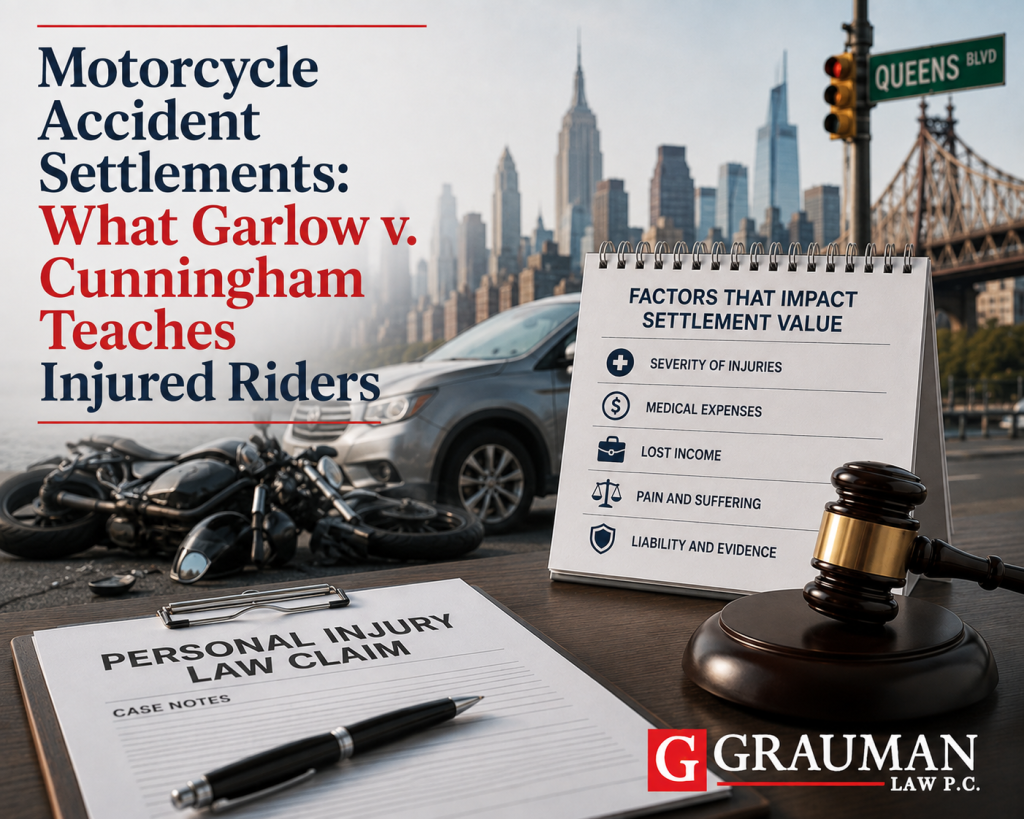
Motorcycle Accident Settlements: What Garlow v. Cunningham Teaches Injured Riders

Motorcycle accidents often result in serious injuries, substantial medical expenses, and significant property damage. After a crash, insurance companies frequently move quickly to negotiate a settlement, sometimes before the injured rider fully understands the extent of their losses. A recent New York case, Garlow v. Cunningham, highlights an important lesson for motorcyclists: the language contained in a settlement agreement can have a major impact on the rights you retain—and the rights you give up. The decision demonstrates why accident victims should carefully review any release or settlement document before signing it. more The Facts of the Case In Garlow v. Cunningham, the plaintiff was injured in a collision involving his motorcycle and the defendant's vehicle. Following the accident, the defendant's insurance carrier attempted to resolve the claims arising from the crash. According to the case, the insurer offered $100,000 to settle both the plaintiff's personal injury claims and his property damage claims. The plaintiff, however, did not agree to the settlement exactly as proposed. Instead, when presented with a release, the plaintiff modified the document to exclude his property damage claim. By making this change, the rider sought to preserve his ability to pursue compensation for damage to his motorcycle and related property losses while addressing the injury claim separately. The dispute eventually centered on whether a binding settlement had been reached. Why Settlement Agreements Matter After a Motorcycle Accident Many accident victims assume that once an insurance company offers compensation, the primary concern is simply the dollar amount being paid. In reality, the language contained within a settlement agreement is often just as important as the settlement figure itself. Settlement documents typically contain a release, which is a legal agreement in which the injured party agrees to give up certain claims in exchange for compensation. Depending on the wording, a release may affect: Personal injury claims; Property damage claims; Medical expenses; Lost wage claims; Future treatment costs; Pain and suffering damages; and Other rights arising from the accident. Once a valid release is signed and accepted, it can become extremely difficult—or impossible—to pursue additional compensation later. For this reason, courts closely examine whether both parties actually agreed to the same settlement terms. What Did the Court Decide? The court determined that there was no enforceable settlement agreement covering all of the claims that the defendant asserted had been resolved. The key issue was that the plaintiff modified the release before signing it. Because the rider altered the proposed agreement by excluding his property damage claim, the signed release did not match the terms originally offered by the insurance carrier. In contract law, a material change to proposed settlement terms can prevent the formation of a binding agreement if the parties have not mutually agreed to the same terms. As a result, the court declined to enforce the alleged settlement in the manner requested by the defendant. The decision illustrates a fundamental legal principle: for a settlement to be enforceable, both parties must agree to the same material terms. Understanding the Difference Between Injury Claims and Property Damage Claims One of the most important takeaways from Garlow is that personal injury claims and property damage claims are often separate components of a motorcycle accident case. Personal Injury Claims These claims generally seek compensation for losses related to physical injuries, including: Medical bills; Future medical treatment; Lost wages; Reduced earning capacity; Pain and suffering; and Other accident-related damages. Property Damage Claims Property damage claims typically involve compensation for: Motorcycle repair costs; Fair market value of a totaled motorcycle; Damaged riding gear; Helmets; Electronics; and Other personal property damaged in the collision. Although insurers sometimes attempt to resolve all claims simultaneously, accident victims may wish to address these issues separately depending on the circumstances of the case. Why Motorcycle Accident Victims Must Review Releases Carefully Insurance companies routinely use releases to finalize claims. Once signed, these documents can have significant legal consequences. Before signing any settlement paperwork, injured riders should understand: What Claims Are Being Released Some releases apply only to property damage, while others apply to all claims arising from the accident. Whether Future Medical Treatment Is Covered Motorcycle accident injuries sometimes worsen over time. Settling too early may prevent recovery for future treatment costs. Whether All Damages Have Been Evaluated Before accepting a settlement, it is important to understand the full extent of medical expenses, lost income, and other damages. Whether the Settlement Reflects the Actual Value of the Claim A settlement may appear attractive initially but fail to account for long-term consequences of the injuries. The Garlow decision serves as a reminder that even seemingly minor language changes can have significant legal implications. Motorcycle Accidents Often Result in Serious Injuries Unlike occupants of passenger vehicles, motorcyclists have very little protection during a collision. Even relatively low-speed crashes can result in: Traumatic brain injuries; Broken bones; Spinal injuries; Road rash; Internal injuries; Shoulder injuries; and Permanent disabilities. Because of the severity of these injuries, the financial stakes in motorcycle accident claims are often substantial. A settlement agreement signed too early or without careful review can significantly affect an injured rider's ability to recover full compensation. What This Means for Queens Motorcyclists Queens presents unique risks for motorcyclists due to heavy traffic, congested intersections, and frequent lane changes by other drivers. Motorcycle accidents regularly occur throughout: Long Island City; Astoria; Flushing; Jamaica; Forest Hills; Rego Park; Jackson Heights; and Kew Gardens. Following a crash, insurance adjusters may contact injured riders quickly in an effort to resolve claims. While settlement discussions are a normal part of the process, Garlow v. Cunningham demonstrates why riders should fully understand the legal effect of any release before signing. Key Takeaways From Garlow v. Cunningham The case offers several important lessons for motorcycle accident victims: Settlement Language Matters The wording of a release can determine which claims remain available and which claims are permanently resolved. Injury and Property Damage Claims May Be Treated Separately A rider may have distinct claims for bodily injuries and motorcycle damage. Both Parties Must Agree to the Same Terms A settlement generally cannot be enforced when the parties have not mutually agreed to identical material terms. Never Rush Into Signing Insurance Paperwork Accident victims should understand exactly what rights they are giving up before accepting a settlement. Conclusion The decision in Garlow v. Cunningham highlights the importance of carefully reviewing settlement agreements after a motorcycle accident. Although the insurer attempted to settle both the injury and property damage portions of the claim, the plaintiff modified the release to preserve certain rights. Because the signed document did not match the insurer's proposed terms, the court declined to enforce the settlement as the defendant requested. For injured motorcyclists in Queens and throughout New York, the case serves as an important reminder that settlement documents are more than mere paperwork. The language of a release can significantly affect future legal rights, making it essential to understand exactly what claims are being resolved before signing any agreement.

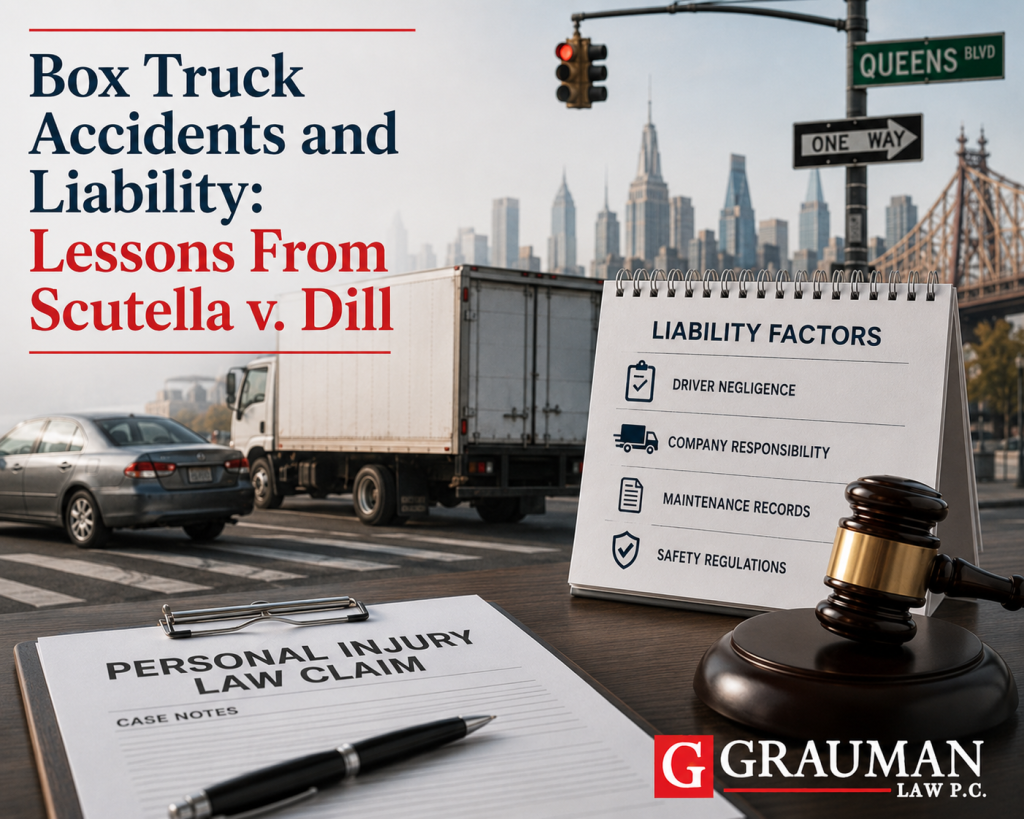
Box Truck Accidents and Liability: Lessons From Scutella v. Dill

Commercial trucks are a common sight throughout Queens, particularly in busy neighborhoods where deliveries occur throughout the day. While these vehicles play an important role in keeping businesses supplied, they can also create dangerous conditions when drivers perform backing maneuvers or obstruct active traffic lanes. A recent New York case, Scutella v. Dill, provides insight into how courts evaluate liability in truck accident cases involving blocked roadways and backing vehicles. The decision serves as a reminder that commercial drivers have a duty to operate their vehicles safely and that questions of negligence often arise when a truck creates a hazard for other motorists. more The Facts of the Case In Scutella v. Dill, the plaintiff alleged that she suffered injuries when her vehicle collided with a box truck that was backing into a driveway. According to the allegations, the truck driver was in the process of reversing the vehicle when the truck blocked the plaintiff's lane of travel. The plaintiff's vehicle subsequently struck the truck, resulting in injuries and a personal injury lawsuit. The defendant argued that the plaintiff was solely responsible for the collision and sought dismissal of the case. However, the plaintiff contended that the truck driver's actions created a dangerous roadway condition and contributed to the accident. The dispute ultimately reached the Appellate Division, which was tasked with determining whether the defendant had established entitlement to judgment as a matter of law. Why Backing Truck Accidents Are Often Legally Complex Unlike many rear-end collisions or intersection crashes, accidents involving backing commercial vehicles frequently involve multiple questions of fact. When a truck driver reverses into a roadway or blocks a lane of travel, courts may consider several factors, including: Whether the driver maintained a proper lookout; Whether the backing maneuver was performed safely; Whether warning devices or signals were used; Whether the driver could adequately see approaching traffic; Whether the truck obstructed the roadway for an unreasonable period of time; and Whether the driver exercised reasonable care under the circumstances. Because large commercial vehicles often have significant blind spots, backing maneuvers can present unique dangers to nearby motorists. What Did the Court Decide? The Appellate Division reinstated the plaintiff's complaint, allowing the lawsuit to proceed. The court explained that the defendant had the burden of demonstrating either that he was not negligent or that any alleged negligence was not a proximate cause of the accident. Importantly, the court found that unresolved factual questions remained regarding the truck driver's conduct. Specifically, issues existed concerning whether the defendant maintained a proper lookout and whether he acted reasonably while backing the truck into the driveway. Because these questions could not be resolved as a matter of law, the defendant was not entitled to dismissal of the case. As a result, the plaintiff was permitted to continue pursuing her claims. The Importance of Reasonable Care for Commercial Drivers Commercial drivers are not automatically liable simply because an accident occurs. However, they are expected to operate their vehicles with reasonable care under the circumstances. This duty becomes especially important when a driver is performing a backing maneuver. Backing a large truck into a driveway, loading area, or commercial property often requires careful attention to surrounding traffic. A driver must remain aware of approaching vehicles, pedestrians, cyclists, and other roadway users. When a truck blocks an active lane of travel, questions may arise regarding whether the maneuver was performed safely and whether sufficient precautions were taken to avoid creating a hazard. The Scutella decision demonstrates that courts closely examine these circumstances before determining whether a commercial driver bears responsibility for a crash. Common Causes of Box Truck Accidents Box truck accidents occur for many reasons, particularly in densely populated urban areas like Queens. Some of the most common contributing factors include: Unsafe Backing Maneuvers Backing accidents often occur when drivers fail to adequately monitor surrounding traffic or misjudge the available space. Obstructed Traffic Lanes A truck that blocks part or all of a travel lane can create a sudden hazard for approaching motorists. Limited Visibility Commercial trucks frequently have significant blind spots that make it difficult for drivers to see vehicles approaching from certain angles. Driver Distraction Like all motorists, commercial drivers can become distracted by phones, navigation systems, delivery schedules, or other factors. Congested Urban Roadways Heavy traffic conditions often leave drivers with little time to react when a truck unexpectedly enters or obstructs their lane. What This Means for Injury Victims The outcome of Scutella v. Dill highlights an important principle of New York personal injury law: liability is not always as straightforward as one party claims. Defendants often argue that an injured motorist was entirely responsible for a collision. However, courts will carefully examine all of the circumstances surrounding the accident before reaching that conclusion. For injured drivers, this means that a claim may still be viable even when the defense attempts to shift all blame onto the plaintiff. Evidence such as: Accident reports; Witness statements; Surveillance footage; Dash camera recordings; Photographs of the scene; and Expert accident reconstruction analysis may all play important roles in establishing how a truck accident occurred and whether the commercial driver contributed to the collision. The Reality of Box Truck Accidents in Queens Queens experiences significant commercial vehicle traffic every day. Delivery trucks, moving trucks, construction vehicles, and commercial box trucks routinely travel through some of the borough's busiest neighborhoods. Areas such as Long Island City, Astoria, Flushing, Jamaica, Forest Hills, and Jackson Heights frequently experience congestion caused by loading operations and commercial deliveries. Drivers in these neighborhoods often encounter trucks that are: Backing into driveways; Entering loading docks; Blocking travel lanes; Double-parked near businesses; or Maneuvering through narrow streets. When these activities are performed carelessly, serious accidents can occur. Key Takeaways From Scutella v. Dill The Scutella decision offers several important lessons for motorists: Commercial Drivers Must Exercise Reasonable Care Truck drivers performing backing maneuvers have a duty to operate their vehicles safely and remain aware of surrounding traffic. Blocking a Lane Can Create Liability Issues When a truck obstructs an active lane of travel, courts may examine whether the obstruction contributed to the collision. Fault Is Not Always Clear-Cut Even when a defendant claims that another driver caused the crash, factual disputes may prevent dismissal of the case. Thorough Investigation Matters Photographs, witness statements, surveillance footage, and other evidence can be critical in determining how a truck accident occurred. Conclusion The decision in Scutella v. Dill illustrates how New York courts evaluate liability in accidents involving box trucks and backing maneuvers. Although the defendant argued that the plaintiff was solely responsible for the crash, the Appellate Division found that unresolved questions remained regarding whether the truck driver acted reasonably and maintained a proper lookout. For Queens motorists, the case serves as an important reminder that commercial vehicles can create dangerous roadway conditions when backing into driveways or obstructing traffic lanes. When a truck driver's conduct contributes to a collision, injured victims may have the right to pursue compensation for their injuries and losses under New York law.

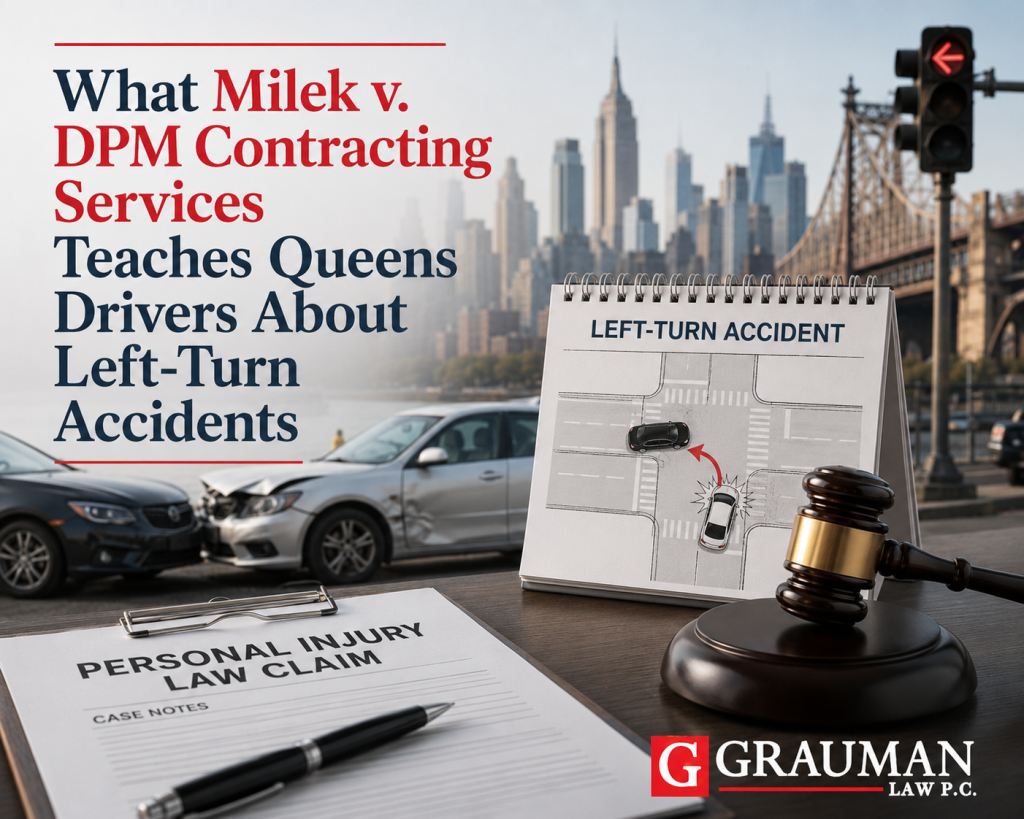
What Milek v. DPM Contracting Services Teaches Queens Drivers About Left-Turn Accidents

Left-turn accidents are among the most common causes of serious motor vehicle collisions in New York. When a driver turns left across oncoming traffic without yielding the right of way, the consequences can be devastating. A recent New York case, Milek v. DPM Contracting Services, Inc., demonstrates how courts analyze fault in these situations and why establishing liability is only one part of a successful personal injury claim. For drivers in Queens, where busy intersections and heavy traffic create countless opportunities for left-turn collisions, this case offers important insight into how New York courts determine responsibility after an accident. more The Facts of the Case In Milek v. DPM Contracting Services, Inc., the plaintiff sought summary judgment on the issue of liability following a motor vehicle accident. According to the plaintiff, he was traveling straight through an intersection when the defendant driver made a left turn directly into his path. The plaintiff argued that the collision occurred because the defendant failed to yield the right of way before attempting the turn. Under New York law, drivers making left turns have a duty to ensure that the maneuver can be completed safely before crossing oncoming traffic. The plaintiff moved for summary judgment, asking the court to determine that the defendants were legally responsible for causing the accident without the need for a trial on liability. Why Left-Turning Drivers Face a Heavy Burden Under New York Law New York Vehicle and Traffic Law places a significant responsibility on drivers who make left turns at intersections. A motorist intending to turn left must yield to approaching vehicles that are close enough to constitute an immediate hazard. This rule exists because left turns are inherently dangerous. A driver crossing opposing lanes of travel must accurately judge the speed and distance of oncoming vehicles and wait until it is safe to proceed. When a collision occurs during a left turn, courts frequently examine whether the turning driver failed to yield the right of way. If the evidence shows that the oncoming vehicle was lawfully proceeding through the intersection and had the right of way, the turning driver may be found negligent as a matter of law. The Court's Decision The court granted summary judgment in favor of the plaintiff on the issue of liability. A significant factor in the decision was the defendants' failure to appear for depositions. Because the defendants did not provide testimony or evidence creating a factual dispute regarding how the accident occurred, they were unable to effectively challenge the plaintiff's version of events. Based on the evidence presented, the court concluded that the plaintiff established that he was traveling straight through the intersection when the defendant made an unsafe left turn into his path. As a result, the plaintiff successfully demonstrated entitlement to judgment on liability. This meant that, for purposes of the lawsuit, the defendants were deemed legally responsible for causing the crash. Why Winning on Liability Does Not End the Case Many accident victims assume that proving another driver caused a crash automatically guarantees compensation. However, New York's no-fault insurance system creates an additional hurdle for many injured plaintiffs. Even after obtaining summary judgment on liability, the plaintiff in Milek still faced a separate legal issue: whether he sustained a "serious injury" under New York Insurance Law § 5102(d). The serious injury threshold is a critical component of many New York car accident cases. To recover damages for pain and suffering, an injured person typically must demonstrate that their injuries satisfy one of the categories outlined in the statute. Examples may include: Significant limitation of use of a body function or system; Permanent consequential limitation of use of a body organ or member; Fractures; Significant disfigurement; or Certain medically determined impairments that substantially interfere with daily activities. Because liability and injury are separate legal issues, a plaintiff can successfully establish fault while still being required to prove that their injuries meet the statutory threshold. Lessons for Queens Drivers Queens is home to some of the busiest intersections in New York City. Areas along Queens Boulevard, Northern Boulevard, Woodhaven Boulevard, Hillside Avenue, and other heavily traveled roadways frequently see collisions involving left-turning vehicles. The Milek decision reinforces several important principles: Drivers Making Left Turns Must Yield Motorists attempting a left turn cannot simply assume they have enough time to complete the maneuver. They must yield to oncoming vehicles that have the right of way and wait until the turn can be made safely. Evidence Matters The plaintiff was able to establish liability because the evidence supported his version of events and the defendants failed to present contrary evidence. Police reports, witness statements, photographs, surveillance footage, and deposition testimony can all play critical roles in determining fault. Liability Is Only One Part of a Personal Injury Case Even when fault appears clear, injured victims must still prove the extent of their injuries and, in many cases, satisfy New York's serious injury threshold to recover non-economic damages. Early Legal Action Can Help Preserve Important Evidence After a left-turn accident, crucial evidence may disappear quickly. Surveillance footage may be overwritten, witnesses may become difficult to locate, and physical evidence can be lost. Prompt investigation can strengthen a victim's ability to establish both liability and damages. Conclusion The decision in Milek v. DPM Contracting Services, Inc. serves as a reminder that drivers who make unsafe left turns can be held liable when they fail to yield the right of way to oncoming traffic. The case also highlights an important reality of New York personal injury litigation: proving fault is often only the first step. For Queens drivers injured in a left-turn collision, understanding how courts analyze liability and serious injury claims can be critical when pursuing compensation. While every case depends on its unique facts, Milek demonstrates how clear evidence of an unsafe left turn can establish responsibility for a crash and position an injured victim to pursue recovery under New York law.