Get A Free Case Evaluation

We handle both personal injury and criminal defense. Please fill out the form below for your free consultation or call us at 347-620-2865.

Blog / Criminal Law

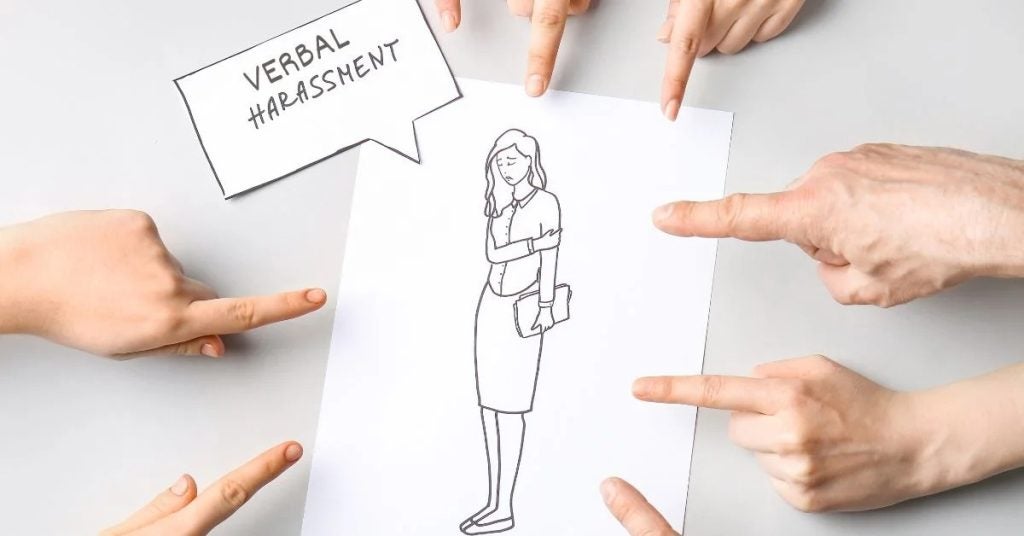
What Qualifies as Verbal Harassment?

What Qualifies as Verbal Harassment?

Among the many forms of misbehaviors in workplaces, verbal harassment creates severe psychological and emotional impacts on victims.

It will outline in detail what constitutes verbal harassment, give a few examples of when it actually happened in real life, and advise how to go about addressing the situation if it hits your workplace.

Definition of Verbal Harassment

Verbal harassment includes words which insult, degrade, or threaten the other individual. The types may be many-insults, demeaning remarks, intimidations, constant criticism; all these often intended to cause a hostile atmosphere in work. It is actually emotional harassment because it affects one’s mental status, self-esteem, and well-being.

At the workplace, anybody can be a cause of verbal harassment: a supervisor, coworker, or even a client. It is harassment if the behavior is sufficiently severe or pervasive that it affects the victim’s ability to do the job or creates an intimidating, hostile, or offensive working environment. Verbal harassment also comes within the prohibition of workplace harassment laws if it is because of race, gender, age, religion, or disability.

Examples of Verbal Harassment

Since it is usually subjective, it may be tough to single out what constitutes verbal harassment in the workplace, because it normally depends on the context and the impact of the behavior. A few common examples of verbal harassment that may indicate if one is being harassed or not are:

  • Yelling or Screaming: Verbal harassment can be constituted if one raises their voice frequently, in an aggressive manner, towards another. It is meant to intimidate one and make the person feel uncomfortably threatened.
  • Insults and Name-Calling: Using names that degrade, comments, or insults based on the appearance, work performance of a particular person, or personal attributes of the individual, all fall square within the ambit of verbal harassment.
  • Derogatory Remarks or Jokes: Poking fun at or making inappropriate comments about a victim’s race, gender, and religion are all some of the categories included within verbal harassment. Again, these types of comments are used to degradation or otherwise humiliate a particular target.
  • Threats: Verbal harassment also includes any verbal threats of harm, losing a job, or other negative consequences. Threats are the prime components that contribute to a hostile work atmosphere and may have an adverse effect on the mental condition of the victim.
  • Constant Criticism: While continuous criticism towards a particular employee, without any buyers in the shape of suggestions or constructive motivation, may be bracketed as verbal harassment if it has been emanating with an intention of taking away morale and self-confidence from a person.

These examples show how verbal harassment can range from overtly aggressive behavior to more subtle, yet equally damaging, forms of abuse. The ability to understand these examples will help you to better identify those instances where verbal harassment is taking place.

Signs and Effects of Verbal Harassment

Identifying the signs of verbal harassment at work may better help one know an appropriate course of action to take. Here are some common signs which may be observed:

  • Increased Anxiety or Stress: If you feel that the anxiety level or stress level at work has shot up considerably, then this could also be a sure shot sign of verbal harassment. Most instances of verbal abuses are meted out in an environment of fear and tension that inhibits one from concentrating on their work.
  • Loss of Productivity at Workplace: Verbal harassment does lead to a decrease in output, motivation, and performance level at work. It will also make a difference in concentrating on something and completing the work at hand.
  • Emotional Distress:Most experiences of verbal harassment are usually accompanied by emotional distress; feelings of sadness, anger, or frustration are often present. This continued abuse can deteriorate mental well-being and include signs and symptoms associated with states of depression.
  • Avoiding: When the harassment is taking a toll on the individual, it manifests in instances where one avoids talking or even being around some people in the workplace for fear of being verbally harassed.

The extent of the mental health impact caused due to verbal abuse may go as far as to develop anxiety or depression, and even physical manifestations, such as headaches or fatigue.

Legal Aspects of Verbal Harassment

While the legal definition of verbal harassment may differ from one jurisdiction to another, it contemplates almost any type of verbal conduct that creates an environment which is offensive or hostile. Harassment of a verbal nature, by nature based on these various workplace laws, including Title VII of the Civil Rights Act, is prohibited and protects workers from discrimination based on protected characteristics.

That is because it must be severe or pervasive enough to create an intimidating, hostile, or abusive work environment for a reasonable person to continue working.It also must impede the victim’s ability to effectively do her job. Let this be a reminder that one or two minor comments or isolated incidents will not suffice for cases of harassment to be considered repeated and heavier actions are what the courts call upon when considering them qualifying.

Knowing one’s rights in any case, let alone one of verbal harassment, is important. Finding legal help for that in the workplace is crucial. Expert employment dispute legal help will guide on what steps are necessary not only to show whether your situation falls within criteria that make it a legally claimed case.

“To understand more about your rights regarding harassment, check out our article on Civil Rights In New York State.”

What to Do If You Experience Verbal Harassment

If you feel that you are being verbally harassed at work, there are ways to protect yourself and take action against the behavior.

1. Document the Harassment

Document every incident of your verbal harassment. Date and time of the incident, location, who was/were involved, and a summary of what was said may be used as evidence if one files a complaint through HR or through legal means.

2. Report the Harassment to HR

If you feel safe doing so, file your complaint of verbal harassment with your HR department. HR needs to be involved in addressing the workplace harassment complaint. Get them to take some steps to at least investigate the matter and take the situation into their hands. Share all the documented evidence you have that can prove your claims.

3. Consult with labor law attorney

It is an option to see a labor law attorney in cases where the HR does nothing or if the verbal harassment continues. Find your attorney who is experienced enough to explain to you all of your legal rights and help determine how good a case you would have, should a formal complaint or lawsuit be filed.

If the harassment involves racial discrimination, consider seeking specialized legal assistance. Learn more about Where Can I Find the Best Racial Discrimination Lawyers?.

4. Practice Self-Care for good mental health.

Verbal harassment is extremely exhausting psychologically. Get professional help through a therapist or counsellor that will be able to assist you in working your way out and finding constructive ways of dealing with your feelings. This is an important investment that you need right now to ensure well-being.

FAQs on Verbal Harassment

Q: Can human resources take action regarding verbal harassment?

Yes, verbal harassment needs to be reported to HR. Actually, that is the duty of HR: it has to ensure work safety and take action on complaints against harassment or discrimination. Just make sure you have documented evidence before reporting them to HR.

Q: How is Verbal Harassment Different from Bullying?

While both are forms of abusive behavior, verbal harassment is more defined legally, particularly when some sort of protected characteristics is brought into the equation, such as race or gender. Conversely, bullying may not rise to the threshold of legality to be defined as harassment but be good enough to create a hostile work environment.

Q: How does Verbal Harassment Affect Mental Health?

Verbal harassment is associated with variable psychological consequences including increased anxiety, depression, and emotional distress and sometimes physical manifestations such as headaches, lethargy, and sleep disturbance.

Conclusion

Knowing what constitutes verbal harassment is important in being able to identify and deal with this negative behavior at the workplace. Verbal harassment can be anything from insults or degrading comments to threats or constant criticism. These facets make it really influence one’s mental health and work performance.

If you are getting something that makes you feel like you are suffering from verbal harassment, consider these steps you might take. Document incidents, report to the HR, seek a lawyer in case it will be needed. Everybody has a right to feel safe in his or her workplace; hence, it is relevant to take those acts in securing your rights.

If you are badly disturbed or would like someone to go over options with you, find an Employment dispute legal help professional who can guide you step by step on how to handle any type of verbal harassment and advise you about your rights.

Posted in:

Related Posts

What Is a Mistrial in a Criminal Case?

What Is a Mistrial in a Criminal Case?

The American system of justice is quite complex, with a host of procedural protections for all players that enter into the judicial process. Perhaps one such component of this system that occasionally arises in the process of handling cases is termed as a mistrial. But just what does it mean when a trial is referred to as a mistrial within a criminal case? The following article will explain in detail what a mistrial is, for what reason it occurs, and what its effects are, as well as discuss how important a good lawyer is in a person’s life if such an occurrence takes place. What Is a Mistrial? Mistrial is a case that was either reconsidered or annulled for some reason without the passing of a decree. In other words, a mistrial means that no result was reached as a result of the trial. So it is evident that a mistrial is not a conclusion but rather, the start of the end so to speak. Any number of reasons or errors can result in a mistrial or the mistrial itself can arise because of different factors. In other words, a mistrial is a legal tool that allows the system to correct what is perceived to be an error in the fabric of the trial. It would be fair to say that if a mistrial has been declared, it does signify an effed up conclusion. However, there can be quite a bit of variation if we consider the implications of a court saying ’let’s do this over’ . All in all, a Mistrial is a turn around and where on almost every case a different verdict is expected. Common Reasons for a Mistrial There are many reasons mistrials might take place, however the most prevalent relate to jury deadlock, procedural mistakes or professional malfeasance. Let’s take a look at these in more detail: 1. Jury Deadlock (Hung Jury) Jury deadlock which is also called a hung jury, is one major reason for the mistrial. The American system requires the judgment to be done through a jury of peers that needs to come to a perverted conclusion for the majority of the crimes. This means that all members of the jury have to concur on the fact whether the defendant is guilty or not guilty. When juries deliberate for a longer period but are unable to reach a consensus on all the issues, the judge considers this cause as an opportunity to assert the mistrial rule’. It is because the jurors are unable to carry out their basic duty which is ascertaining whether the accused is innocent or guilty. In such a situation, it is the case in the prosecution which it has the choice of retrying with another jury, leaving the case, or seeking a settlement with the alleged accused. 2. Procedural Errors Mistrials most frequently occur due to some form of procedural error that leads to a certain unfairness in the trial process. For instance, there are rigorous rules in the preservation and presentation of evidence, the treatment of witnesses, and the conduct of trial. “ Understanding Knife Laws in New York is an example of legislation that could impact trial procedures depending on the charges involved”. These rules make equal opportunity for prosecution and defense to be heard and thus present a case. In serious procedural errors, like egregious mismanagement of evidence, inadequate instruction of the jury, or otherwise admitting other evidence, a judge may rule for a mistrial. These types of errors void the trial and prevent an honest determination of the fact. A defense could now motion for dismissal of all charges, or the prosecution may re-try the case with corrected procedures. 3. Professional Misconduct One more acknowledged ground for a mistrial is professional misconduct by the prosecution or the defense. Attorneys must observe the ethical rules and professional standards; thus, any intentional departure from such standards will have serious consequences against the trial. Examples of this are attempts to introduce excluded evidence, making statements designed to inflame the jury, or knowingly presenting perjured testimony. After a judge determines that one or both parties have engaged in misconduct that would impact the fairness of the trial itself, he has the authority to void the results of a trial and grant a new trial. Sometimes professional misconduct involves such severest of penalties on the lawyers concerned with their disbarment or some other disciplinary action. Both parties must abide by the code of conduct so as to ensure a just trial to all the parties involved. Implications of a Mistrial Consequences depend on why the mistrial occurred. Generally speaking, a mistrial either requires that a case be dismissed or re-tried. However, whether or not a case is retried depends on several factors including, among others, the grievousness of the charges, the strength of the evidence, and of course, the reasons behind the case for mistrial. 1. Retrial of the Case Generally, in the case of a mistrial, the prosecution has a right to retry the case. It means the entire trial process gets started all over again with a different jury, and both sides will get a fresh chance to prove themselves. A retrial of a case can be costly to the prosecution and defense since they usually have to present the same arguments and pieces of evidence all over again. The decision to retry the case, however, is not automatic. There is discretion for the prosecution as to whether it would serve the interests of justice in pursuing a retrial. If the evidence against the defendant were weak or the mistrial was because of major errors or misconduct, it may not be pursued. 2. Dismissing the Charges In certain cases, there is a full dismissal of charges by the judge. This is most likely to occur if the mistrial was occasioned through gross errors or misconduct that cannot be cured. In such a case, where the court dismisses a case “with prejudice,” this means the prosecution is barred from refiling the same case, and neither may the defendant be re-tried on those same charges. This many times is done to protect the rights of the defendant from being tried over and over again for the same crime. Conversely, when a case is dismissed “without prejudice,” the prosecution, under certain circumstances, may still be able to refile charges at a later date. The Importance of a Defense Attorney in Cases of Mistrial Imposing criminal charges can overwhelm any defendant, particularly when such a case was declared a mistrial and left to the discretion of the court as to its future actions. It is in such instances that one certainly requires the services of a defense attorney to press through the rigors of the legal system on behalf of the client. 1. Fair Procedures One of the most important things a defense attorney usually does is to make sure that due process is served, and procedures are followed correctly in the sequence of events leading up to and through a trial. Everything from how evidence is handled and how witnesses are interrogated down to the case presentation by the prosecution will be scrutinized by the defense attorney. The defense attorney makes sure all procedures are followed by minimizing the chances of a mistrial to take place due to some sort of procedural error. 2. Addressing Procedural Errors If these errors occur in the procedure, the defense attorney may take such further action as he sees fit. He might file a motion to dismiss charges or request the judge to declare a mistrial. A prompt and rapid move of the defense attorney towards such procedural errors acts to safeguard his client’s rights to a fair trial. 3. Responding to Professional Misconduct If the prosecution acts in a professionally improper manner, such behavior can be brought to the attention of the judge by a defense attorney, who can duly request appropriate remedies, such as a mistrial or dismissal of the charges. The experienced defense attorney will know when to look for mistakes and will be prepared to take whatever steps are necessary in order to protect the interests of their client. FAQs About Mistrials in Criminal Cases “FAQs About Mistrials in Criminal Cases. If you’re looking for more details on criminal law, check out our article on Common Criminal Law Questions In New York State.” Q: What Is a Mistrial in a Criminal Case? A mistrial is a declaration that a trial cannot continue because something in the proceedings has negated the likelihood of a fair conclusion. The end of a trial must conclude with a “guilty” or “not guilty” decision, and usually that will be hindered by procedural errors, jury deadlock, or professional misconduct. Q: Is a Mistrial the End of a Criminal Case? A mistrial concludes the current criminal case, but it may not necessarily acquit the defendant. With the identified procedural or clerical errors fixed, the prosecution can refile the case. In rare occasions, the judge can dismiss the case “with prejudice”, which could bar the case from a future retrial. Q: Can a Defendant Request a Mistrial? Although the defense attorney cannot formally motion for a mistrial, he or she may be able to make motions to dismiss charges based on his or her belief in procedural violations or violation of rights of his or her client. Ultimately, the judge must decide whether the circumstances indeed merit declaring the case a mistrial. Q: Can a Defendant Face Trial Again After a Mistrial? Yes, a defendant might face trial again after a mistrial. If the prosecution thinks it is in the interest of justice to pursue a conviction, then it will be refiling the case. On the other hand, when the judge declares a mistrial and dismisses the case “with prejudice,” then it cannot be retried. Q: Why is a defense attorney important in my case? An individual should be represented by an experienced legal counselor in case criminal charges are brought against him, inclusive of the risk of a mistrial. This being so, it is the mandate of the defense attorney to assist his client in navigating through the gall of the legal system and protect his rights as well as see proper proceedings are carried out before, during, and after the hearing of his case. Indeed good counsel does guarantee a difference in one’s trial. Conclusion Coming from either a hung jury or sometimes even procedural errors or even professional misconduct a mistrial is a sudden and complex result in a criminal case, sometimes with overwhelming effects on both the prosecution and the defense. To a defendant, a mistrial may well equate to uncertainty and continued legal obstacles. At the same time, nevertheless, a defendant, with the assistance of an efficient defense attorney, will be able to overcome such situations and work his or her way out for the best result of the case. It has been designed in a given way to ensure fairness and protection for all parties against the rights of others in terms of criminal justice. In every declaration of mistrial, you will need to have an attorney who understands how the system works and can well represent you in a court. If you are facing criminal charges or if you have questions about mistrials and your legal options in defending yourself, it is best to get in touch with a qualified defense attorney to ensure that your rights are protected and that you receive a fair trial.

What Happens If You Kill Someone in Self-Defense in New York?

What Happens If You Kill Someone in Self-Defense in New York?

In instances where self-defense calls for one to take another life, it is easy for the line to be blurred between self-defense and criminal liability. This article covers self-defense killing in New York consequences, from an explanation of the legal framework down to possible consequences for you in case this happens. Understanding Self-Defense Laws in New York In New York, the legal term for self-defense is “justification,” which is regulated under New York Penal Law. The law provides that a person may use reasonable force to prevent imminent physical harm either against themselves or another. Deadly force can only be used under very specific circumstances. Knowing exactly when self-defense is legally justified and under what conditions a person must meet requires knowledge to avoid criminal liability for the actions taken. New York does not have a stand your ground law like some other states. It is instead a duty to retreat state. That means if you can safely avoid the confrontation, you are obliged to do so before resorting to deadly force, except in your own home. This would be considered an exception under what is called the castle doctrine, which allows you to use deadly force to protect yourself against an intruder in your home without the obligation to retreat. Legal Justification for Killing in Self-Defense Self-defense killing is serious, and it must be justified legally when certain criteria are satisfied: Imminent Threat: The threat of deadly force or serious physical injury has to be imminent. It means that the danger must be real as well as unavoidable at the same time. Proportional Response: The force applied in self-defense should be proportional to the level of the threat. If the attacker is unarmed and poses no serious threat, using deadly force may not be justified. No Safe Retreat: Under New York’s duty to retreat rule, you must attempt to avoid the situation if it is safe to do so. If you are outside your home and can safely retreat from the threat, you are obligated to do so before resorting to deadly force. It is crucial to understand these conditions to determine whether a killing in self-defense would be legally justified. Failing to meet any of these requirements can lead to criminal charges, even if you genuinely believed you were defending yourself. When Is Deadly Force Considered Justifiable? Under New York law, deadly force is justifiable if you have a reasonable belief, under the circumstances which exist at such time, that deadly force is necessary to prevent: Imminent death or serious physical injury to either yourself or another individual A forcible felony – rape, kidnapping, or armed robbery. But the burden of proof generally falls upon the person involved in the self-defence case to prove that their actions were reasonable given the circumstances and necessary perforce. The details of the incident will be closely examined by law enforcement and the courts to see if the application of deadly force is a justifiable case. Potential Legal Consequences for Self-Defense Killing For related legal topics, see our related article titled Understanding Romeo and Juliet Laws in New York, as it relates and discusses in further detail other nuances of criminal law here in New York. Even with a feeling that your self-defense actions are justified, charges can always be brought against you for killing another human being. After any incident, the police will have to investigate what happened and decide whether charges are appropriate. Depending on the evidence existing and case circumstances, you might be arrested and face the need to prove your innocence in the court of law. Whether or not the prosecutor decides to press charges will depend on the witness statements, whether any weapons were used, and whether you had a reasonable opportunity to retreat. If it goes to trial, then it will depend on whether your actions meet the criteria for self-defense under New York law. You are also not exempt from the family of the deceased filing a civil case against you for the wrongful death of their loved one; that can also happen, even when criminal charges have not been pressed against you. In civil cases, the burden of proof is much lower, meaning that even if someone is acquitted in criminal court, they may also be held liable to pay monetary damages. Factors Courts Consider in Self-Defense Cases Following are some of the factors a court will consider in determining whether a killing was justified on grounds of self-defense: The Level of Threat: Did a real credible threat of death or serious injury exist? Proportionality: Whether the force applied was proper to the circumstances. Opportunity to Retreat: Could you have safely avoided the confrontation? Prior Relationship: Was there any prior relationship between you and the attacker that may have influenced the incident? Witness Testimonies: Would there be any witnesses to corroborate the events described? Each of these factors will help you decide whether your actions were legal or whether you could be found criminally responsible for the killing. How an Attorney Can Help If You Face Self-Defense Charges If your self-defense case entails other complications – such as prior legal disputes or criminal records – you will want to refer to our related articles on Common Criminal Law Questions In New York State in order to obtain a fuller sense of the invariable legal complications. In all these kinds of cases where self-defense has been used to kill, a good and experienced criminal defense attorney has to be summoned for assistance. A self-defense claim can be quite complex for an individual to get through by himself, the right lawyer can make all the difference in protecting your rights as well as in mounting the best possible defense. It is where an attorney can help in marshaling evidence, interviewing necessary witnesses, and putting the best possible light on your case. They would know New York self-defense laws and could advise you best on what to do to avoid charges or minimize them as much as possible. For more on criminal charges and how to navigate the legal system, see our guide on Common Criminal Law Questions In New York State. FAQs About New York Self-Defense Killing Q: Can I be charged with a crime if I kill someone in self-defense in New York? A: That depends. If the proof shows that you acted within the justification of New York’s self-defense laws, you may not be indighted. However, the police will always investigate any use of deadly force. And you may well be arrested pending review of events. Q: What should I do if I’ve used deadly force in self-defense? A: Contact a criminal defense attorney immediately. Do not make any statements to law enforcement without legal representation, as anything you say could be used against you. Q: How is New York different from every other state when it comes to self-defense? A: Unlike some states, New York is a duty to retreat state, meaning that you cannot use deadly force unless unable to safely retreat from the threatening situation, except when such occurs in a dwelling. Conclusion Self-defense killing can get very legalistically complicated. It requires immense knowledge regarding New York’s self-defense laws, more so about those instances where the law permits the use of deadly force. The awareness of such limitation and requirement is highly significant in establishing this defense of self-defense so one may not end up facing criminal liability thereof. A situation may arise whereby one shall find it immensely necessary to defend oneself. Any situation in which the law may interpret your actions to be disproportionately unreasonable would make having an experienced lawyer protect your rights go a long way in ensuring that you are safe. If you have been involved in a self-defense incident in which legal service is needed, then contact our criminal defense lawyers today for a free consultation.

Can You Press Charges Against Someone for Making False Accusations?

Can You Press Charges Against Someone for Making False Accusations?

This is the power of a false accusation: it can destroy one’s personal and professional life. An accused person may face powerful challenges in most spheres of their life, including reputation damage, living a life bogged down with emotional distress, and legal complications. While one wishes to seek justice from time to time, what are you to do when there is a false accusation against you? The article in concrete form weighs up possibilities of suing on false accusations and describes legal ways of protection of rights. Understanding False Accusations A false accusation is defined as an intentional claim made by one person against another, with the intent to wrongfully charge the latter with misconduct. It could be maliciously brought into disputes or sometimes by accident. Whatever the intent may be, the outcome resulting from a false accusation can range from criminal measures against the accused to a damaged reputation and finally to colossal emotional trauma of the accused. It should again be stressed that false accusation can be committed through various forms, such as defamation, malicious prosecution, to false imprisonment; each usually carries a separate legal boundary and thus bears different consequences regarding the nature of remedies that the falsely accused has at his or her disposal. Can You Press Criminal Charges for False Accusations? The term “pressing charges” is poorly understood. To add to that, in regard to the criminal charge, only a law enforcement and prosecutor has the right to table a criminal charge against anyone here in the United States. You cannot, as a private citizen, press charges against another person charging you with lying. Rather, you can always report any such claims to the police, and provided you have all the evidence, then the police may take action: they will review your case and may file criminal charges against them. “For more information about criminal laws and your rights, you may refer to our guide on Common Criminal Law Questions In New York State.” In some, rare circumstances, the complainant would be indictable for perjury if they filed their complaint under oath, or for filing a false police report if they knowingly filed a report where they knew information was not valid. Naturally, all prosecutorial decisions are made at the discretion of law enforcement and the prosecution, meaning you would not be the one personally filing those charges. Civil Remedies for False Accusations Although you cannot directly file criminal charges, one can certainly file civil action against a person for false accusations. Civil remedies compensate for the damages caused by the wrongful accusation. A few of the various legal actions possible follow: 1. Defamation Lawsuits One very common route of action leveled when one feels he or she has been accused of something untrue is to sue for defamation. Defamation occurs by the communication of a false statement that harms another person’s good reputation. There are two kinds of defamation: Libel: A statement that is written or otherwise published in the media, and would include, for example, social network sites, newspapers, and online articles. Slander: false speaking used to accuse a person, as if he has committed some wrong, casual or public, by which his reputation is damaged. To bring a case of defamation, you must be able to prove all of the following: False Statement: There was a statement made that is factually untrue. A statement to a third party: means that the false statement has been communicated to someone other than yourself. Harm to Reputation: The statement harmed your good reputation by bringing it down in personal or professional aspects. Intent or Negligence: The person making the statement was either negligent or malicious in passing on the information when he knew it was not true. 2. Malicious Prosecution Malicious prosecution is a civil remedy of those acts when someone with malafide intention, with knowledge that it is not a genuine case, initiates a case against you and consequently causes damage to your reputation or otherwise. The following elements must be established in malicious prosecution: Filing of a Lawsuit: The defendant has brought or continued an action against you. Lack of Probable Cause: The legal action was filed without good cause or justification. Malicious Intent: It was a prosecution maliciously carried on to hurt you. Favorable Termination: The proceeding was finally discharged in your favour and proved that the accusation against you had no grounds. Damages: You subsequently suffered damage, either to your reputation, emotionally, or financially. Note that malicious prosecution is not an easy claim to establish because, in proving the existence of malicious intent on the part of the accuser, clear and convincing evidence is required. However, if you successfully present your claim, then recovery on account of certain losses due to emotional distress, financial loss, and associated damage you suffered because of such a false accusation might be recovered. 3. False Imprisonment You may have a claim for false imprisonment if unlawful detention without a legal warrant or order was the result of a malicious false accusation. When a claim for false imprisonment arises, confinement lawfully restrains a person’s movements. To establish a case for false imprisonment, the following ingredients must be met satisfactorily: Intentional Confinement: The accused intentionally restricted your freedom of movement. Non-Consent: this is a case wherein you did not agree to such confinement Lack of Legal Justification: The detention occurred without a legal basis or authority. Claims for false imprisonment are made where one is falsely accused of some crime by a person, and this leads to the wrongful arrest or detention of him or her by some kind of law enforcement. What to Do If You Are Falsely Accused It’s essential to understand your civil rights and know how to protect them during legal proceedings. For further details, check out our article on Civil Rights In New York State. Whatever the case or the situation may be when one is facing false accusations, it is always indispensable to take steps for the protection of one’s rights and in seeking justice. Here are some things you may want to consider: Consult an Attorney One of the most important things you can do is consult a seasoned attorney. A good attorney will clarify your rights to you, discuss all possible legal avenues, and point out which might be advisable if you decide to file a civil action in defamation, malicious prosecution, or false imprisonment. Whichever avenue you choose, there you find the expertise and guidance of the attorney indispensable in helping you make a sound case. Collection of Evidence Evidence is imperative in defense against false accusations.Any documentation that may be related to emails, messages, postings, or social media, and any witness statements, can serve as evidence in an attempt to controvert with evidence the accusations against you. Aside from solidifying your case in the civil lawsuit, evidence is indicative that the damage brought by the false accusation includes being defamatory in nature and causing severe emotional and mental harm. Do Not Seek Revenge Of course, a person has every right to this anger or irritation when accused of something he or she has never done. However, it is never good to act back against the accuser. A surge of emotions or counter-accusation could weaken one’s legal standing and be used even against him in court.The best line of approach would be to put all efforts into creating and presenting your case, let the due process of law take effect. Protect Your Reputation The false accusations can really bring you into disrepute. If the accusation was made in public, then that is a good avenue on which you would seek professional advice on how you manage your public image. Additionally, it is best to avoid any further public statements before the case is over, as some of these may result in unintended consequences against you. Damages in a Defamation Lawsuit: Evidence The first thing that one should know when pursuing a case of defamation is the type of damages one may claim. These damages are, in essence, given as compensation for the harm false accusations have caused: Special Damages: The actual losses one could measure in terms of money that were a result of the defamation. Special damages are classified also when a person does not get a job or an economic opportunity because of another person’s false accusations. General Damages: These are non-economic in nature and include any harm to your reputation, emotional distress, or pain and suffering. These are more intangible but significant results of defamation. Punitive Damages: These are awarded when there is something much more heinous at the hand of the defendant. The idea behind punitive damages is that the wrongdoer must be punished and others must be deterred from these actions. Criminal Charges for Perjury and False Reporting Sometimes the accuser may be charged with crimes such as perjury or false reporting. Perjury was defined earlier in the book as when a person knowingly gives false testimony under oath. False reporting is a crime for actually making the report knowing the information is false to a law enforcement officer. These are charges dealt with by the law enforcement and the prosecutors, and thus you cannot make those charges yourself. You can, however, report your case to the police, and if you have enough evidence to present, they may possibly act based on criminal charges against the accuser. The Importance of Legal Counsel This may be through a civil action lawsuit against defamation, malicious prosecution, or false imprisonment; you deserve the expertise and skills of a lawyer. The skilled lawyer will outline for you your rights, get the evidence needed to present your case, and present that evidence in court as an attempt to seek justice from an injury caused by false accusations. The whole process, from having to deal with the court system to having your voice heard, can be quite overwhelming at times. Should one be falsely accused of something, he or she would need an attorney by his side. Never try to fight a battle alone, as it is highly recommended that an active professional is on your side, with complete assurance to present you in court for fighting for one’s right. Conclusion Civil remedies include libel suits, complaint against malicious prosecution, or civil action for false imprisonment, wherein the plaintiff can receive damages as its restorative value over one’s reputation, among others. This is, in general, the process to defend oneself against a false accusation: protection of rights, preservation of evidence, and seeking an attorney. The lawyer will, therefore, be in a position to take you through every step as you begin the building of your case, piece together the relevant evidence, and present it to the court as you regain your good name and receive your justice. If you are a victim of a false accusation, do not wait another day to contact an attorney abou tyour legal options and take the first step towards defending your rights and finding justice.