Get A Free Case Evaluation

We handle both personal injury and criminal defense. Please fill out the form below for your free consultation or call us at 347-620-2865.

Blog / Personal Injury

Commercial Vehicle Accident Attorney in Forest Hills, NY: What Injured Victims Need to Know After a Crash

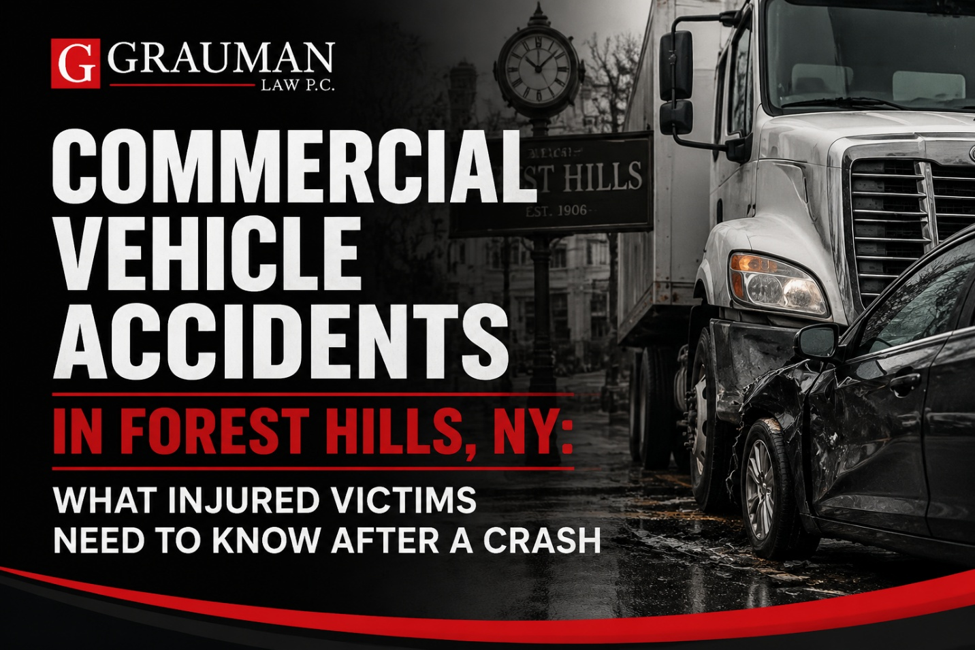
Commercial vehicle accident in Forest Hills, NY showing a truck collision with a passenger vehicle and representing injured victims seeking legal guidance from Grauman Law P.C

A commercial vehicle accident can happen in a matter of seconds, but the physical, financial, and emotional impact can last for months or even years. One moment you may be traveling through Forest Hills, NY, and the next you may be dealing with painful injuries, medical appointments, vehicle repairs, lost income, and uncertainty about what to do next.

Commercial vehicle crashes are often more complicated than standard collisions because they may involve delivery companies, employers, commercial insurance carriers, vehicle owners, contractors, or multiple parties who may share responsibility.

If you were injured in a commercial vehicle accident in Forest Hills, NY, understanding your rights is an important first step. Whether the crash involved a delivery truck, company vehicle, service van, construction vehicle, or another commercial vehicle, determining fault requires a detailed investigation into how the accident happened.

Grauman Law P.C. helps injured victims throughout Forest Hills, Queens, and surrounding New York communities understand their legal options after serious crashes. Our team works to investigate accidents, identify responsible parties, and help clients pursue compensation for injuries and losses.

If you need guidance after a commercial vehicle accident, call 347-620-2865 or Contact us today to schedule a consultation with Grauman Law P.C.

Do not wait to understand your rights after a serious crash. Contact Grauman Law P.C. today for legal support after a commercial vehicle accident in Forest Hills, NY.

Why Commercial Vehicle Accidents Are Different From Other Crashes in Forest Hills, NY

Many people assume a commercial vehicle accident is handled the same way as a typical collision. However, these cases often involve additional legal and insurance issues that can make recovering compensation more challenging.

A commercial vehicle accident may involve:

  • The commercial driver
  • The employer or company that owns the vehicle
  • A delivery or transportation company
  • A vehicle leasing company
  • A maintenance provider
  • Commercial insurance carriers
  • Other potentially responsible parties

Unlike many regular crashes, commercial vehicle accident claims often require reviewing additional evidence, including:

  • Driver employment records
  • Vehicle maintenance records
  • Company safety procedures
  • Training documentation
  • Accident reports
  • Witness statements
  • Available video footage

For example, if a delivery driver causes a crash while making stops throughout Queens, the investigation may involve not only the driver but also the company responsible for hiring, training, and supervising that employee.

Commercial insurance companies may begin investigating immediately after an accident. Before providing statements or accepting a settlement offer, speak with Grauman Law P.C. by calling 347-620-2865 or visiting our Contact us page.

Common Types of Commercial Vehicle Accidents in Forest Hills, NY

Commercial vehicles operate throughout Forest Hills and surrounding Queens neighborhoods every day. Busy roads, delivery routes, commercial areas, and residential streets can create situations where commercial vehicles and passenger vehicles are forced to share limited space.

Common commercial vehicle accidents include:

Delivery Truck Accidents

Delivery trucks and vans are frequently present throughout Queens as companies transport packages, food, equipment, and supplies.

Delivery vehicle accidents may happen because of:

  • Distracted driving
  • Unsafe turns
  • Failure to yield
  • Speeding
  • Driver fatigue
  • Improper parking
  • Backing accidents

Because delivery vehicles are often larger and heavier than passenger cars, collisions can cause serious injuries.

If you were injured in a delivery truck accident, Grauman Law P.C. can help investigate whether the driver, company, or another party may be responsible.

Call 347-620-2865 or get in touch with our team to discuss your legal options.

Company Vehicle Accidents

Many businesses rely on employees who drive vehicles as part of their daily operations.

Examples include:

  • Service vans
  • Construction vehicles
  • Utility vehicles
  • Repair vehicles
  • Contractor vehicles
  • Sales vehicles

When an employee causes a crash while performing job-related duties, the company may potentially share responsibility depending on the circumstances.

Determining responsibility may require reviewing:

  • Employment information
  • Company policies
  • Driver training records
  • Vehicle ownership information

Commercial Truck Accidents

Commercial trucks can cause devastating injuries because of their:

  • Size
  • Weight
  • Limited visibility
  • Longer stopping distances

Truck accidents may involve:

  • Tractor-trailers
  • Box trucks
  • Freight trucks
  • Construction trucks
  • Garbage trucks

Victims involved in truck crashes may face extensive medical treatment, rehabilitation, lost wages, and long-term challenges.

If you were injured in a commercial truck accident, Grauman Law P.C. can help you understand your legal options. Learn more about truck accident representation here:

Truck Accident Lawyer in Forest Hills, NY

Call 347-620-2865 today to schedule a consultation.

What Causes Commercial Vehicle Accidents in Forest Hills, NY?

Commercial vehicle accidents can happen for many different reasons. While some crashes are caused by driver mistakes, others may involve unsafe company practices, inadequate training, improper maintenance, or violations of safety requirements.

Determining the cause of a commercial vehicle accident is an important step because it may help identify who can be held responsible for your injuries.

Common causes of commercial vehicle accidents include:

Distracted Driving

Commercial drivers may experience distractions while operating vehicles, including:

  • GPS navigation systems
  • Mobile devices
  • Communication with dispatchers
  • Delivery schedules
  • Route planning

Even a few seconds of distraction can lead to a serious collision, especially on busy Queens roadways where vehicles, pedestrians, and cyclists frequently share the road.

Driver Fatigue and Unrealistic Delivery Schedules

Commercial drivers may face pressure to complete routes, meet deadlines, or work extended hours. Fatigue can impact a driver's ability to safely operate a vehicle.

A fatigued driver may experience:

  • Slower reaction times
  • Reduced concentration
  • Poor decision-making
  • Difficulty maintaining vehicle control

If a company’s scheduling practices or supervision contributed to a crash, those factors may become important during an accident investigation.

Improper Vehicle Maintenance

Commercial vehicle operators and companies have a responsibility to maintain safe vehicles.

Mechanical issues that may contribute to accidents include:

  • Brake failures
  • Tire defects
  • Steering problems
  • Equipment failures
  • Lighting issues

Maintenance records and inspection reports may provide important information when determining why a commercial vehicle accident occurred.

Unsafe Driving Practices

Commercial vehicle crashes may also happen because of negligent driving behaviors, including:

  • Speeding
  • Unsafe lane changes
  • Failure to yield
  • Running traffic signals
  • Aggressive driving
  • Improper turns

When another party’s negligence causes your injuries, you may have the right to pursue compensation through a personal injury claim.

Common Injuries Caused by Commercial Vehicle Accidents

Commercial vehicle accidents often result in more serious injuries because commercial vehicles are generally larger and heavier than passenger vehicles.

Injured victims may experience:

  • Traumatic brain injuries
  • Concussions
  • Head injuries
  • Neck injuries
  • Back injuries
  • Spinal cord injuries
  • Broken bones
  • Internal injuries
  • Soft tissue injuries
  • Permanent disabilities
  • Emotional trauma

Some injuries may require:

  • Emergency treatment
  • Surgery
  • Physical therapy
  • Rehabilitation
  • Long-term medical care

The impact of a commercial vehicle accident can affect nearly every part of your life, including your ability to work, support your family, and maintain your quality of life.

Grauman Law P.C. helps injured victims understand their options after serious crashes. If another driver, company, or commercial operator caused your accident, our team can help you explore your legal options.

Call 347-620-2865 or Contact us today to discuss your commercial vehicle accident.

What Compensation Can You Recover After a Commercial Vehicle Accident?

A serious commercial vehicle accident can create significant financial challenges. Medical expenses, missed work, vehicle repairs, and ongoing treatment can quickly become overwhelming.

Depending on the circumstances of your accident, you may be able to seek compensation for:

  • Emergency medical expenses
  • Hospital bills
  • Doctor visits
  • Physical therapy
  • Rehabilitation costs
  • Future medical treatment
  • Lost wages
  • Reduced earning ability
  • Property damage
  • Pain and suffering
  • Emotional distress
  • Permanent injuries

Every accident is different. The value of a claim depends on factors such as:

  • Severity of injuries
  • Cost of medical treatment
  • Amount of lost income
  • Long-term impact of injuries
  • Available insurance coverage
  • Who was responsible for the crash

A commercial vehicle accident attorney can review the facts of your case and help you understand what options may be available.

If you are searching for a personal injury lawyer after a commercial vehicle accident in Forest Hills, NY, Grauman Law P.C. is here to help.

Call 347-620-2865 or Contact us to schedule a consultation.

What Should You Do After a Commercial Vehicle Accident in Forest Hills, NY?

The steps you take after a commercial vehicle accident can have an impact on your health, your recovery, and your ability to pursue compensation.

If you are able, consider taking the following steps:

1. Seek Medical Attention

Your health should always be your first priority.

Some injuries may not appear immediately after a crash. Seeking medical care creates documentation of your injuries and treatment.

Keep records of:

  • Medical appointments
  • Prescriptions
  • Treatment recommendations
  • Medical expenses

2. Report the Accident

Make sure the accident is reported to the appropriate authorities.

An official accident report may contain important details about:

  • The vehicles involved
  • The drivers involved
  • The accident location
  • Potential contributing factors

3. Document the Scene

If possible, collect evidence, including:

  • Photos of vehicle damage
  • Photos of the roadway
  • Photos of injuries
  • Driver information
  • Insurance information
  • Witness contact information

Evidence can become more difficult to obtain as time passes.

4. Be Careful When Speaking With Insurance Companies

After a commercial vehicle accident, you may receive calls from insurance representatives.

Before providing a recorded statement or accepting a settlement offer, consider speaking with an attorney.

Commercial insurance companies often have teams working to protect their financial interests. Understanding your rights before making decisions can help protect your claim.

5. Contact Grauman Law P.C.

Commercial vehicle accident claims can involve complicated liability issues. Acting quickly may help preserve important evidence and protect your legal options.

Call 347-620-2865 or get in touch with Grauman Law P.C. today.

Do not wait until evidence is lost or deadlines become an issue. Speak with a legal team that understands commercial vehicle accidents in Forest Hills, NY.

Why Choose Grauman Law P.C. After a Commercial Vehicle Accident in Forest Hills, NY?

After a commercial vehicle accident, injured victims often face challenges that go beyond physical injuries. You may be dealing with medical bills, insurance companies, missed work, vehicle repairs, and uncertainty about what happens next.

Choosing the right legal team can help you better understand your options and protect your rights throughout the process.

Grauman Law P.C. helps injured clients throughout Forest Hills, Queens, and surrounding New York communities by focusing on:

  • Investigating how the accident occurred
  • Identifying all potentially responsible parties
  • Reviewing available evidence
  • Communicating with insurance companies
  • Evaluating accident-related losses
  • Helping clients pursue compensation

Commercial vehicle accidents often require a detailed investigation because responsibility may not always fall on one person. A driver, employer, vehicle owner, maintenance company, or another party may potentially share liability.

You can learn more about our approach and legal team by visiting our about us page.

If you were injured in a commercial vehicle accident in Forest Hills, NY, call 347-620-2865 or Contact us today to schedule a consultation.

Why You Should Contact a Commercial Vehicle Accident Attorney After a Crash

Many accident victims are unsure whether they need legal representation after a commercial vehicle accident.

However, these cases often involve:

  • Large commercial insurance policies
  • Businesses protecting their interests
  • Multiple potentially responsible parties
  • Complex evidence requirements
  • Disputed liability issues

A commercial vehicle accident attorney can help by:

Investigating the Accident

A thorough investigation may include reviewing:

  • Police reports
  • Driver statements
  • Vehicle damage
  • Witness accounts
  • Surveillance footage
  • Company records
  • Maintenance information

Protecting You From Insurance Pressure

Insurance companies may attempt to resolve claims quickly. However, an early settlement may not account for:

  • Future medical treatment
  • Long-term injuries
  • Lost earning ability
  • Ongoing expenses

Before accepting an offer, speak with Grauman Law P.C. to understand whether it reflects the full impact of your accident.

Call 347-620-2865 or Contact us to discuss your case.

Frequently Asked Questions About Commercial Vehicle Accidents in Forest Hills, NY

What should I do immediately after a commercial vehicle accident in Forest Hills, NY?

After a commercial vehicle accident, seek medical attention, report the accident, document the scene, gather information from witnesses, and avoid making statements to insurance companies before understanding your rights.

Speaking with Grauman Law P.C. early may help protect important evidence and your ability to pursue compensation.

Do I need a lawyer after a commercial vehicle accident?

A commercial vehicle accident lawyer can help investigate the crash, identify responsible parties, handle insurance communications, and pursue compensation for accident-related losses.

Commercial vehicle cases are often more complex than standard crashes because businesses and insurers may be involved.

Can I file a claim if a company vehicle caused my accident?

Possibly. If an employee caused an accident while performing work-related duties, the company may potentially share responsibility depending on the circumstances.

Determining liability requires reviewing factors such as employment status, company policies, and how the accident occurred.

How much compensation can I recover after a commercial vehicle accident?

The amount of compensation available depends on factors including:

  • Severity of injuries
  • Medical expenses
  • Lost wages
  • Future medical needs
  • Property damage
  • Long-term impact of the accident

Grauman Law P.C. can review your situation and help explain your potential options.

How long do I have to file a commercial vehicle accident claim in New York?

The deadline depends on the specific circumstances of the accident and the parties involved. Because important evidence can become harder to obtain over time, contacting an attorney as soon as possible is recommended.

What if I was partially responsible for the accident?

New York follows comparative negligence rules, meaning an injured person may still be able to recover compensation even if they share some responsibility for the crash.

The amount recovered may depend on each party’s percentage of fault.

Contact Grauman Law P.C. After a Commercial Vehicle Accident in Forest Hills, NY

A commercial vehicle accident can leave you facing injuries, financial stress, and uncertainty about your future.

Whether you were injured in a delivery truck crash, company vehicle accident, commercial truck collision, or another type of commercial vehicle accident, understanding your legal options is an important first step.

Grauman Law P.C. helps injured victims throughout Forest Hills, Queens, and surrounding New York communities pursue compensation after serious crashes.

If you or a loved one was injured:

Call Grauman Law P.C. today at 347-620-2865.

You can also Contact us online to schedule a consultation.

Do not wait to understand your rights after a serious commercial vehicle accident. Contact Grauman Law P.C. today for legal guidance and take the first step toward protecting your future.

Related Resources

Learn more about commercial vehicle accident representation in Forest Hills, NY:
Commercial Vehicle Accidents in Forest Hills, NY

Posted in:

Related Posts

Rideshare crash scene with accident claim documents and legal representation.

How to Bring a Claim After a Rideshare Crash

After Uber or Lyft accidents here in Kew Gardens, things can get confusing. There are various insurance filings that might need to be made, and a lot depends on the status of the rideshare driver at the moment of the accident. Our firm can help you by coordinating all these steps, identifying every available policy and source of compensation, and handling all communications and negotiations to get you the best possible outcome. How to Bring a Claim After Uber/Lyft Accidents Getting Started in the App Once you've done the basics (called 911, helped anyone injured), immediately screenshot the Uber or Lyft trip details in the app so you have the driver's name, vehicle information, route, timestamps, and trip status (if you're a passenger). That data establishes which coverage period applied, and it can become inaccessible later, so it's best to have it safe right from the beginning. After you've got your screenshots, report the incident through the rideshare app. Be sure to give only the basic facts. Avoid making any statements about fault, talking about the extent of injuries, or even about how the collision happened. Getting Evidence Photograph the vehicle damage, roadway, any traffic controls, and visible injuries. If there are witnesses, get their contact info if they're willing to give it. You'll give all this to your lawyer, and your lawyer will put it together, look for more as needed, and chase things down. Dealing With No-Fault New York's no-fault statute requires every motor vehicle, including those used for Uber and Lyft trips, to carry Personal Injury Protection (PIP) coverage that pays medical expenses and a portion of lost wages to driver and any passengers, regardless of who caused the crash and up to the basic $50,000 limit. A passenger riding in an Uber is a covered person under that policy. The group insurance policy that rideshares maintain for drivers must include this no-fault coverage, and you'll need to turn to this first to cover your losses. You have 30 days to bring a claim, and we can get that started for you. Regardless of what insurers you talk with during this process, however, always refuse to give any recorded statements, stick to facts only, and pass off all the communication to your lawyer as soon as you have one. Above all, never sign anything without having your lawyer look over it first. Other Insurance The insurance available from the rideshare company depends on the driver's status at the moment of impact: App off: only the driver's personal policy applies Logged on but not yet engaged in a trip: minimum limits of $75,000 per person and $150,000 per accident for bodily injury, plus $25,000 for property damage Accepted a request/have a passenger: $1,250,000 coverage for bodily injury, death, and property damage, plus $1,250,000 in supplemental uninsured/underinsured motorist coverage and no-fault Beyond Economic Damages To get compensation for pain and suffering and other non-economic damages that go beyond the no-fault benefits, you'll need to have what New York law considers a serious injury. Your lawyer can help you understand whether you qualify for this and then deal with the paperwork and other issues. Talk to a Lawyer in Kew Gardens If you've been in a rideshare wreck, contact us at Grauman Law P.C. right away for a free consultation. From our Kew Gardens and Forest Hills offices, we serve clients through NYC and beyond.

Bicycle accident scene in NYC

Bicycle Accident Claims: Lessons From Velazquez v. County of Westchester

When people think of bicycle accidents, they often picture collisions between cyclists and motor vehicles. While those crashes are common, not every bicycle injury involves a negligent driver. In many cases, dangerous property conditions, poorly maintained premises, unexpected obstacles, or hazardous structures can cause serious injuries to cyclists. A recent New York case, Velazquez v. County of Westchester, highlights an important aspect of bicycle accident litigation: property owners and those responsible for maintaining premises may be held liable when dangerous conditions contribute to a cyclist's injuries. The decision serves as a reminder that bicycle accident claims can extend beyond roadway negligence and may involve issues of premises liability, property maintenance, and dangerous conditions. The Facts of the Case In Velazquez v. County of Westchester, the plaintiff brought a personal injury lawsuit after allegedly suffering injuries while riding his bicycle near the North White Plains train station parking lot. According to the plaintiff, the accident occurred when he collided with the arm of a toll booth located within the parking facility. The plaintiff alleged that the condition of the property contributed to the accident and sought compensation for his injuries. The defendants moved for summary judgment, arguing that the case should be dismissed before trial. They contended that the toll booth arm was an open and obvious condition and therefore could not serve as the basis for liability. The dispute ultimately reached the Appellate Division, which examined whether the defendants had established entitlement to dismissal as a matter of law. Bicycle Accident Cases Are Not Always About Cars Many cyclists are surprised to learn that a bicycle accident claim may arise even when no motor vehicle is involved. Cyclists frequently encounter hazards such as: Gates and barriers; Parking lot structures; Construction equipment; Potholes; Uneven pavement; Defective sidewalks; Roadway debris; Poor lighting conditions; Improperly placed signs; and Other dangerous property conditions. When a dangerous condition causes a cyclist to crash, the legal analysis often focuses on who owned, controlled, maintained, or was responsible for the area where the accident occurred. The Velazquez case demonstrates how these issues can become central to a bicycle injury lawsuit. Understanding the "Open and Obvious" Defense One of the primary arguments raised by the defendants involved the legal concept of an "open and obvious" condition. Property owners frequently argue that they should not be liable for injuries caused by conditions that are readily visible. The theory behind this defense is that individuals should be expected to observe and avoid obvious hazards. However, New York courts have repeatedly explained that simply labeling a condition as "open and obvious" does not automatically eliminate liability. Courts must often consider additional factors, including: The surrounding environment; Lighting conditions; Visibility; The location of the hazard; Foreseeable use of the property; and Whether the condition was inherently dangerous. As a result, an allegedly visible condition may still present an unreasonable risk of harm under certain circumstances. What Did the Court Decide? The Appellate Division reversed the lower court's dismissal of the case. The court determined that the defendants failed to establish, as a matter of law, that the toll booth arm was both open and obvious and not inherently dangerous under the circumstances existing at the time of the accident. In other words, the court concluded that factual questions remained regarding the nature of the condition and whether it presented an unreasonable danger to users of the property. Because those issues could not be resolved solely based on the evidence presented by the defendants, dismissal was inappropriate. As a result, the plaintiff was permitted to continue pursuing the bicycle injury claim. Why Property Owners Have a Duty to Maintain Safe Conditions Under New York law, property owners and those responsible for maintaining property generally have a duty to keep their premises in a reasonably safe condition. This duty may apply to: Parking lots; Commercial properties; Train stations; Shopping centers; Sidewalks; Apartment complexes; Public facilities; and Other areas where people are expected to travel. The precise scope of that duty depends on the circumstances of each case. When a dangerous condition exists and contributes to an injury, courts may examine: Whether the owner created the condition; Whether the owner knew about the condition; Whether the owner should have discovered it through reasonable inspection; and Whether reasonable corrective action was taken. Why Visibility Alone Does Not End a Case One of the most important lessons from Velazquez is that visibility is only one factor in determining liability. Property owners often argue that a condition was obvious and therefore not actionable. However, courts recognize that some visible conditions can still be dangerous. For example: A visible pothole may still present a hazard; A visible obstruction may be improperly placed; A visible barrier may be difficult to perceive under certain lighting conditions; or A visible structure may create an unreasonable risk because of its location. The Appellate Division's decision reinforces the principle that courts must evaluate the totality of the circumstances rather than relying solely on whether a condition could theoretically be seen. Common Property Hazards That Cause Bicycle Accidents Cyclists are particularly vulnerable to roadway and property defects because bicycles are less stable than passenger vehicles and often have limited room to maneuver. Common hazards include: Gates and Barriers Parking lot arms, access gates, and entry barriers can create risks when improperly maintained or positioned. Potholes and Surface Defects Even relatively small roadway defects can cause a cyclist to lose control. Poor Lighting Inadequate illumination can make obstacles difficult to detect. Construction Zones Temporary barriers, debris, and equipment can create dangerous conditions. Drainage Grates and Utility Covers Improperly maintained infrastructure may present hazards to cyclists. Debris and Obstructions Loose materials, equipment, or objects left in travel areas can contribute to crashes. What This Means for Injury Victims The Velazquez decision highlights the importance of conducting a thorough investigation after a bicycle accident. Potentially important evidence may include: Photographs of the accident scene; Surveillance footage; Maintenance records; Property inspection reports; Witness statements; Lighting conditions at the time of the incident; and Evidence identifying the parties responsible for maintaining the property. Without a detailed investigation, important evidence regarding the cause of the accident may be lost. Why This Case Matters in Queens Queens has experienced significant growth in bicycle traffic over the past decade. Cyclists regularly travel through: Long Island City; Astoria; Flushing; Forest Hills; Jackson Heights; Sunnyside; Jamaica; and Bayside. Many bicycle routes pass through areas containing: Train stations; Parking facilities; Commercial properties; Public transportation hubs; and Mixed-use developments. As a result, bicycle accidents in Queens frequently involve property conditions in addition to motor vehicle traffic. The legal principles discussed in Velazquez are therefore highly relevant to cyclists who suffer injuries because of dangerous conditions on public or private property. Key Takeaways From Velazquez v. County of Westchester The case offers several important lessons: Bicycle Accidents Are Not Limited to Vehicle Collisions Dangerous property conditions can also cause serious cycling injuries. Property Owners May Face Liability Those who own, control, or maintain property may be responsible when hazardous conditions contribute to an accident. Open and Obvious Does Not Automatically Mean Safe Courts consider the surrounding circumstances when evaluating dangerous conditions. Thorough Investigation Is Essential Identifying responsible parties and preserving evidence is often critical to a successful claim. Conclusion The decision in Velazquez v. County of Westchester demonstrates that bicycle accident cases often involve issues far beyond motor vehicle negligence. After allegedly colliding with a toll booth arm at the North White Plains train station parking lot, the plaintiff pursued claims based on the condition of the property. The Appellate Division determined that the defendants failed to establish, as a matter of law, that the condition was open and obvious and not inherently dangerous, allowing the case to proceed. For cyclists in Queens and throughout New York, the case serves as an important reminder that dangerous property conditions can play a significant role in bicycle accidents. When hazards such as gates, barriers, poor lighting, potholes, or obstructions contribute to a crash, property owners and those responsible for maintaining the premises may face liability for resulting injuries.

Hit and run scene

Uber Hit-and-Run Claims: Lessons From Liberty Mutual v. Wilson

Uber and Lyft have become a routine part of daily life throughout New York. Whether traveling to work, heading into Manhattan, or catching a flight from JFK or LaGuardia Airport, thousands of Queens residents rely on rideshare services every day. While many passengers assume that insurance coverage is straightforward if an accident occurs, rideshare crashes often involve multiple insurance policies, overlapping benefits, and complex legal disputes. Those complications become even more significant when the at-fault vehicle leaves the scene. A recent New York case, Matter of Liberty Mutual Fire Insurance Company v. Wilson, highlights some of the legal issues that can arise after an Uber passenger is injured in a hit-and-run collision. The case illustrates the role of uninsured motorist coverage and demonstrates how insurance companies may challenge claims when questions arise about the circumstances of an accident. The Facts of the Case In Matter of Liberty Mutual Fire Insurance Company v. Wilson, the respondent was riding as a passenger in an Uber vehicle in Hempstead, New York. According to the claim, the Uber vehicle was rear-ended by another vehicle. The alleged at-fault vehicle then fled the scene without stopping. Because the driver of the other vehicle was never identified, the passenger sought compensation through uninsured motorist coverage and demanded arbitration. The insurance carrier, Liberty Mutual, challenged the claim and sought to stay the arbitration proceeding. The insurer argued that the collision may have been staged and therefore did not constitute a covered accident under the applicable insurance policy. The dispute ultimately required the court to examine issues involving uninsured motorist benefits, hit-and-run claims, and allegations of insurance fraud. Understanding Uninsured Motorist Coverage Many people mistakenly believe uninsured motorist coverage applies only when another driver lacks insurance. In reality, uninsured motorist coverage often applies in several situations, including: Accidents involving uninsured drivers; Hit-and-run collisions; Accidents involving unidentified vehicles; and Certain situations where insurance coverage is unavailable. The purpose of uninsured motorist coverage is to protect innocent individuals who suffer injuries because of financially irresponsible or unidentified drivers. Without this protection, many accident victims would be left without a practical source of compensation. For passengers injured in Uber or Lyft accidents, uninsured motorist coverage can become particularly important when the responsible vehicle leaves the scene before it can be identified. Why Hit-and-Run Accidents Create Unique Challenges Hit-and-run accidents often present difficulties that are not present in ordinary motor vehicle collisions. When the at-fault driver flees, investigators may have limited information regarding: The driver's identity; Vehicle ownership; Insurance coverage; Witnesses; and The circumstances leading to the collision. As a result, injured passengers frequently rely on uninsured motorist benefits when the responsible driver cannot be located. However, because the fleeing driver is unknown, insurance companies often scrutinize these claims carefully. Evidence becomes especially important in establishing that a legitimate hit-and-run accident actually occurred. What Did the Court Discuss? The court addressed several important principles involving uninsured motorist coverage. Among other things, the court acknowledged that deliberately staged collisions do not qualify as covered accidents under automobile insurance policies. Insurance coverage is designed to compensate victims of genuine accidents, not intentionally manufactured collisions. At the same time, the court emphasized the fundamental purpose of uninsured motorist coverage: protecting individuals who are injured by unidentified or financially irresponsible drivers. The case therefore involved competing considerations. On one hand, insurers have a legitimate interest in investigating and preventing fraudulent claims. On the other hand, innocent accident victims are entitled to the protections that uninsured motorist coverage was designed to provide. The litigation focused on these competing concerns and the circumstances surrounding the alleged hit-and-run collision. Why Uber and Lyft Accident Claims Are Often More Complex Unlike traditional car accident cases, rideshare accidents may involve several layers of insurance coverage. Depending on the circumstances, coverage may potentially involve: The rideshare driver's personal policy; Uber or Lyft insurance coverage; No-fault insurance benefits; Uninsured motorist coverage; Supplemental uninsured motorist coverage; and Other available insurance policies. The applicable coverage frequently depends on factors such as: Whether the driver was logged into the app; Whether a passenger was present; Whether a ride had been accepted; The timing of the collision; and The identity of the at-fault driver. These issues can significantly complicate an otherwise straightforward injury claim. Understanding No-Fault Benefits in New York New York's no-fault insurance system provides certain benefits regardless of who caused the accident. These benefits may include: Medical expenses; Lost earnings; Transportation costs related to treatment; and Certain other economic losses. For rideshare passengers, determining which insurer is responsible for providing no-fault benefits can sometimes become a disputed issue. Although no-fault benefits may provide immediate assistance after an accident, they are often only one part of a larger injury claim. Why Insurance Fraud Allegations Matter The insurer in Liberty Mutual v. Wilson raised concerns that the collision may have been staged. Insurance fraud allegations can dramatically alter the course of a case. When an insurer suspects fraud, it may conduct extensive investigations involving: Recorded statements; Vehicle inspections; Witness interviews; Surveillance; Accident reconstruction experts; and Examination under oath proceedings. While fraudulent claims certainly exist, legitimate accident victims can sometimes find themselves caught in lengthy investigations when insurers question the circumstances of a collision. This is one reason why documenting the accident thoroughly is often critical. Evidence That Can Strengthen a Hit-and-Run Claim Because the at-fault vehicle is often unknown, evidence becomes especially important in hit-and-run cases. Helpful evidence may include: Police Reports Prompt reporting can help establish that a hit-and-run occurred. Witness Statements Independent witnesses can provide valuable corroboration. Dash Camera Footage Video evidence may capture the fleeing vehicle or the collision itself. Uber or Lyft Ride Records App data can confirm the timing and location of the ride. Photographs Photographs of vehicle damage can help demonstrate how the collision occurred. Medical Records Treatment records help establish the nature and extent of the injuries. What This Means for Injury Victims The Wilson case highlights an important reality: rideshare accident claims often involve more than simply determining who caused the crash. Injured passengers may face issues involving: Uninsured motorist claims; Arbitration proceedings; No-fault benefits; Coverage disputes; Fraud investigations; and Multiple insurance carriers. Understanding these issues can be essential when pursuing compensation after a serious accident. Why This Case Matters in Queens Queens residents are among the most frequent users of rideshare services in New York City. Uber and Lyft trips are common for travel to and from: JFK Airport; LaGuardia Airport; Manhattan; Long Island; Brooklyn; and Nassau County. Given the volume of rideshare traffic throughout Queens, accidents involving Uber and Lyft vehicles occur regularly. When a hit-and-run driver is involved, the insurance issues can become significantly more complicated than a typical car accident claim. The principles discussed in Liberty Mutual v. Wilson therefore have direct relevance for Queens passengers who rely on rideshare services every day. Key Takeaways From Liberty Mutual v. Wilson The case offers several important lessons: Uninsured Motorist Coverage Can Protect Hit-and-Run Victims Coverage may be available when the at-fault driver cannot be identified. Rideshare Claims Often Involve Multiple Insurance Layers Determining available coverage can require careful analysis. Insurers May Investigate Suspected Fraud Questions regarding the legitimacy of an accident can lead to extensive investigations. Evidence Is Critical Documentation often plays a major role in establishing the validity of a hit-and-run claim. Conclusion The decision in Matter of Liberty Mutual Fire Insurance Company v. Wilson highlights the complexities that can arise when an Uber passenger is injured in a hit-and-run collision. While the case involved allegations that the accident may have been staged, it also reinforced the important purpose of uninsured motorist coverage: protecting innocent individuals injured by unidentified or financially irresponsible drivers. For Queens residents who use Uber or Lyft to travel throughout New York City, Long Island, and the region's airports, the case serves as a reminder that rideshare accident claims can quickly become complicated. Issues involving no-fault benefits, uninsured motorist coverage, arbitration, and insurance investigations often require careful analysis to ensure that injured passengers receive the protections afforded under New York law.