While many passengers assume that insurance coverage is straightforward if an accident occurs, rideshare crashes often involve multiple insurance policies, overlapping benefits, and complex legal disputes. Those complications become even more significant when the at-fault vehicle leaves the scene.
A recent New York case, Matter of Liberty Mutual Fire Insurance Company v. Wilson, highlights some of the legal issues that can arise after an Uber passenger is injured in a hit-and-run collision. The case illustrates the role of uninsured motorist coverage and demonstrates how insurance companies may challenge claims when questions arise about the circumstances of an accident.
The Facts of the Case
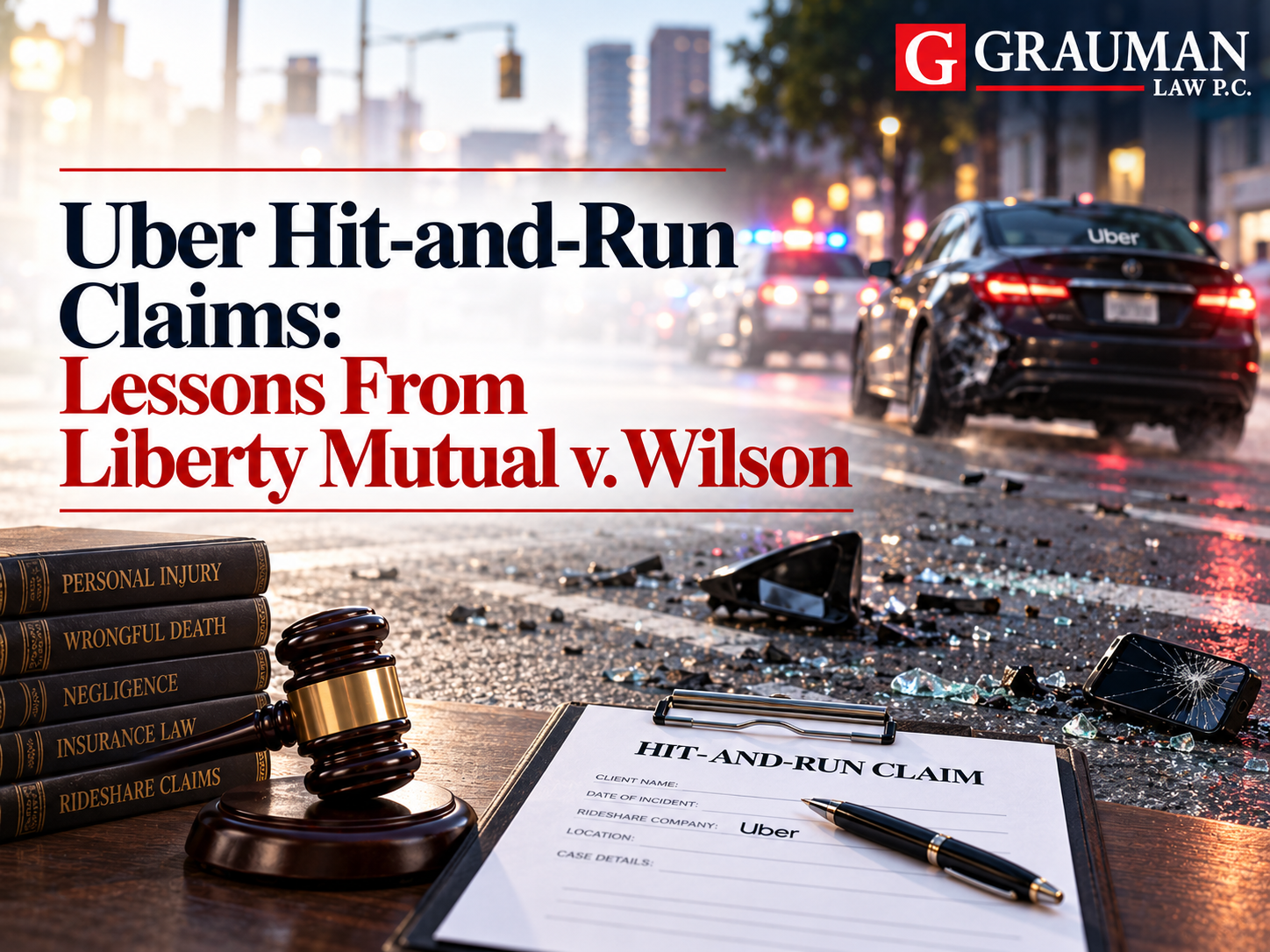
In Matter of Liberty Mutual Fire Insurance Company v. Wilson, the respondent was riding as a passenger in an Uber vehicle in Hempstead, New York.According to the claim, the Uber vehicle was rear-ended by another vehicle. The alleged at-fault vehicle then fled the scene without stopping.
Because the driver of the other vehicle was never identified, the passenger sought compensation through uninsured motorist coverage and demanded arbitration.
The insurance carrier, Liberty Mutual, challenged the claim and sought to stay the arbitration proceeding.
The insurer argued that the collision may have been staged and therefore did not constitute a covered accident under the applicable insurance policy.
The dispute ultimately required the court to examine issues involving uninsured motorist benefits, hit-and-run claims, and allegations of insurance fraud.
Understanding Uninsured Motorist Coverage
Many people mistakenly believe uninsured motorist coverage applies only when another driver lacks insurance.In reality, uninsured motorist coverage often applies in several situations, including:
- Accidents involving uninsured drivers;
- Hit-and-run collisions;
- Accidents involving unidentified vehicles; and
- Certain situations where insurance coverage is unavailable.
Without this protection, many accident victims would be left without a practical source of compensation.
For passengers injured in Uber or Lyft accidents, uninsured motorist coverage can become particularly important when the responsible vehicle leaves the scene before it can be identified.
Why Hit-and-Run Accidents Create Unique Challenges
Hit-and-run accidents often present difficulties that are not present in ordinary motor vehicle collisions.When the at-fault driver flees, investigators may have limited information regarding:
- The driver's identity;
- Vehicle ownership;
- Insurance coverage;
- Witnesses; and
- The circumstances leading to the collision.
However, because the fleeing driver is unknown, insurance companies often scrutinize these claims carefully.
Evidence becomes especially important in establishing that a legitimate hit-and-run accident actually occurred.
What Did the Court Discuss?
The court addressed several important principles involving uninsured motorist coverage.Among other things, the court acknowledged that deliberately staged collisions do not qualify as covered accidents under automobile insurance policies.
Insurance coverage is designed to compensate victims of genuine accidents, not intentionally manufactured collisions.
At the same time, the court emphasized the fundamental purpose of uninsured motorist coverage: protecting individuals who are injured by unidentified or financially irresponsible drivers.
The case therefore involved competing considerations.
On one hand, insurers have a legitimate interest in investigating and preventing fraudulent claims.
On the other hand, innocent accident victims are entitled to the protections that uninsured motorist coverage was designed to provide.
The litigation focused on these competing concerns and the circumstances surrounding the alleged hit-and-run collision.
Why Uber and Lyft Accident Claims Are Often More Complex
Unlike traditional car accident cases, rideshare accidents may involve several layers of insurance coverage.Depending on the circumstances, coverage may potentially involve:
- The rideshare driver's personal policy;
- Uber or Lyft insurance coverage;
- No-fault insurance benefits;
- Uninsured motorist coverage;
- Supplemental uninsured motorist coverage; and
- Other available insurance policies.
- Whether the driver was logged into the app;
- Whether a passenger was present;
- Whether a ride had been accepted;
- The timing of the collision; and
- The identity of the at-fault driver.
Understanding No-Fault Benefits in New York
New York's no-fault insurance system provides certain benefits regardless of who caused the accident.These benefits may include:
- Medical expenses;
- Lost earnings;
- Transportation costs related to treatment; and
- Certain other economic losses.
Although no-fault benefits may provide immediate assistance after an accident, they are often only one part of a larger injury claim.
Why Insurance Fraud Allegations Matter
The insurer in Liberty Mutual v. Wilson raised concerns that the collision may have been staged.Insurance fraud allegations can dramatically alter the course of a case.
When an insurer suspects fraud, it may conduct extensive investigations involving:
- Recorded statements;
- Vehicle inspections;
- Witness interviews;
- Surveillance;
- Accident reconstruction experts; and
- Examination under oath proceedings.
This is one reason why documenting the accident thoroughly is often critical.
Evidence That Can Strengthen a Hit-and-Run Claim
Because the at-fault vehicle is often unknown, evidence becomes especially important in hit-and-run cases.Helpful evidence may include:
Police Reports
Prompt reporting can help establish that a hit-and-run occurred.Witness Statements
Independent witnesses can provide valuable corroboration.Dash Camera Footage
Video evidence may capture the fleeing vehicle or the collision itself.Uber or Lyft Ride Records
App data can confirm the timing and location of the ride.Photographs
Photographs of vehicle damage can help demonstrate how the collision occurred.Medical Records
Treatment records help establish the nature and extent of the injuries.What This Means for Injury Victims
The Wilson case highlights an important reality: rideshare accident claims often involve more than simply determining who caused the crash.Injured passengers may face issues involving:
- Uninsured motorist claims;
- Arbitration proceedings;
- No-fault benefits;
- Coverage disputes;
- Fraud investigations; and
- Multiple insurance carriers.
Why This Case Matters in Queens
Queens residents are among the most frequent users of rideshare services in New York City.Uber and Lyft trips are common for travel to and from:
- JFK Airport;
- LaGuardia Airport;
- Manhattan;
- Long Island;
- Brooklyn; and
- Nassau County.
When a hit-and-run driver is involved, the insurance issues can become significantly more complicated than a typical car accident claim.
The principles discussed in Liberty Mutual v. Wilson therefore have direct relevance for Queens passengers who rely on rideshare services every day.
Key Takeaways From Liberty Mutual v. Wilson
The case offers several important lessons:Uninsured Motorist Coverage Can Protect Hit-and-Run Victims
Coverage may be available when the at-fault driver cannot be identified.Rideshare Claims Often Involve Multiple Insurance Layers
Determining available coverage can require careful analysis.Insurers May Investigate Suspected Fraud
Questions regarding the legitimacy of an accident can lead to extensive investigations.Evidence Is Critical
Documentation often plays a major role in establishing the validity of a hit-and-run claim.Conclusion
The decision in Matter of Liberty Mutual Fire Insurance Company v. Wilson highlights the complexities that can arise when an Uber passenger is injured in a hit-and-run collision. While the case involved allegations that the accident may have been staged, it also reinforced the important purpose of uninsured motorist coverage: protecting innocent individuals injured by unidentified or financially irresponsible drivers.For Queens residents who use Uber or Lyft to travel throughout New York City, Long Island, and the region's airports, the case serves as a reminder that rideshare accident claims can quickly become complicated. Issues involving no-fault benefits, uninsured motorist coverage, arbitration, and insurance investigations often require careful analysis to ensure that injured passengers receive the protections afforded under New York law.