A recent New York case, Marinos v. Brahaj, addresses an important legal issue that arises in many modern transportation-related accidents: whether a person’s agreement to arbitrate disputes can prevent surviving family members from pursuing a wrongful death claim in court.
The decision provides valuable guidance for families facing the aftermath of a fatal accident and highlights a critical distinction between personal injury claims and wrongful death actions under New York law.
The Facts of the Case
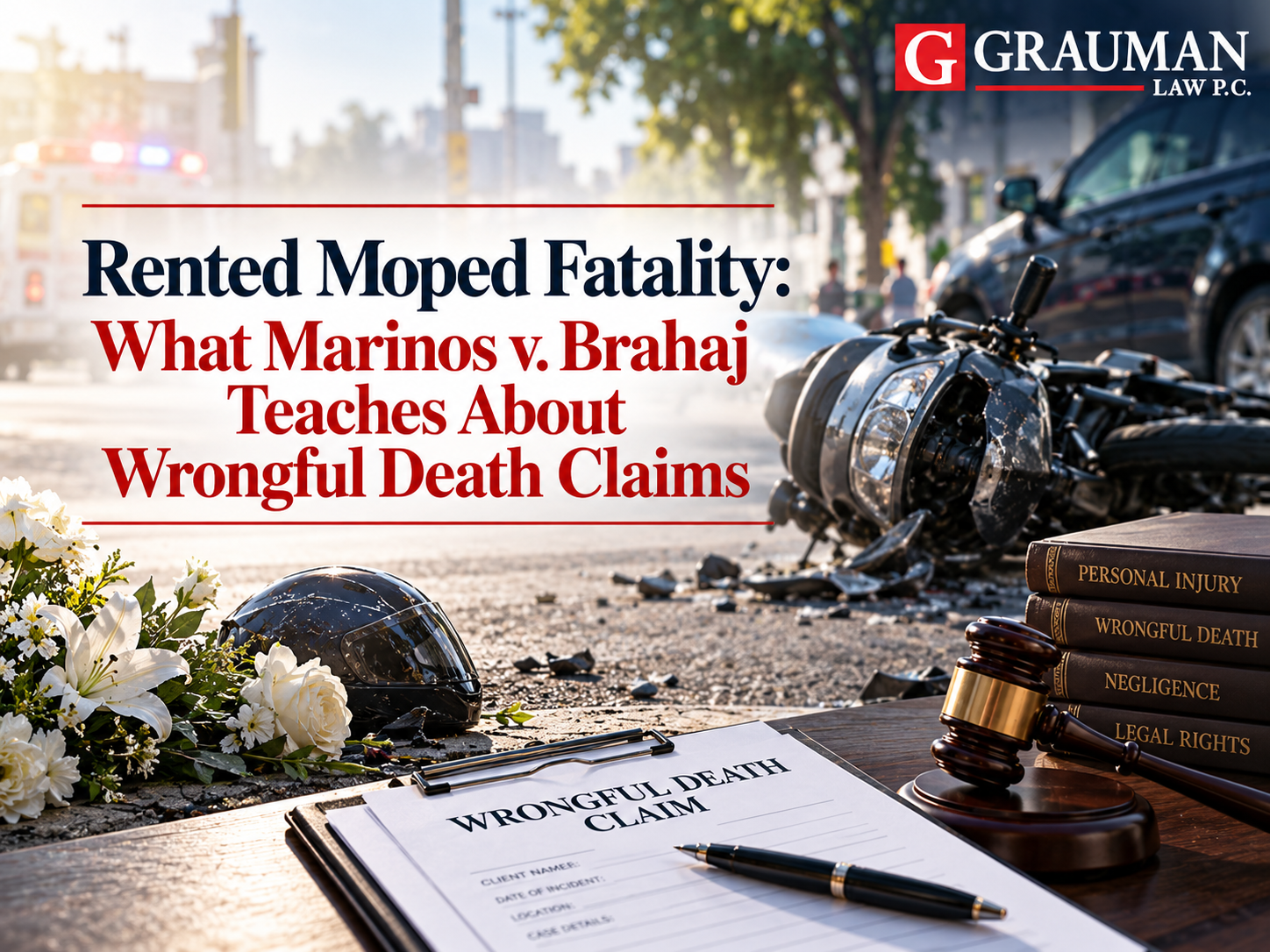
In Marinos v. Brahaj, the decedent rented and operated a Revel electric moped in Manhattan.According to the case, the rider was ejected from the moped and thrown into the roadway, where he was subsequently struck by a vehicle. The accident resulted in fatal injuries.
Following the tragedy, the decedent's parents brought legal claims arising from the incident, including claims related to personal injury and wrongful death.
The defendants sought to compel arbitration based on an agreement the decedent had allegedly accepted when renting the moped through the Revel mobile application.
Like many app-based services, the rental platform included terms and conditions that contained an arbitration provision requiring certain disputes to be resolved outside of court.
The central legal question became whether that arbitration agreement also applied to the wrongful death claims brought by the decedent's parents.
The Growing Role of Arbitration Agreements in Modern Transportation Services
Today, consumers routinely agree to digital contracts when using:- Ride-share services;
- Scooter rental platforms;
- Moped-sharing services;
- Bike-sharing programs;
- Delivery applications; and
- Various transportation-related apps.
Many users accept these terms by simply clicking a button within an application, often without reading the full agreement.
As a result, arbitration provisions have become increasingly important in litigation involving app-based transportation services.
However, the existence of an arbitration agreement does not automatically resolve every legal issue, particularly when family members bring claims after a fatal accident.
Understanding the Difference Between Personal Injury and Wrongful Death Claims
One of the most important aspects of Marinos is the distinction between personal injury claims and wrongful death claims.Although they often arise from the same accident, these causes of action are legally different.
Personal Injury Claims
A personal injury claim generally belongs to the injured individual.The claim seeks compensation for losses suffered by that person, including:
- Medical expenses;
- Pain and suffering;
- Lost wages;
- Disability;
- Loss of enjoyment of life; and
- Other accident-related damages.
Wrongful Death Claims
A wrongful death claim is different.Under New York law, a wrongful death action is brought on behalf of eligible family members or distributees who suffer losses as a result of the death.
These claims are separate from the decedent's personal injury rights and seek damages associated with the losses suffered by surviving family members.
This distinction became the key issue in Marinos v. Brahaj.
What Did the Court Decide?
The Appellate Division held that the parents' wrongful death claim was not subject to the arbitration clause that the decedent allegedly agreed to when renting the Revel moped.The court explained that the wrongful death cause of action belongs to the distributees rather than to the decedent.
Because the wrongful death claim is legally distinct from the personal injury claim that belonged to the rider, the arbitration agreement could not automatically bind the parents with respect to their independent wrongful death rights.
As a result, the wrongful death claim was permitted to proceed outside of arbitration.
The decision reinforces the principle that wrongful death actions are separate legal claims belonging to surviving family members, not merely extensions of the decedent's personal injury claim.
Why This Decision Matters
The Marinos ruling has implications far beyond moped accidents.Many companies increasingly rely on arbitration provisions in consumer agreements. These clauses frequently appear in:
- Transportation apps;
- Vehicle rental agreements;
- Subscription services;
- Online marketplaces;
- Delivery platforms; and
- Technology-based services.
For families, this distinction can significantly affect where and how a case is litigated.
The Rise of Scooter and Moped Accidents in New York City
Micromobility services have transformed transportation throughout New York City.Electric scooters, bicycles, and mopeds offer convenient alternatives to traditional transportation, particularly in densely populated neighborhoods.
However, these vehicles also expose riders to significant risks.
Unlike occupants of passenger vehicles, riders generally lack substantial protection during a collision.
Common causes of serious scooter and moped accidents include:
- Vehicle collisions;
- Roadway defects;
- Driver inattention;
- Unsafe lane changes;
- Opening vehicle doors;
- Traffic congestion; and
- Loss of vehicle control.
What Families Should Know After a Fatal Accident
When a fatal accident occurs, families are often overwhelmed by grief while simultaneously facing legal, financial, and practical challenges.Potential issues may include:
- Funeral expenses;
- Medical bills;
- Loss of financial support;
- Investigation of the accident;
- Insurance claims;
- Potential litigation; and
- Questions regarding liability.
The Marinos decision illustrates why these cases often require careful legal analysis before assumptions are made about a family's rights.
Why This Case Is Especially Relevant in Queens
Queens residents regularly encounter:- Revel mopeds;
- Citi Bikes;
- Electric scooters;
- Ride-share vehicles;
- Delivery riders; and
- Other app-based transportation services.
As these transportation options continue to grow in popularity, legal disputes involving rental agreements, accident liability, and wrongful death claims are likely to become increasingly common.
The principles discussed in Marinos therefore have direct relevance to families throughout Queens and New York City.
Key Takeaways From Marinos v. Brahaj
The case provides several important lessons:Wrongful Death Claims Are Legally Distinct
A wrongful death action belongs to surviving distributees and is separate from the decedent's personal injury claim.Arbitration Clauses Do Not Always Control Every Claim
The existence of an arbitration agreement does not automatically determine the rights of surviving family members.App-Based Transportation Services Create Unique Legal Issues
Rental agreements, mobile applications, and digital contracts can significantly affect litigation following a serious accident.Families May Have Independent Rights
Even when an injured person entered into a contractual agreement, surviving family members may retain separate legal claims under New York law.Conclusion
The decision in Marinos v. Brahaj highlights an important aspect of New York wrongful death law. Although the decedent rented a Revel moped through an application containing an arbitration provision, the Appellate Division determined that the parents' wrongful death claim belonged to them as distributees and was not automatically subject to the arbitration agreement.For families coping with the loss of a loved one in a scooter, moped, bicycle, ride-share, or other transportation-related accident, the case serves as a reminder that wrongful death claims often involve rights that are legally distinct from those held by the deceased person. As transportation technology continues to evolve throughout New York City, these legal principles will remain increasingly important for accident victims and their families.