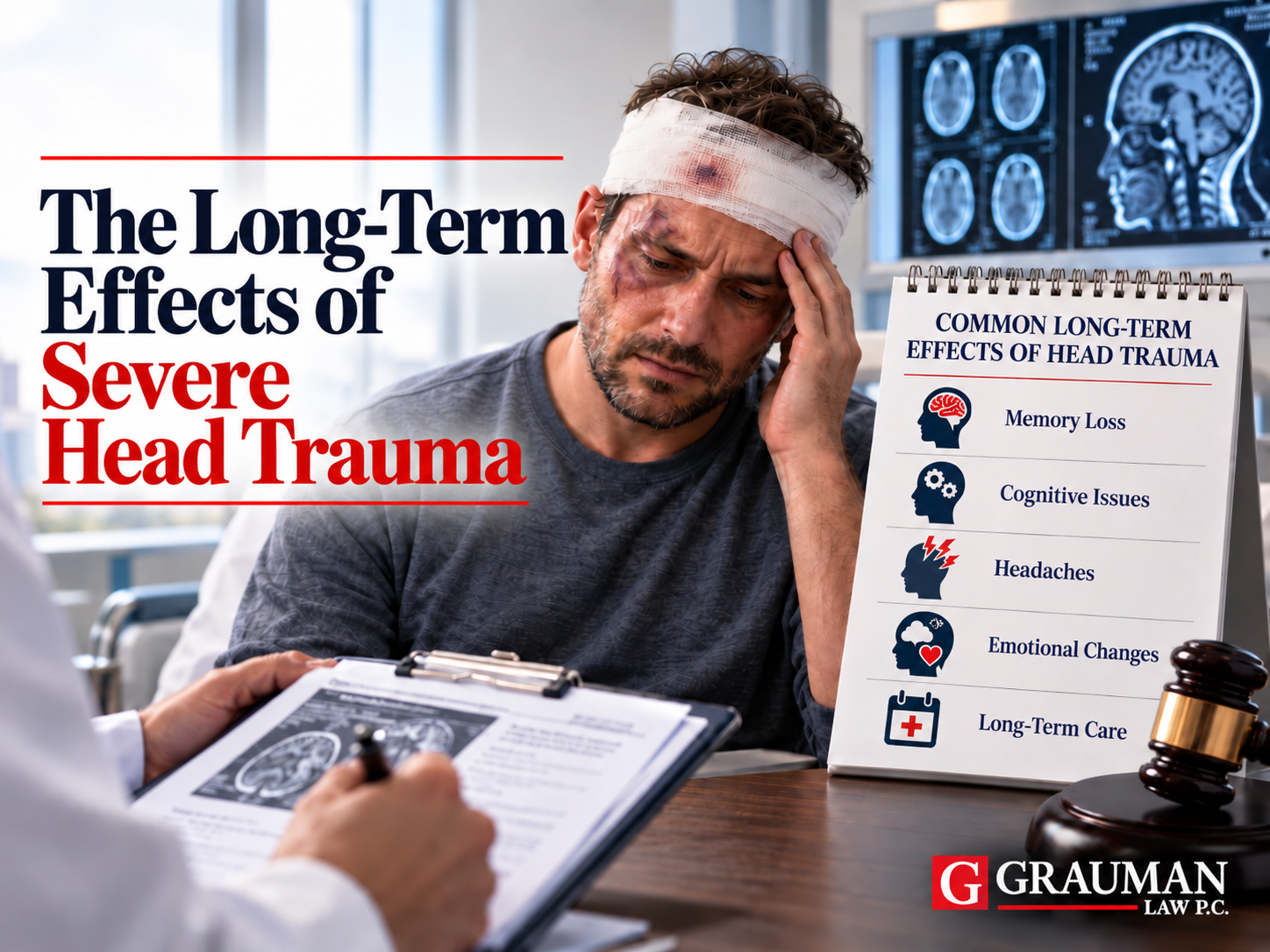
Severe head trauma after an accident can leave lasting effects on both the body and mind. Families in Nassau County who face a traumatic brain injury often have to deal with years of medical and daily life and work challenges. Traumatic Brain Injury Outcomes The first hours after a blow or jolt that damages brain tissue tend to dominate the medical attention, but the full cost of that injury frequently reveals itself only after the initial, acute crisis has passed. Five years after such an event, more than half of those still living remain moderately or severely disabled, and a similar share who once held jobs can no longer work. One in three still needs help with everyday tasks. Ability to Manage Life Memory, attention, processing speed, and the capacity to plan or shift from one task to another often remain impaired for a long time after these injuries, and cognitive change can be the most stubborn and far-reaching consequence. Studies that follow survivors for two years and beyond show that those with the gravest injuries fall further behind their peers on measures of general intellect and executive skill rather than catching up. Physical Complications Physical complications frequently persist as chronic conditions, like post-traumatic epilepsy (which appears in roughly 1/5th of survivors), balance problems, headaches, loss of smell or taste, visual disturbances, and sleep disruption. These are all common enough in survivors that they become chronic conditions rather than symptoms you can expect to improve with time. Hydrocephalus, infections, and damage to blood vessels that later raise stroke risk can all be present and add further complexity to the prognosis. Emotional Life Depression, anxiety, irritability, impulsivity, and reduced empathy appear in traumatic brain injury victims at rates well above those seen in the general population, and these often intensify rather than fade. An umbrella review of more than thirty million participants found elevated risks for psychotic disorders, attention-deficit conditions, suicide, and later dementia. These psychiatric and neurodegenerative associations often don't appear immediately, either. Hormonal Changes The pituitary gland sits at the base of the skull and is therefore vulnerable to impact. It can lose function after the injury, and that can mean hormonal disruption which worsens fatigue, muscle loss, cognitive fog, and emotional instability for years unless it is specifically tested for. Growth hormone deficiency is the most frequent finding, followed by shortages of sex hormones, thyroid hormone, and cortisol. Effects on Nassau County Victims and Families Because these injuries can continue to evolve rather than just resolve, families must arrange ongoing medical surveillance, rehabilitation, and practical support while they also plan for changing needs in housing, transportation, finances, and daily care. Legal questions about the proper compensation for all these costs over a lifetime can be heated and contested when the injury is due to the negligence of someone else. If you or someone close to you is living with the effects of severe head trauma, contact Grauman Law in Kew Gardens, NY for a free consultation. We've been serving Nassau County and New York City for nearly two decades.