Get A Free Case Evaluation

We handle both personal injury and criminal defense. Please fill out the form below for your free consultation or call us at 347-620-2865.

Blog

Do I Need Home Property Damage Lawyers?

Do I Need Home Property Damage Lawyers?

Homeowners insurance policies come with their own set of challenges when it comes to making property damage claims particularly following disasters such as tornadoes and hurricanes. This is a period where one needs to appreciate, for instance, what constitutes property law, what is contained and usually foreign of works terms and policies of assurance but managing one’s feelings. In normal cases, in such situations, it is preferable to use the services of a home property damage lawyer for a bunch of reasons.

Is a home property damage lawyer a necessity?

Why would you need a home property damage lawyer in the first place?

It’s simply because the world of insurance is, perhaps, one of the worst to navigate, especially when there’s enormous sums of money involved. And when it comes to the types of claims that are lodged after extreme property damage has occurred, the type of situations that have people temporally, or worse, permanently displaced from their residences – every single claim feels like being thrown into a court. Hence, insurance companies engage lawyers to represent their interests. It could also be that you should obtain the services of an attorney and let them help you out.

The claims process can be challenging, especially when your property has suffered considerable damage. However, it is not necessary to go through the process alone. If necessary, you are able to recruit a lawyer who deals specifically with property damage in order to assist you in that procedure. Regardless of whether you engage the services of an attorney or you don’t, there are crucial measures you can and should take in order to safeguard yourself against loss.

Contested Claims

Contested Claims: There are occasions when your insurance company may dispute your claim or seek to limit the amount of money that they pay out for needed repairs to your property. This is when lawyers come in; to settle negotiations between you and your insurer, and should this fail, take the case to court and seek to represent you in a trial.

According to the policy of the insurance companies, an insured is expected to have the best interests served as far as the claim is concerned. They however moved the executor to the deposition. He can take legal measures to assist in these claims. He or she can be an insider without being restricted.

Understanding Denied Claims

Once an insurance claim is denied, a property damage lawyer can help in a better understanding of the reasons why this happened. He or she can help you in many ways. First and foremost, the attorney can seek to justify the reason for the denial with the existing policy. He or she can also work in assisting the you in seeking further application for the overturn of the denial and if need be, pursue the case in the court. Lastly, the lawyer can aid you in ensuring that you do not go against the law in the process of pursuing the insurance claim from the insurance company.

Preventing losses to property by tornadoes and hurricanes

Most homeowners’ insurance policies will cover weather-related losses from tornadoes and hurricanes, with some exceptions. Many policies come with higher deductibles regarding hurricane and windstorm damage, especially in high-risk areas. Certain policies may not cover specific types of damages at all. Even when coverage exists, it may be necessary to obtain additional specific policies to cover named perils, such as floods.

Understanding the safeguards and exclusions related to natural calamities requires careful examination of your policy or consultation with a professional.

Bad Faith Insurance Claims

Understanding claims filed against insurance companies can be complicated, particularly when claims are made in bad faith. In simple terms, a bad faith insurance claim occurs when an insurance company acts dishonestly during any stage of the claims process. There are various forms in which an insurer can act in bad faith, but not every error made by a company constitutes bad faith; sometimes, mistakes occur without malicious intent.

Common examples of bad faith practices include:

  • Refusal to Pay: An insurance company may refuse to pay a valid claim without providing a valid justification.
  • Unreasonable Delays: Excessive delays in resolving claims can lead to unnecessary hardship for the insured.
  • Ineffective Investigations: A negligent or ineffective investigation by the claims handler can also signify bad faith.
  • Low Settlement Offers: Offering settlements that fall significantly below the policy declaration is another indication of bad faith.

A property damage lawyer can assist you in claiming unfair treatment from an insurer if you believe that they have not acted in good faith. This is a serious issue; proving bad faith requires demonstrating that the insurer acted dishonestly or with intent to deceive.

Considerations Before Hiring an Attorney

Before appointing an attorney, it is important to determine if the expenses are justified. Many property damage attorneys work on a contingency basis, meaning they only get paid if you do.

It is also advisable to review and maintain your insurance policy to avoid making unnecessary changes or seeking additional coverage in the future. This ensures that all the premiums you’ve paid are sufficient for the time in question.

Conclusion

In summary, we are living in a time of unprecedented challenges regarding homeowners’ insurance claims. The complexities of navigating these claims can often feel overwhelming. Whether or not to seek the help of a home property damage attorney depends on the seriousness of your situation, the actions of your insurance company, and the extent of your damages. If you face a complex claim that has been submitted to an insurer but is being disputed or delayed, hiring an attorney may be worthwhile.

Understanding the extent of the damage, the relevant policy provisions, and the pros and cons of litigation can guide your decision-making process.
Recommended Posts

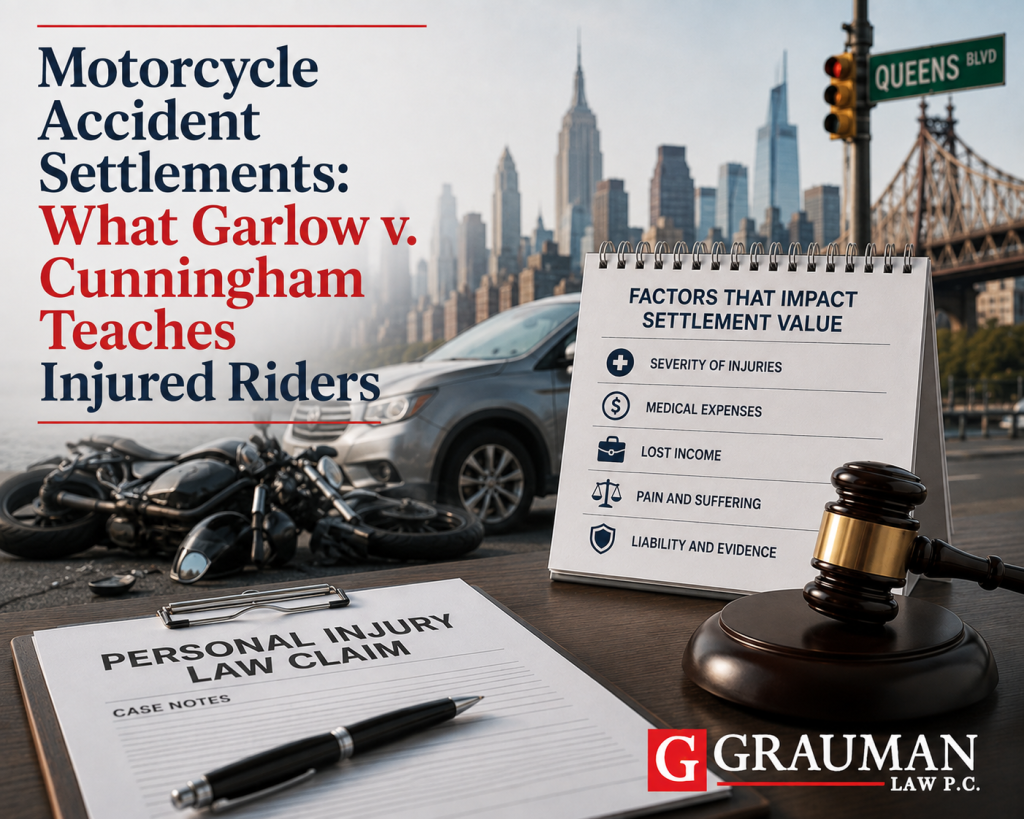
Motorcycle Accident Settlements: What Garlow v. Cunningham Teaches Injured Riders

Motorcycle accidents often result in serious injuries, substantial medical expenses, and significant property damage. After a crash, insurance companies frequently move quickly to negotiate a settlement, sometimes before the injured rider fully understands the extent of their losses. A recent New York case, Garlow v. Cunningham, highlights an important lesson for motorcyclists: the language contained in a settlement agreement can have a major impact on the rights you retain—and the rights you give up. The decision demonstrates why accident victims should carefully review any release or settlement document before signing it. more The Facts of the Case In Garlow v. Cunningham, the plaintiff was injured in a collision involving his motorcycle and the defendant's vehicle. Following the accident, the defendant's insurance carrier attempted to resolve the claims arising from the crash. According to the case, the insurer offered $100,000 to settle both the plaintiff's personal injury claims and his property damage claims. The plaintiff, however, did not agree to the settlement exactly as proposed. Instead, when presented with a release, the plaintiff modified the document to exclude his property damage claim. By making this change, the rider sought to preserve his ability to pursue compensation for damage to his motorcycle and related property losses while addressing the injury claim separately. The dispute eventually centered on whether a binding settlement had been reached. Why Settlement Agreements Matter After a Motorcycle Accident Many accident victims assume that once an insurance company offers compensation, the primary concern is simply the dollar amount being paid. In reality, the language contained within a settlement agreement is often just as important as the settlement figure itself. Settlement documents typically contain a release, which is a legal agreement in which the injured party agrees to give up certain claims in exchange for compensation. Depending on the wording, a release may affect: Personal injury claims; Property damage claims; Medical expenses; Lost wage claims; Future treatment costs; Pain and suffering damages; and Other rights arising from the accident. Once a valid release is signed and accepted, it can become extremely difficult—or impossible—to pursue additional compensation later. For this reason, courts closely examine whether both parties actually agreed to the same settlement terms. What Did the Court Decide? The court determined that there was no enforceable settlement agreement covering all of the claims that the defendant asserted had been resolved. The key issue was that the plaintiff modified the release before signing it. Because the rider altered the proposed agreement by excluding his property damage claim, the signed release did not match the terms originally offered by the insurance carrier. In contract law, a material change to proposed settlement terms can prevent the formation of a binding agreement if the parties have not mutually agreed to the same terms. As a result, the court declined to enforce the alleged settlement in the manner requested by the defendant. The decision illustrates a fundamental legal principle: for a settlement to be enforceable, both parties must agree to the same material terms. Understanding the Difference Between Injury Claims and Property Damage Claims One of the most important takeaways from Garlow is that personal injury claims and property damage claims are often separate components of a motorcycle accident case. Personal Injury Claims These claims generally seek compensation for losses related to physical injuries, including: Medical bills; Future medical treatment; Lost wages; Reduced earning capacity; Pain and suffering; and Other accident-related damages. Property Damage Claims Property damage claims typically involve compensation for: Motorcycle repair costs; Fair market value of a totaled motorcycle; Damaged riding gear; Helmets; Electronics; and Other personal property damaged in the collision. Although insurers sometimes attempt to resolve all claims simultaneously, accident victims may wish to address these issues separately depending on the circumstances of the case. Why Motorcycle Accident Victims Must Review Releases Carefully Insurance companies routinely use releases to finalize claims. Once signed, these documents can have significant legal consequences. Before signing any settlement paperwork, injured riders should understand: What Claims Are Being Released Some releases apply only to property damage, while others apply to all claims arising from the accident. Whether Future Medical Treatment Is Covered Motorcycle accident injuries sometimes worsen over time. Settling too early may prevent recovery for future treatment costs. Whether All Damages Have Been Evaluated Before accepting a settlement, it is important to understand the full extent of medical expenses, lost income, and other damages. Whether the Settlement Reflects the Actual Value of the Claim A settlement may appear attractive initially but fail to account for long-term consequences of the injuries. The Garlow decision serves as a reminder that even seemingly minor language changes can have significant legal implications. Motorcycle Accidents Often Result in Serious Injuries Unlike occupants of passenger vehicles, motorcyclists have very little protection during a collision. Even relatively low-speed crashes can result in: Traumatic brain injuries; Broken bones; Spinal injuries; Road rash; Internal injuries; Shoulder injuries; and Permanent disabilities. Because of the severity of these injuries, the financial stakes in motorcycle accident claims are often substantial. A settlement agreement signed too early or without careful review can significantly affect an injured rider's ability to recover full compensation. What This Means for Queens Motorcyclists Queens presents unique risks for motorcyclists due to heavy traffic, congested intersections, and frequent lane changes by other drivers. Motorcycle accidents regularly occur throughout: Long Island City; Astoria; Flushing; Jamaica; Forest Hills; Rego Park; Jackson Heights; and Kew Gardens. Following a crash, insurance adjusters may contact injured riders quickly in an effort to resolve claims. While settlement discussions are a normal part of the process, Garlow v. Cunningham demonstrates why riders should fully understand the legal effect of any release before signing. Key Takeaways From Garlow v. Cunningham The case offers several important lessons for motorcycle accident victims: Settlement Language Matters The wording of a release can determine which claims remain available and which claims are permanently resolved. Injury and Property Damage Claims May Be Treated Separately A rider may have distinct claims for bodily injuries and motorcycle damage. Both Parties Must Agree to the Same Terms A settlement generally cannot be enforced when the parties have not mutually agreed to identical material terms. Never Rush Into Signing Insurance Paperwork Accident victims should understand exactly what rights they are giving up before accepting a settlement. Conclusion The decision in Garlow v. Cunningham highlights the importance of carefully reviewing settlement agreements after a motorcycle accident. Although the insurer attempted to settle both the injury and property damage portions of the claim, the plaintiff modified the release to preserve certain rights. Because the signed document did not match the insurer's proposed terms, the court declined to enforce the settlement as the defendant requested. For injured motorcyclists in Queens and throughout New York, the case serves as an important reminder that settlement documents are more than mere paperwork. The language of a release can significantly affect future legal rights, making it essential to understand exactly what claims are being resolved before signing any agreement.

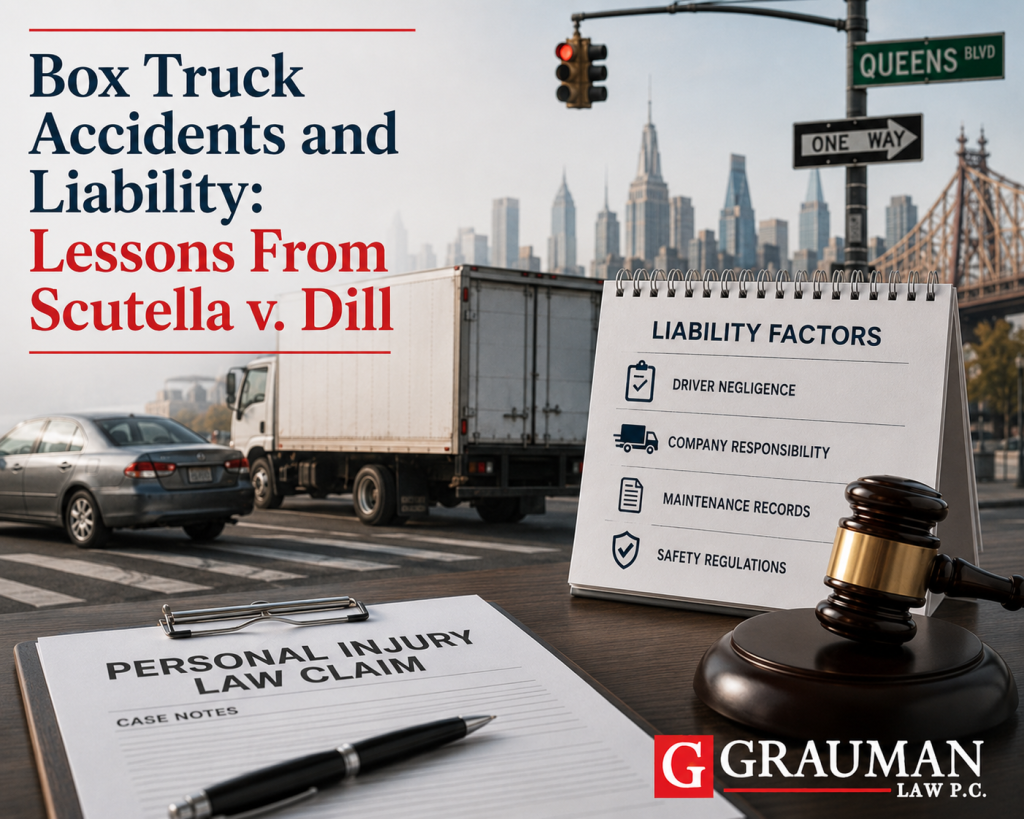
Box Truck Accidents and Liability: Lessons From Scutella v. Dill

Commercial trucks are a common sight throughout Queens, particularly in busy neighborhoods where deliveries occur throughout the day. While these vehicles play an important role in keeping businesses supplied, they can also create dangerous conditions when drivers perform backing maneuvers or obstruct active traffic lanes. A recent New York case, Scutella v. Dill, provides insight into how courts evaluate liability in truck accident cases involving blocked roadways and backing vehicles. The decision serves as a reminder that commercial drivers have a duty to operate their vehicles safely and that questions of negligence often arise when a truck creates a hazard for other motorists. more The Facts of the Case In Scutella v. Dill, the plaintiff alleged that she suffered injuries when her vehicle collided with a box truck that was backing into a driveway. According to the allegations, the truck driver was in the process of reversing the vehicle when the truck blocked the plaintiff's lane of travel. The plaintiff's vehicle subsequently struck the truck, resulting in injuries and a personal injury lawsuit. The defendant argued that the plaintiff was solely responsible for the collision and sought dismissal of the case. However, the plaintiff contended that the truck driver's actions created a dangerous roadway condition and contributed to the accident. The dispute ultimately reached the Appellate Division, which was tasked with determining whether the defendant had established entitlement to judgment as a matter of law. Why Backing Truck Accidents Are Often Legally Complex Unlike many rear-end collisions or intersection crashes, accidents involving backing commercial vehicles frequently involve multiple questions of fact. When a truck driver reverses into a roadway or blocks a lane of travel, courts may consider several factors, including: Whether the driver maintained a proper lookout; Whether the backing maneuver was performed safely; Whether warning devices or signals were used; Whether the driver could adequately see approaching traffic; Whether the truck obstructed the roadway for an unreasonable period of time; and Whether the driver exercised reasonable care under the circumstances. Because large commercial vehicles often have significant blind spots, backing maneuvers can present unique dangers to nearby motorists. What Did the Court Decide? The Appellate Division reinstated the plaintiff's complaint, allowing the lawsuit to proceed. The court explained that the defendant had the burden of demonstrating either that he was not negligent or that any alleged negligence was not a proximate cause of the accident. Importantly, the court found that unresolved factual questions remained regarding the truck driver's conduct. Specifically, issues existed concerning whether the defendant maintained a proper lookout and whether he acted reasonably while backing the truck into the driveway. Because these questions could not be resolved as a matter of law, the defendant was not entitled to dismissal of the case. As a result, the plaintiff was permitted to continue pursuing her claims. The Importance of Reasonable Care for Commercial Drivers Commercial drivers are not automatically liable simply because an accident occurs. However, they are expected to operate their vehicles with reasonable care under the circumstances. This duty becomes especially important when a driver is performing a backing maneuver. Backing a large truck into a driveway, loading area, or commercial property often requires careful attention to surrounding traffic. A driver must remain aware of approaching vehicles, pedestrians, cyclists, and other roadway users. When a truck blocks an active lane of travel, questions may arise regarding whether the maneuver was performed safely and whether sufficient precautions were taken to avoid creating a hazard. The Scutella decision demonstrates that courts closely examine these circumstances before determining whether a commercial driver bears responsibility for a crash. Common Causes of Box Truck Accidents Box truck accidents occur for many reasons, particularly in densely populated urban areas like Queens. Some of the most common contributing factors include: Unsafe Backing Maneuvers Backing accidents often occur when drivers fail to adequately monitor surrounding traffic or misjudge the available space. Obstructed Traffic Lanes A truck that blocks part or all of a travel lane can create a sudden hazard for approaching motorists. Limited Visibility Commercial trucks frequently have significant blind spots that make it difficult for drivers to see vehicles approaching from certain angles. Driver Distraction Like all motorists, commercial drivers can become distracted by phones, navigation systems, delivery schedules, or other factors. Congested Urban Roadways Heavy traffic conditions often leave drivers with little time to react when a truck unexpectedly enters or obstructs their lane. What This Means for Injury Victims The outcome of Scutella v. Dill highlights an important principle of New York personal injury law: liability is not always as straightforward as one party claims. Defendants often argue that an injured motorist was entirely responsible for a collision. However, courts will carefully examine all of the circumstances surrounding the accident before reaching that conclusion. For injured drivers, this means that a claim may still be viable even when the defense attempts to shift all blame onto the plaintiff. Evidence such as: Accident reports; Witness statements; Surveillance footage; Dash camera recordings; Photographs of the scene; and Expert accident reconstruction analysis may all play important roles in establishing how a truck accident occurred and whether the commercial driver contributed to the collision. The Reality of Box Truck Accidents in Queens Queens experiences significant commercial vehicle traffic every day. Delivery trucks, moving trucks, construction vehicles, and commercial box trucks routinely travel through some of the borough's busiest neighborhoods. Areas such as Long Island City, Astoria, Flushing, Jamaica, Forest Hills, and Jackson Heights frequently experience congestion caused by loading operations and commercial deliveries. Drivers in these neighborhoods often encounter trucks that are: Backing into driveways; Entering loading docks; Blocking travel lanes; Double-parked near businesses; or Maneuvering through narrow streets. When these activities are performed carelessly, serious accidents can occur. Key Takeaways From Scutella v. Dill The Scutella decision offers several important lessons for motorists: Commercial Drivers Must Exercise Reasonable Care Truck drivers performing backing maneuvers have a duty to operate their vehicles safely and remain aware of surrounding traffic. Blocking a Lane Can Create Liability Issues When a truck obstructs an active lane of travel, courts may examine whether the obstruction contributed to the collision. Fault Is Not Always Clear-Cut Even when a defendant claims that another driver caused the crash, factual disputes may prevent dismissal of the case. Thorough Investigation Matters Photographs, witness statements, surveillance footage, and other evidence can be critical in determining how a truck accident occurred. Conclusion The decision in Scutella v. Dill illustrates how New York courts evaluate liability in accidents involving box trucks and backing maneuvers. Although the defendant argued that the plaintiff was solely responsible for the crash, the Appellate Division found that unresolved questions remained regarding whether the truck driver acted reasonably and maintained a proper lookout. For Queens motorists, the case serves as an important reminder that commercial vehicles can create dangerous roadway conditions when backing into driveways or obstructing traffic lanes. When a truck driver's conduct contributes to a collision, injured victims may have the right to pursue compensation for their injuries and losses under New York law.

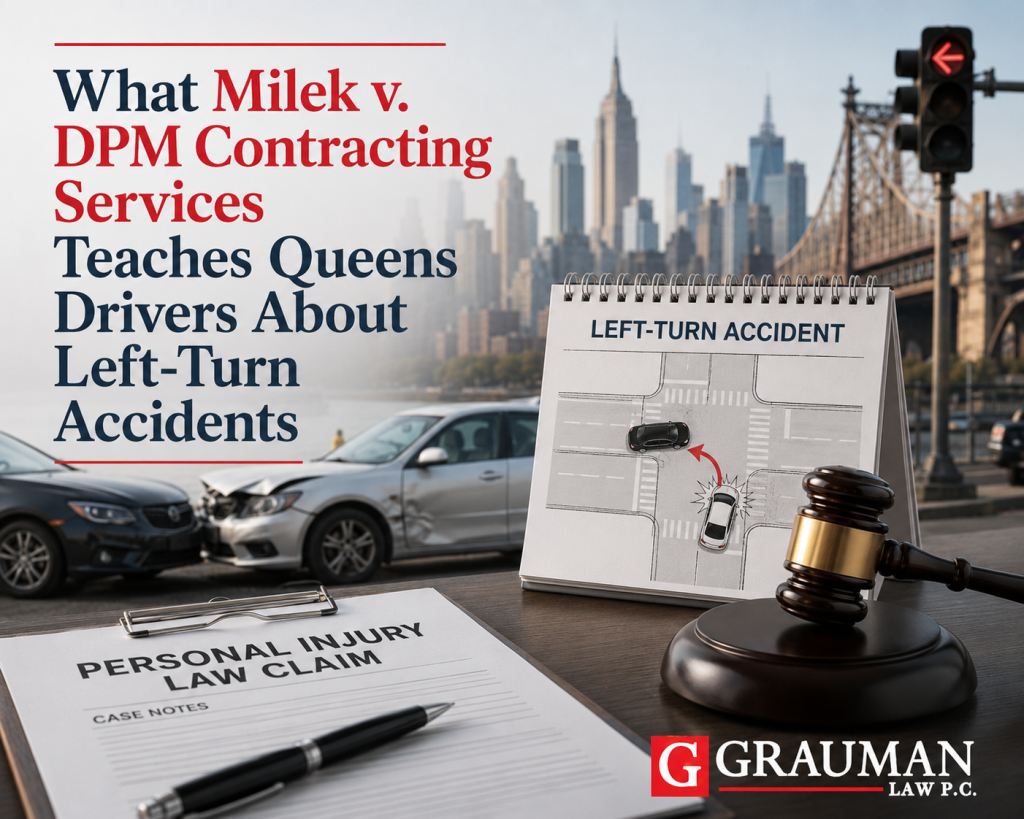
What Milek v. DPM Contracting Services Teaches Queens Drivers About Left-Turn Accidents

Left-turn accidents are among the most common causes of serious motor vehicle collisions in New York. When a driver turns left across oncoming traffic without yielding the right of way, the consequences can be devastating. A recent New York case, Milek v. DPM Contracting Services, Inc., demonstrates how courts analyze fault in these situations and why establishing liability is only one part of a successful personal injury claim. For drivers in Queens, where busy intersections and heavy traffic create countless opportunities for left-turn collisions, this case offers important insight into how New York courts determine responsibility after an accident. more The Facts of the Case In Milek v. DPM Contracting Services, Inc., the plaintiff sought summary judgment on the issue of liability following a motor vehicle accident. According to the plaintiff, he was traveling straight through an intersection when the defendant driver made a left turn directly into his path. The plaintiff argued that the collision occurred because the defendant failed to yield the right of way before attempting the turn. Under New York law, drivers making left turns have a duty to ensure that the maneuver can be completed safely before crossing oncoming traffic. The plaintiff moved for summary judgment, asking the court to determine that the defendants were legally responsible for causing the accident without the need for a trial on liability. Why Left-Turning Drivers Face a Heavy Burden Under New York Law New York Vehicle and Traffic Law places a significant responsibility on drivers who make left turns at intersections. A motorist intending to turn left must yield to approaching vehicles that are close enough to constitute an immediate hazard. This rule exists because left turns are inherently dangerous. A driver crossing opposing lanes of travel must accurately judge the speed and distance of oncoming vehicles and wait until it is safe to proceed. When a collision occurs during a left turn, courts frequently examine whether the turning driver failed to yield the right of way. If the evidence shows that the oncoming vehicle was lawfully proceeding through the intersection and had the right of way, the turning driver may be found negligent as a matter of law. The Court's Decision The court granted summary judgment in favor of the plaintiff on the issue of liability. A significant factor in the decision was the defendants' failure to appear for depositions. Because the defendants did not provide testimony or evidence creating a factual dispute regarding how the accident occurred, they were unable to effectively challenge the plaintiff's version of events. Based on the evidence presented, the court concluded that the plaintiff established that he was traveling straight through the intersection when the defendant made an unsafe left turn into his path. As a result, the plaintiff successfully demonstrated entitlement to judgment on liability. This meant that, for purposes of the lawsuit, the defendants were deemed legally responsible for causing the crash. Why Winning on Liability Does Not End the Case Many accident victims assume that proving another driver caused a crash automatically guarantees compensation. However, New York's no-fault insurance system creates an additional hurdle for many injured plaintiffs. Even after obtaining summary judgment on liability, the plaintiff in Milek still faced a separate legal issue: whether he sustained a "serious injury" under New York Insurance Law § 5102(d). The serious injury threshold is a critical component of many New York car accident cases. To recover damages for pain and suffering, an injured person typically must demonstrate that their injuries satisfy one of the categories outlined in the statute. Examples may include: Significant limitation of use of a body function or system; Permanent consequential limitation of use of a body organ or member; Fractures; Significant disfigurement; or Certain medically determined impairments that substantially interfere with daily activities. Because liability and injury are separate legal issues, a plaintiff can successfully establish fault while still being required to prove that their injuries meet the statutory threshold. Lessons for Queens Drivers Queens is home to some of the busiest intersections in New York City. Areas along Queens Boulevard, Northern Boulevard, Woodhaven Boulevard, Hillside Avenue, and other heavily traveled roadways frequently see collisions involving left-turning vehicles. The Milek decision reinforces several important principles: Drivers Making Left Turns Must Yield Motorists attempting a left turn cannot simply assume they have enough time to complete the maneuver. They must yield to oncoming vehicles that have the right of way and wait until the turn can be made safely. Evidence Matters The plaintiff was able to establish liability because the evidence supported his version of events and the defendants failed to present contrary evidence. Police reports, witness statements, photographs, surveillance footage, and deposition testimony can all play critical roles in determining fault. Liability Is Only One Part of a Personal Injury Case Even when fault appears clear, injured victims must still prove the extent of their injuries and, in many cases, satisfy New York's serious injury threshold to recover non-economic damages. Early Legal Action Can Help Preserve Important Evidence After a left-turn accident, crucial evidence may disappear quickly. Surveillance footage may be overwritten, witnesses may become difficult to locate, and physical evidence can be lost. Prompt investigation can strengthen a victim's ability to establish both liability and damages. Conclusion The decision in Milek v. DPM Contracting Services, Inc. serves as a reminder that drivers who make unsafe left turns can be held liable when they fail to yield the right of way to oncoming traffic. The case also highlights an important reality of New York personal injury litigation: proving fault is often only the first step. For Queens drivers injured in a left-turn collision, understanding how courts analyze liability and serious injury claims can be critical when pursuing compensation. While every case depends on its unique facts, Milek demonstrates how clear evidence of an unsafe left turn can establish responsibility for a crash and position an injured victim to pursue recovery under New York law.